
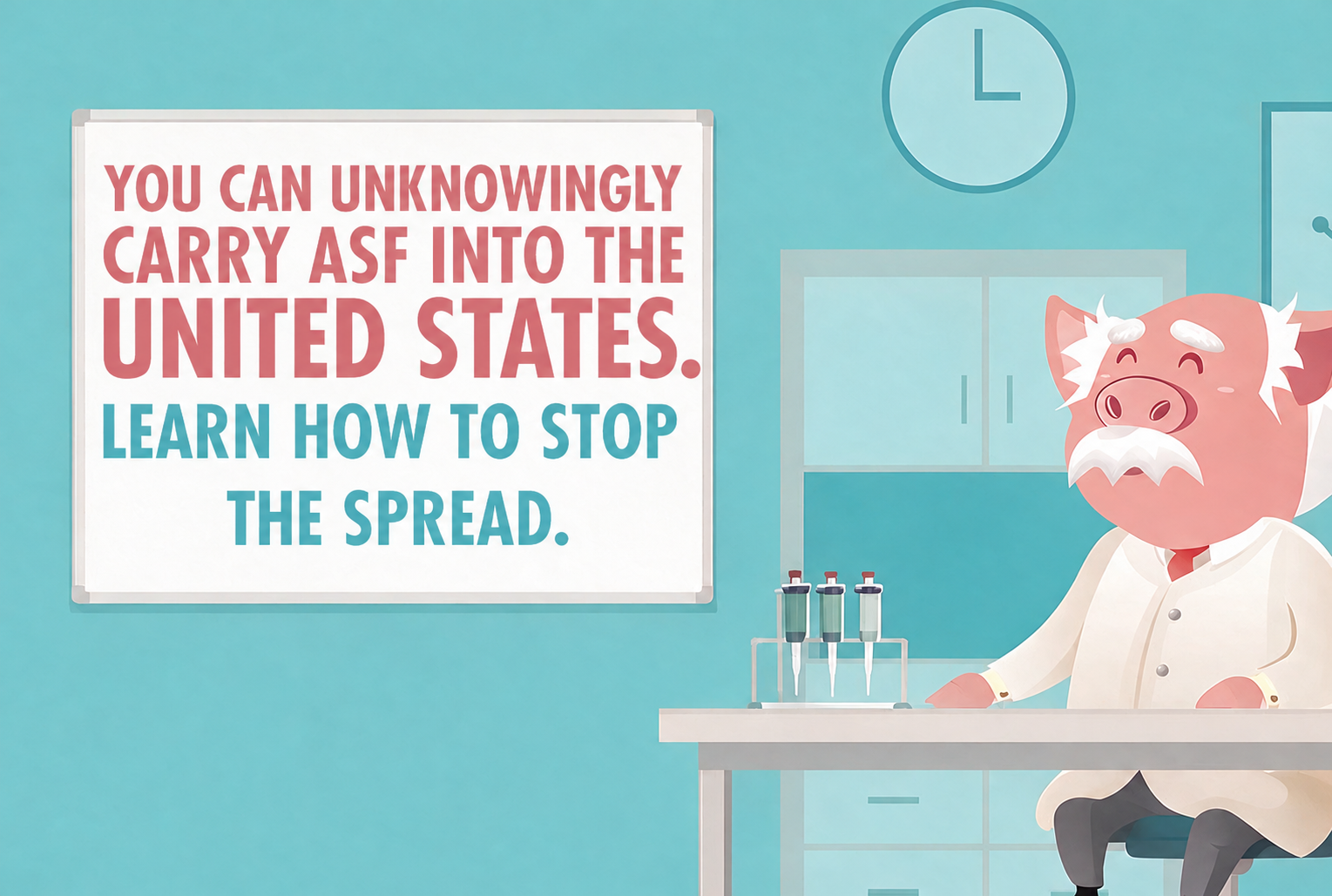
Farm tours, hikes and local food can all put travellers in contact with African swine fever (ASF), the US Department of Agriculture warned on 2 November, setting out five ordinary holiday activities that could bring the virus back into the United States.
ASF is highly contagious and deadly in wild and domestic pigs but does not affect people. Travellers can still carry it unknowingly on contaminated clothes, shoes or pork products, which is why the department asks for a few precautions.
The first two risks are farm visits and simply being near pigs: soil, manure and other material can cling to shoes, clothes and gear even without touching an animal. USDA advises following local biosecurity rules and either throwing such items away or washing and disinfecting them before packing. Free-roaming and feral pigs also live in forests and parks, so boots and equipment should be cleaned of mud after outdoor trips, and clothes worn on agritourism stays with pigs or other livestock should be washed.
The fourth is food. Travellers can enjoy local dishes but should not pack pork to take home, because the virus survives in many cooked and uncooked pork products.
Finally, on arrival in the US mainland, Puerto Rico or the US Virgin Islands, travellers should declare all meat and animal products, including wildlife products, to US Customs and Border Protection and say whether they visited a farm or were near livestock. Anyone who has been around pigs should wait at least five days before visiting a farm or other place with pigs.
Source: USDA
Comments
(0)