
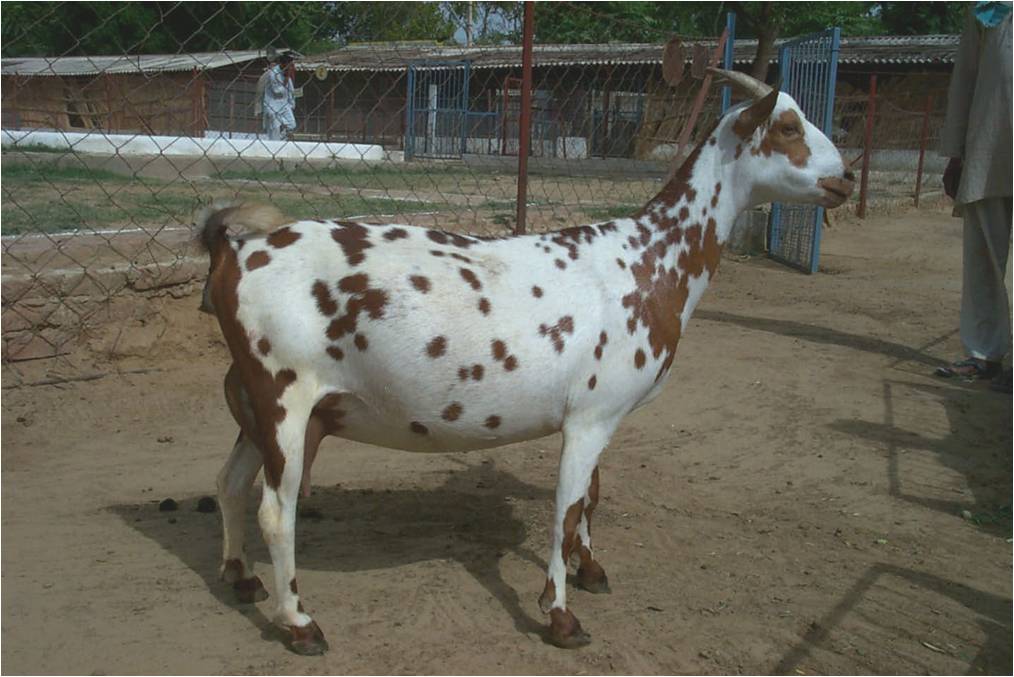
Two healthy Barbari kids, a male and a female, were born on 25 October to a goat of a different breed after their embryos had been frozen and thawed, the ICAR-Central Institute for Research on Goats at Makhdoom in India has announced. The Indian Council of Agricultural Research (ICAR) calls it a milestone in assisted reproduction for indigenous goats.
The team combined several techniques. A Barbari donor doe was treated for multiple ovulation, and her embryos were collected at the single-cell zygote stage through laparoscopic, or keyhole, surgery. They were then cryopreserved at the two-cell stage by vitrification, a fast-freezing method.
After thawing, the embryos kept developing to the four-cell stage and were placed in a Sirohi recipient goat, again by laparoscopic transfer with minimal surgery. Both kids show the typical features of the Barbari breed, the institute said, confirming that a Sirohi surrogate can carry frozen Barbari embryos to term.
The institute says freezing embryos this early and transferring them with little surgery offers a way to conserve and multiply elite animals of India's own goat breeds. Embryos from the best does can be stored and later carried by more common goats, so the genetics of a valuable animal are not lost and can be spread faster than by natural breeding alone.
ICAR presents the result as a step towards using advanced reproductive biotechnology for the conservation and genetic improvement of indigenous goat breeds.
Photo: Indusgf / Wikimedia Commons (CC BY-SA 4.0)
Source: ICAR

Comments
(0)