
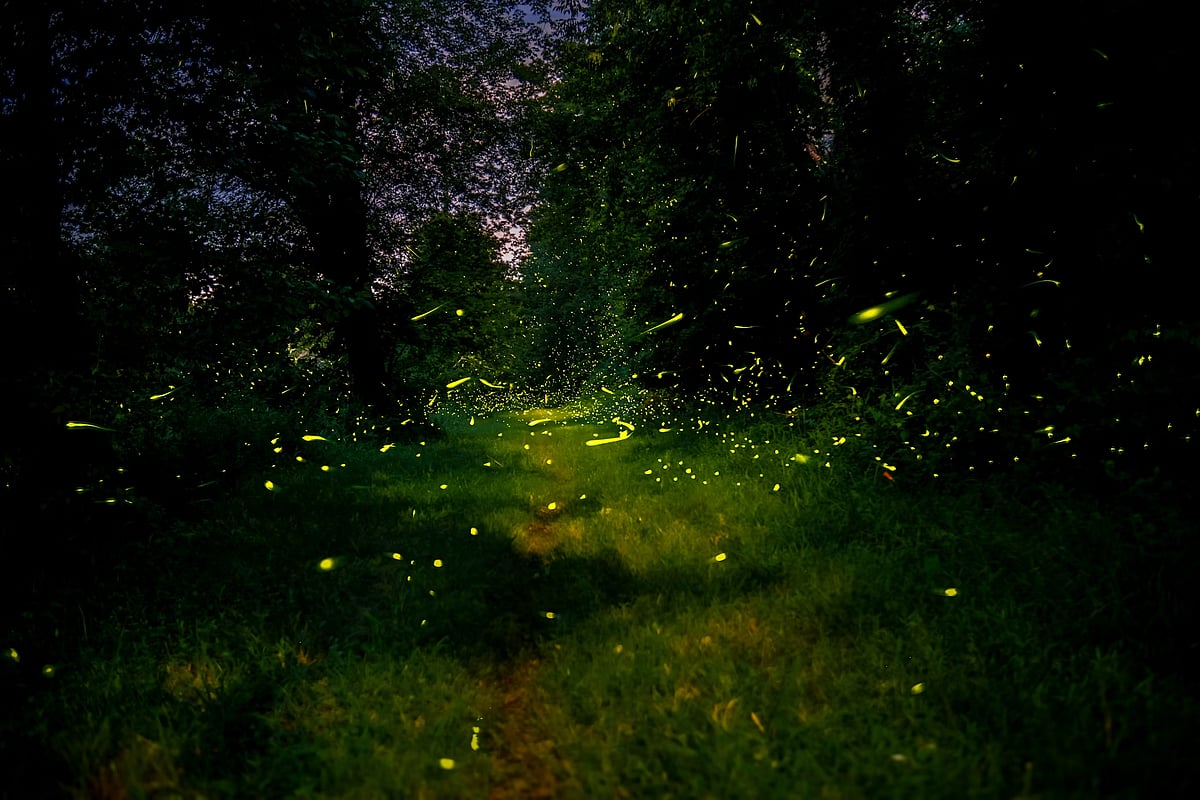
A generation ago, flickering points of light in the bushes by a village pond on a moonless night were an ordinary sight. In many villages they are now rare. The claim circulating online that 'we are the last generation to have seen fireflies' is not quite true, but scientists do worry that the insects are declining in many places — and almost every cause traces back to farming and the rural environment.
A firefly makes its own light, an ability called bioluminescence. A chemical named luciferin and an enzyme named luciferase react with oxygen in a special organ; the light is cool, unlike an electric bulb, and by controlling the flow of oxygen the insect switches it on and off at will. The light is language: males flash in set rhythms to attract females, and larvae glow to warn predators off. Some species use scent instead.
The firefly's life cycle is long. Before it flies as an adult, the larva of many species spends one to several years underground, in piles of fallen leaves or in damp places. Pesticides damage soil and vegetation and kill the larvae's food — small snails, earthworms and other insects. Scrub beside ponds, rivers and wetlands is cleared for houses, taking safe habitat with it. Even the habit of sweeping every fallen leaf from a garden destroys the shelter of larvae hidden beneath.
Artificial light is another major threat. Against house lights, street lamps and car headlights, a firefly's small signal goes unseen, mates are not found and no new generation follows. Climate change plays a part as well: excess heat, drought and long dry spells deny the insects the damp conditions they need.
Niloy Howlader, a former zoology student at Dhaka University now studying evolutionary biology at the University of Padova in Italy, says saving fireflies needs no grand effort: leave some trees and scrub around the house, avoid needless pesticide, cut unnecessary night lighting, and leave part of the leaf litter undisturbed rather than clearing it all. That shelters firefly larvae and many other small creatures.
The same habits that would bring the fireflies back — hedgerows around fields, patches of fallow land and restrained pesticide use — are the conditions on which pollinators and beneficial insects in the crop fields depend.
Source: Prothom Alo
Comments
(0)