
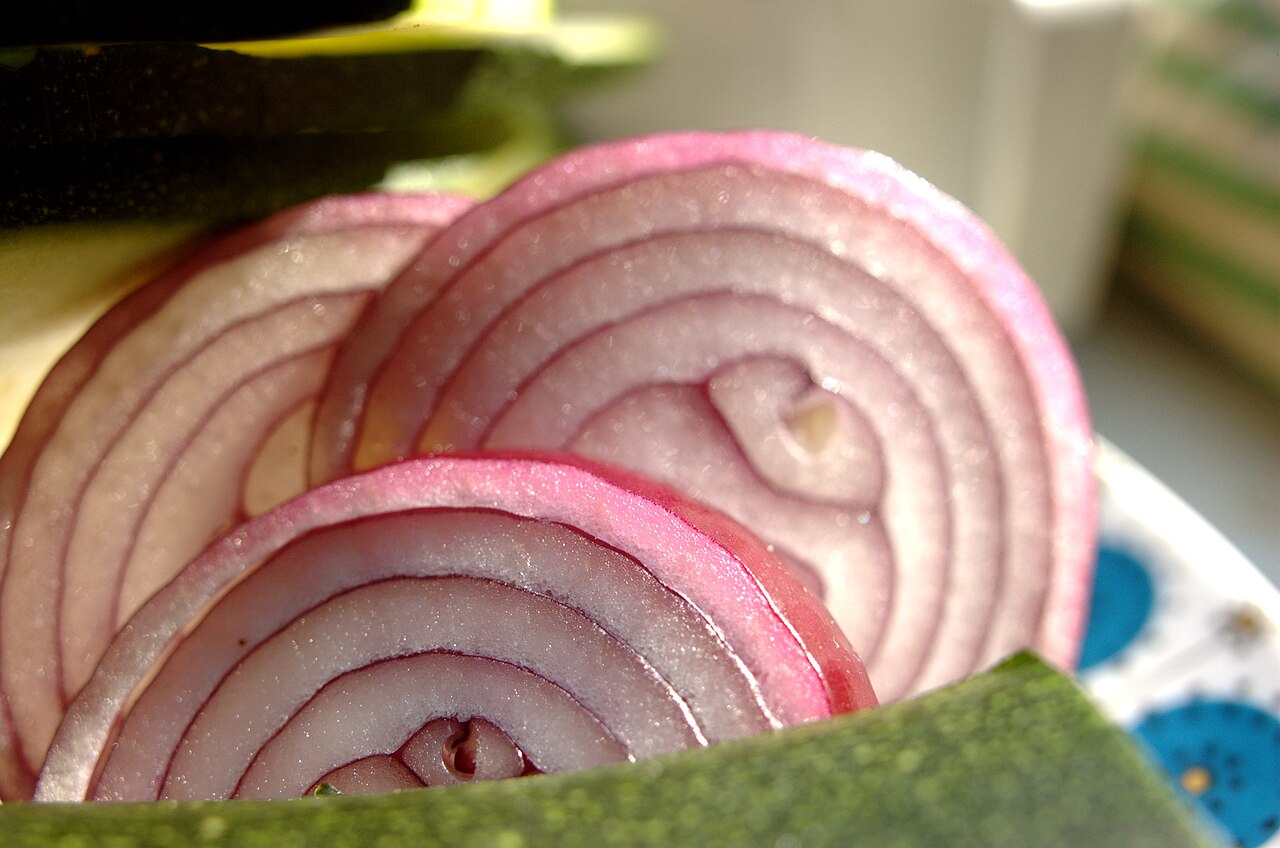
Onion goes into most dishes, as well as salads and mashes, yet cutting one brings tears to almost everyone's eyes. A kitchen report in Samakal explains why, and what helps.
Scientists explain that every onion cell stores plenty of sulphur compounds and certain enzymes. They are inactive until a knife breaks the cells; then they mix and react to form a pungent gas known as the lachrymatory factor. The eyes are sensitive, and when the gas reaches them the tear glands start producing tears to protect them.
Putting the onion in the refrigerator for 10 to 15 minutes before cutting helps, because a cold onion releases less gas.
Peeling the onion and soaking it in water for a while also helps, since some of the gas dissolves in the water instead of drifting up to the eyes.
A sharp knife is better than a blunt knife or a boti. A sharp blade crushes fewer cells, so less of the irritating gas is formed.
Samakal's report draws on TV9.
Photo: Roland Geider / Wikimedia Commons (public domain)
Source: samakal




Comments
(0)