
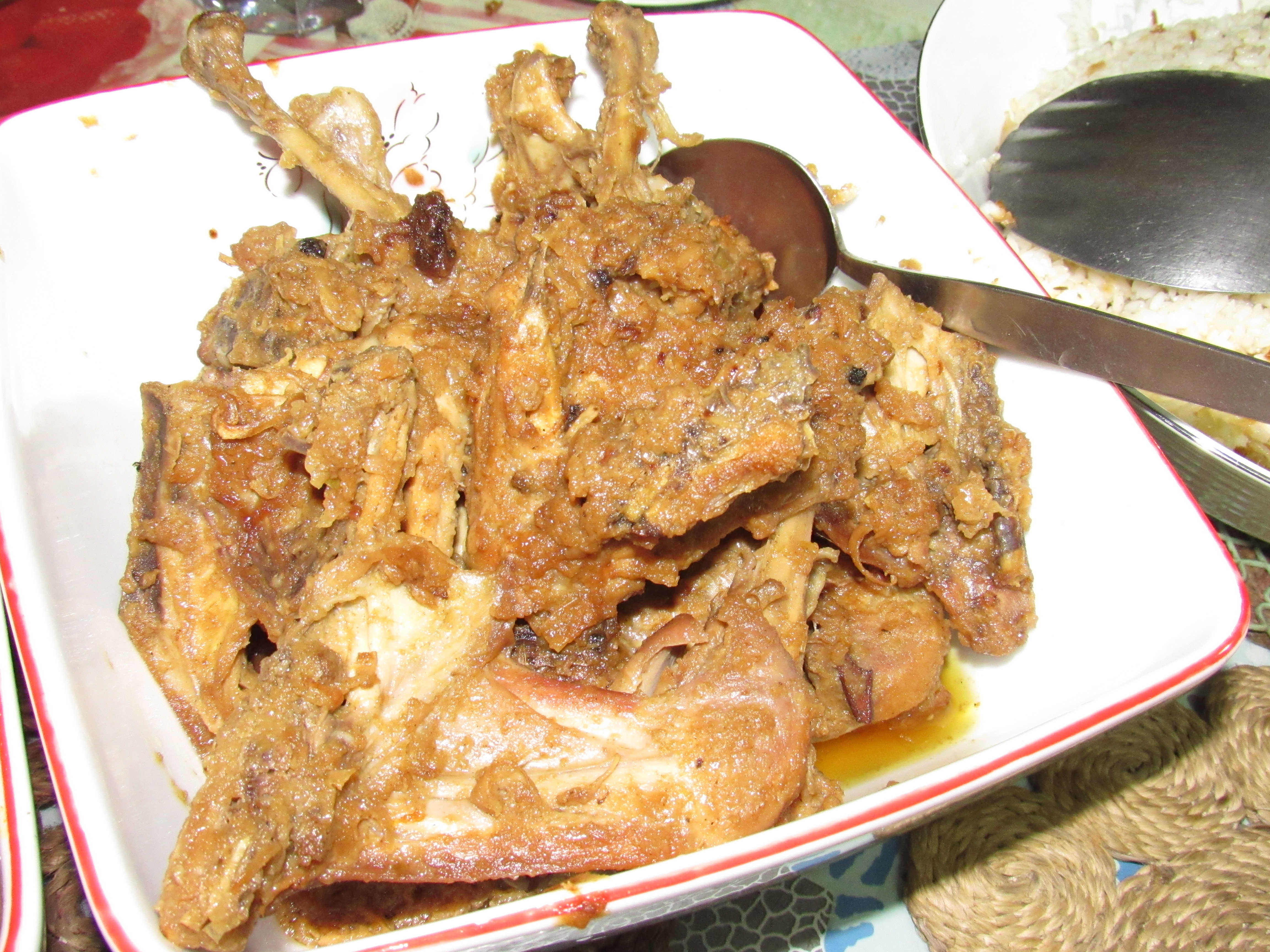
On 27 January 2026 the lifestyle desk of Jagonews24 published a home recipe for a whole chicken roast cooked in coconut milk. The paper offered it to readers who want to cook something different and tasty at home without the bother of a restaurant: in its words, the creamy taste of coconut milk and the gentle aroma of the spices make the chicken soft and juicy, and the dish suits a special day as well as an ordinary family meal. The recipe needs one whole chicken, a short list of spices, half a cup of coconut milk and a few steps on the stove.
This report sets out the recipe as Jagonews24 gave it, explains its ingredients and the dish's place in Bangladeshi cooking from reference works and earlier reports, and adds the advice that health authorities give on handling raw chicken and cooking it through.
The ingredients in the Jagonews24 recipe
The recipe lists the following, with the amounts the paper gave:
- chicken: 1 whole bird
- zarda colour (yellow food colouring): 1 teaspoon
- oil: 4 tablespoons
- garam masala powder: 1 teaspoon
- nutmeg and mace powder: half a teaspoon
- chilli powder: half a teaspoon
- ginger paste: 1 tablespoon
- garlic paste: one and a half teaspoons
- cardamom and cinnamon (no amount given)
- bay leaves: 5 to 6
- nut paste: 1 tablespoon
- coconut milk: half a cup
- beresta (fried onion) paste: 1 teaspoon
- ghee: 2 tablespoons
- salt to taste
The list is short for a dish of this kind. It gives no amount for the cardamom and cinnamon, it does not name the nut for the nut paste, and it does not say how heavy the chicken should be. The cooking time therefore depends on the bird, which is why the test of doneness that health authorities describe, set out later in this report, matters for a whole chicken more than for small pieces.
How the dish is cooked
Jagonews24 gave the method in a few sentences. Set out step by step, it runs as follows:
- Clean the chicken, wash it and let the water drain off.
- Rub the chicken with a little zarda colour and salt, and fry it lightly over a low flame.
- When the chicken turns golden, lift it out and set it aside.
- In a karai, cook all the powdered and ground spices, the nut paste and the garam masala, stirring them well.
- Add the chicken and the coconut milk and cover the pan.
- When the chicken is cooked and the oil rises to the top, add the fried beresta and the ghee, and take the pan off the heat after 2 to 3 minutes.
The name can mislead a reader who expects an oven. Writing about the Bangladeshi wedding roast in April 2023, the American food site Tasting Table noted that the chicken "isn't actually roasted at all" but is made on a stove in a frying pan or wok. It described the technique as bhuna, which it explained as frying or sauteing meat with a thick sauce, a stove-top method popular in South Asian cooking.
Its account of the usual method follows the same order as the Jagonews24 steps. The chicken is rubbed with salt and a yellow colouring, browned and lifted out; aromatics such as cinnamon, cardamom, cloves and bay leaf are fried in hot oil and a masala paste is added to make the sauce; the chicken goes back in once the sauce is cooked and creamy; and the dish is topped with crispy fried onions and served with pilau rice. Tasting Table listed many variations, among them yogurt marinades with ginger and garlic paste and sauces thinned with water, sometimes with rose or kewra water. In the Jagonews24 version the creaminess comes from the coconut milk and the nut paste.
A wedding dish with Mughal roots
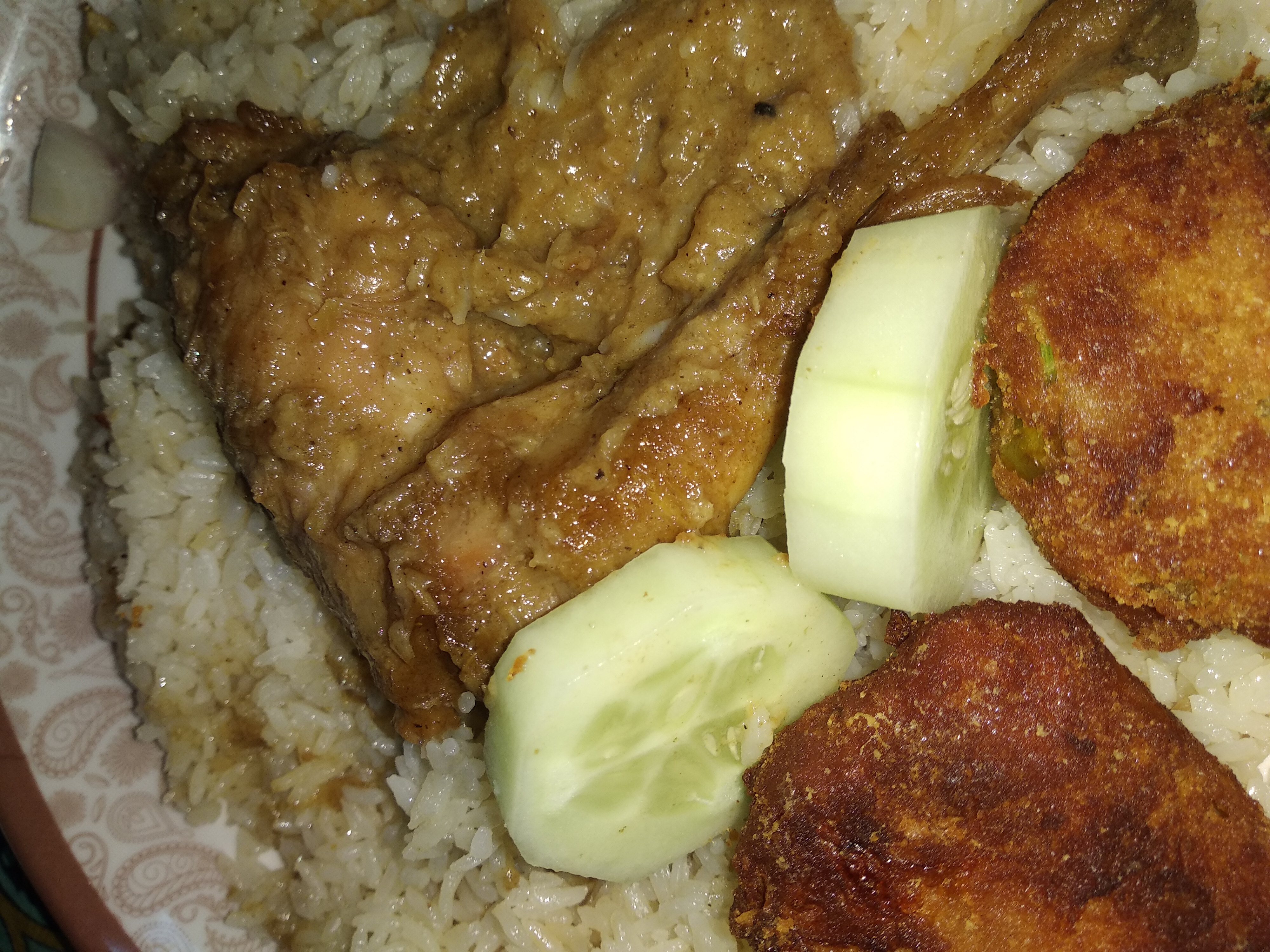
Tasting Table called the dish biye barir murgi roast, the wedding-house chicken roast, and wrote that it has a place at nearly every Bangladeshi wedding, alongside biryani, samosas and kebabs, and also at Eid and at simple birthday parties. It described a deeply seasoned, rich sauce that balances savoury and sweet flavours.
On the dish's origins, the site drew on the American food magazine Epicurious, which had quoted a chef and food scholar: the first version was murgh musallam, which came from "Turko-Persian-Afghan Mughal influence". A whole bird was cooked rather than the chicken quarters that later became common, and the practice of serving a whole bird has largely fallen away except at weddings, where the bride and groom are still served a whole bird to share. The Jagonews24 recipe keeps that older whole-bird form.
Reference works on Bangladeshi food describe the same lineage. Wikipedia's article on Bangladeshi cuisine says the country's culinary habits were strongly influenced by its history of Mughal rule, that Dhaka was the Mughal capital of the Bengal Subah, and that the Nawabs of Dhaka brought Mughlai cooking to Bengal, a style marked by meat and dairy ingredients with mild spices; korma, it says, is still served on special occasions such as Eid and weddings. In Chittagong, the same article notes, durus kura is a whole chicken cooked in a thick broth and served with polao or khichuri.
The Daily Star looked at how wedding food in Old Dhaka had changed in its Star Lifestyle pages of 29 April 2025, in a series made with the Goethe-Institut Bangladesh. The paper wrote that kachchi biryani had become the quintessential wedding dish but that the older favourite was chicken, above all a saffron-scented murg polao. A member of an Old Dhaka family that had lived at the same address for more than three centuries told the paper that "at the end of the day, it is kachchi, chicken roast, and rezala that reign supreme". The head of a museum in Bangshal told the paper that kachchi gained its place as a wedding dish after the migrations that followed the Partition of 1947.
What coconut milk is
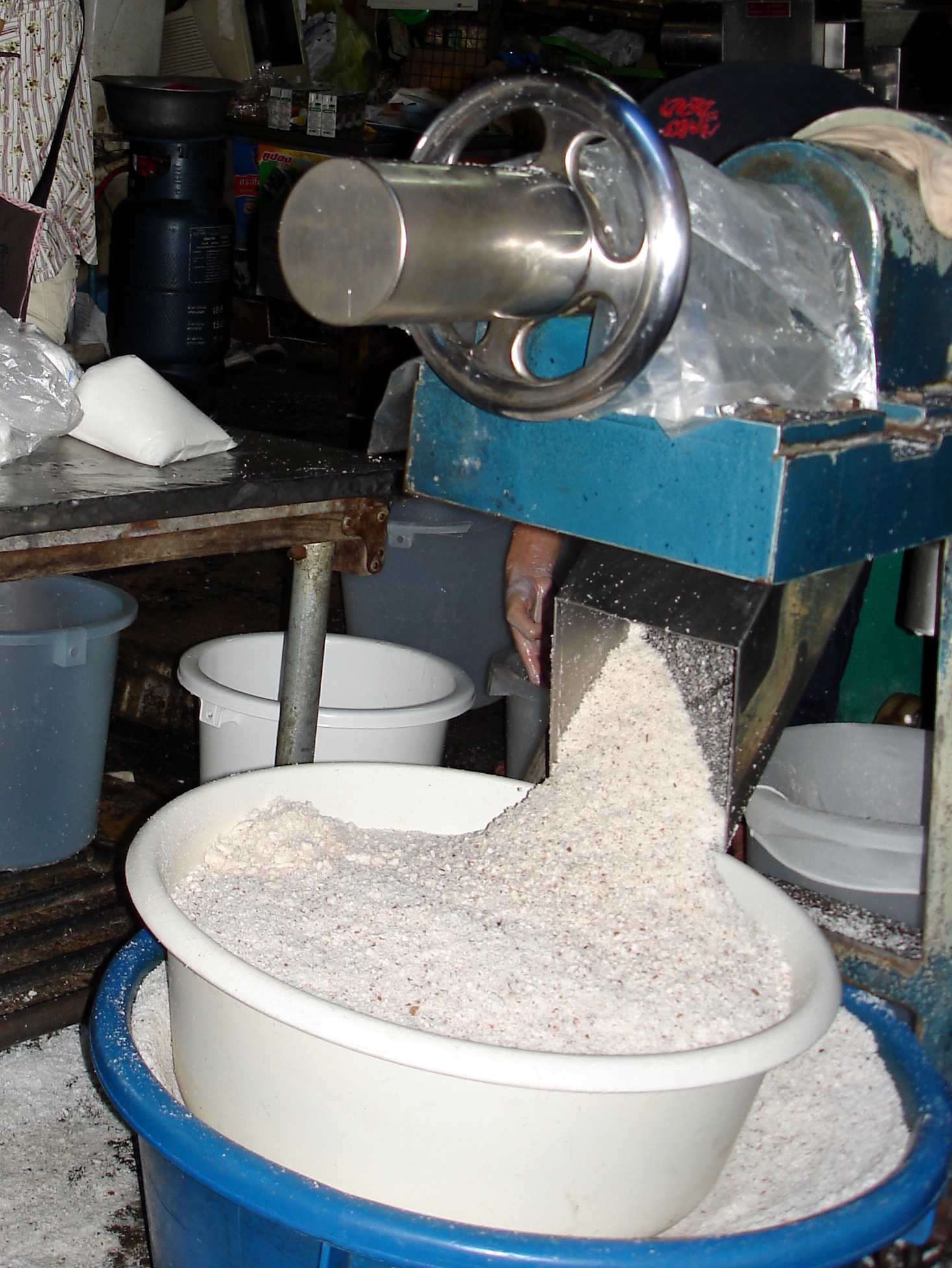
Coconut milk, the ingredient that sets this recipe apart, is a plant milk pressed from the grated flesh of mature coconuts. Its milky colour and rich taste come from its high oil content, most of which is saturated fat. It is a traditional cooking ingredient in Southeast Asia, Oceania, South Asia and East Africa.
The traditional method is to grate the white flesh, mix it with a little hot water and squeeze the pulp through cloth. The first pressing gives coconut cream, or thick coconut milk, which contains around 20 to 50 percent fat; pressing the pulp again after soaking it in hot water gives thin coconut milk, with 5 to 20 percent fat. The Asian and Pacific Coconut Community and the Codex Alimentarius of the Food and Agriculture Organization (FAO) both set standards for these products, although commercial labels do not always follow them.
Coconut milk is not coconut water. Coconut water is the clear liquid found inside the coconut, while coconut milk is the liquid extracted by crushing the flesh. According to the nutrition figures cited in Wikipedia's article from United States Department of Agriculture (USDA) data, 100 millilitres of coconut milk contain 230 kilocalories and are 68 percent water, 24 percent fat, 6 percent carbohydrate and 2 percent protein, with 21 grams of saturated fat, about half of it lauric acid. The Jagonews24 recipe uses half a cup for a whole chicken.
The coconut palm is a familiar tree in Bangladesh. Banglapedia, the national encyclopedia of Bangladesh, describes Cocos nucifera as a palm that grows 8 to 30 metres tall; a well cared-for palm may yield 200 or more fruits a year. In Bangladesh it is grown as a homestead plant for its fruit and many other uses, and also as an avenue tree. The encyclopedia says the flesh is eaten raw or used in confectionery, foodstuffs and sweets, the dried copra yields oil, the husk gives coir for mats and rope, and tender nuts are in great demand as a drink. Its entry puts the area under coconut at about 31,600 hectares and production at about 96,000 tonnes.
The spices: garam masala, nutmeg, mace, cardamom, cinnamon and bay leaf
Banglapedia defines a spice as any aromatic plant, plant part or plant product used to flavour food, its value lying in its aroma, the essential oil. It describes the popular garam masala as a combination of clove, black pepper, cinnamon and cardamom, used mostly in special meat curries and rice preparations. The blend varies from region to region; Wikipedia notes that in West Bengal, Odisha, Assam and Bangladesh it may be made with cardamom, cinnamon and clove alone.
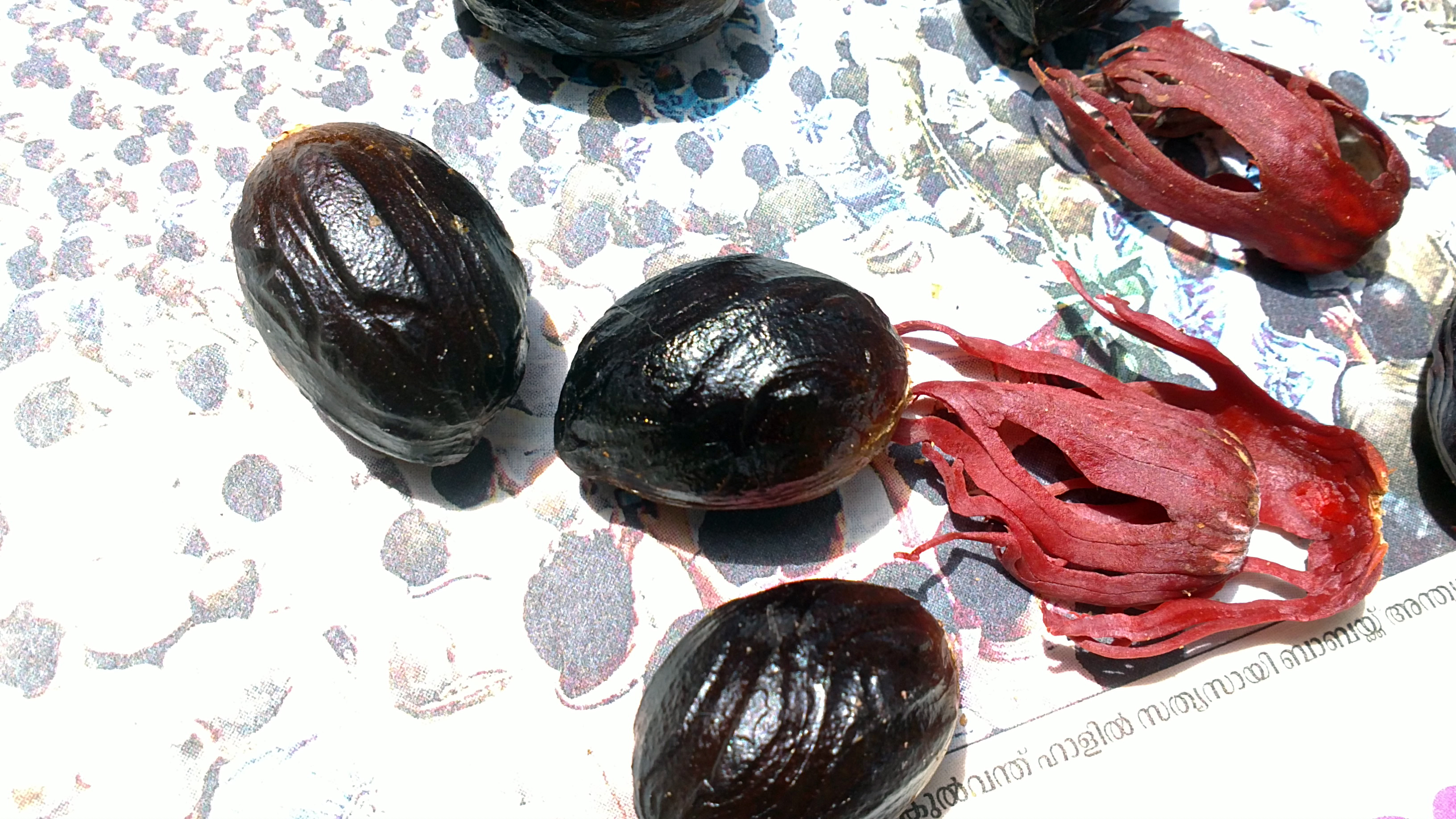
Nutmeg, known locally as jaiphal, is in Banglapedia's words a delicately flavoured spice: the dried ripe seed of Myristica fragrans, an evergreen tree 10 to 20 metres tall that is native to the Molucca Islands of Indonesia and is grown in Indonesia, Malaysia, Sri Lanka and the West Indies. The encyclopedia says it is highly prized for special dishes in Bangladesh such as polao, biryani and tehari. Mace, known in Bengali as joyitri, comes from the same fruit: it is the reddish covering, or aril, around the nutmeg seed. Its flavour is like nutmeg but more delicate; once removed from the seed, it is flattened and dried for 10 to 14 days, turning pale yellow, orange or tan. The recipe uses half a teaspoon of the two ground together.
Cardamom is the seed of plants in the genera Elettaria and Amomum, of the ginger family. Green cardamom has small light-green pods, while black cardamom has larger dark-brown pods; the spice keeps best in the pod, because ground seeds quickly lose their flavour. Cinnamon is the inner bark of trees of the genus Cinnamomum. The species known as Ceylon or true cinnamon, Cinnamomum verum, takes its name from Sri Lanka, but most cinnamon in world trade comes from related species usually called cassia.
Bay leaf, or tejpata, is described in Banglapedia as the dried leaf of Cinnamomum tamala, a small tree of the same family. The encyclopedia calls it one of the most common spices in Bangladeshi cooking, grown commercially on the uplands and hillocks of Sylhet, with grafted plants also grown in orchards and homestead gardens. The recipe uses five or six leaves.
Ginger and garlic, the two pastes in the recipe, are both grown in Bangladesh. Banglapedia describes ginger, Zingiber officinale, as a rain-fed crop of uplands and hill slopes, with Dinajpur, Rangpur, Tangail, Chittagong and Rangamati among the main growing districts, and says the country produces about 49,405 tonnes from about 19,055 hectares. It says garlic is grown all over the country with emphasis on Faridpur, Jessore, Rajshahi, Rangpur, Dinajpur, Pabna, Dhaka and Comilla, putting production at about 90,170 tonnes on 25,593 hectares. The recipe calls for a tablespoon of ginger paste and one and a half teaspoons of garlic paste.
Beresta, ghee and the zarda colour
Beresta is fried onion, and Tasting Table named crispy fried onions as the usual finish of the wedding roast. The Jagonews24 recipe uses onion twice: a teaspoon of beresta paste among the spices, and fried beresta added at the end with the ghee. Banglapedia describes onion, Allium cepa, as a crop grown in all districts of Bangladesh, Faridpur being the largest producer, with an area of about 86,429 hectares and production of about 589,410 tonnes in its entry. The encyclopedia notes that the Bangladesh Agricultural Research Institute (BARI) released a variety called BARI Piaj-1.
Ghee is clarified butter, a cooking fat from the Indian subcontinent. It is usually made by simmering butter, skimming off impurities and keeping the clear fat while discarding the solids that settle at the bottom; it is valued for its nutty flavour and a high smoke point. In Bengal, ghee made from cow's milk, called gaoa ghee, is used with rice or roti or as a finishing drizzle on a curry or dal, which is how the recipe uses its two tablespoons, added in the last minutes of cooking.
The zarda colour takes its name from zarda, the sweet yellow rice served at weddings across the subcontinent. The name comes from the Persian word zard, meaning yellow, because food colouring gives the rice its colour. The recipe rubs the chicken with a little of this colour, a teaspoon in the ingredient list, with salt before frying. Tasting Table noted that many recipes for the dish give the chicken its colour instead with a yellow spice such as turmeric.
Cooking a whole chicken through: what health authorities advise
With a whole bird, the authorities' advice on checking the thickest part of the meat applies in full. The United States Centers for Disease Control and Prevention (CDC), in guidance dated 29 April 2024, says raw chicken can be contaminated with Campylobacter, Salmonella or Clostridium perfringens bacteria, and that eating undercooked chicken, or other foods touched by raw chicken or its juices, can cause food poisoning.
The World Health Organization (WHO) says in its fact sheet on Campylobacter that the bacterium is one of the four key global causes of diarrhoeal disease and the most common bacterial cause of human gastroenteritis in the world. Eating undercooked, contaminated poultry is believed to be a major contributor. Symptoms usually start 2 to 5 days after infection, though the range is 1 to 10 days, and include diarrhoea, often bloody, abdominal pain, fever, headache, nausea and vomiting, usually lasting 3 to 6 days. The illness is generally mild but can be fatal among very young children, the elderly and people with weakened immunity. WHO says the bacteria can be killed by heat and thorough cooking.
The Jagonews24 recipe begins by washing the chicken. The CDC's advice is that raw chicken is ready to cook and does not need to be washed first; it cites a USDA study in which 1 in 7 people who cleaned their sink after washing chicken still had germs in the sink. For those who choose to wash chicken, the CDC says to run the water gently over it to reduce splashing, to clean the sink and the area around it immediately with hot, soapy water and sanitise them, and to wash the hands for 20 seconds.
The CDC also advises washing the hands with soap and water for at least 20 seconds before and after handling raw chicken, using a separate cutting board for raw chicken, never placing cooked food or fresh produce on a plate, board or surface that held raw chicken, and washing boards, utensils, dishes and counters with hot, soapy water after preparing chicken.
For doneness, the CDC says to use a food thermometer to make sure chicken reaches a safe internal temperature of 165 degrees Fahrenheit. Health Canada's chart of safe cooking temperatures, published on 4 June 2024, gives 74 degrees Celsius (165 degrees Fahrenheit) for poultry pieces such as breasts, legs, thighs and wings, and 82 degrees Celsius (180 degrees Fahrenheit) for a whole bird. It advises inserting the thermometer through the thickest part of the meat, all the way to the middle and not touching the bone, and checking each piece separately. The recipe's sign of readiness is the oil rising to the top of the sauce; the authorities' test is the temperature at the centre of the meat.
Leftovers should go into the refrigerator or freezer within 2 hours, the CDC says, or within 1 hour if the food is exposed to temperatures above 90 degrees Fahrenheit. Anyone who falls ill after eating should see a doctor.
Fat and salt in a festive dish
The recipe is rich: four tablespoons of oil, two of ghee, half a cup of coconut milk and a tablespoon of nut paste. The WHO fact sheet on a healthy diet, dated 26 January 2026, names ghee and coconut oil, along with fatty meat, butter, palm oil, cream, cheese and lard, as sources of saturated fat, and says unsaturated fat, found in fish, avocado and nuts and in sunflower, soybean, canola and olive oils, is preferable.
WHO advises that no more than 10 percent of total energy intake should come from saturated fat. Among the ways it lists to reduce saturated fat are steaming or boiling instead of frying, replacing butter, lard and ghee with oils rich in polyunsaturated fat such as soybean, canola, corn, safflower and sunflower oils, and trimming visible fat from meat. For salt, it advises adults to keep intake below 5 grams a day, and it notes that salt added during cooking counts towards that. The recipe leaves the salt to taste.
Anyone with heart disease, high blood pressure, diabetes or another condition that calls for a special diet should ask a doctor or a qualified nutritionist how often and how much of a dish like this suits them.
Chicken in Bangladesh: what the official figures show
Banglapedia's entry on poultry says the domestic chicken probably descends from the red jungle fowl of Southeast Asia and that people probably domesticated it more than 4,000 years ago. It notes that because local chickens produce less meat and fewer eggs, farmers in Bangladesh have turned to poultry farms with improved breeds such as White Leghorn and Rhode Island Red, which are larger and may reach 4 kilograms.
The Department of Livestock Services (DLS), in its "Livestock Economy at a Glance 2024-2025" sheet, built on Bangladesh Bureau of Statistics (BBS) data and marked provisional, put the number of chickens in the country at 3,360.70 lakh in 2024-25, up from 3,277.77 lakh in 2023-24 and 2,683.93 lakh in 2015-16 (a lakh is one hundred thousand). It counted 705.82 lakh ducks, for a total poultry population of 4,066.52 lakh.
The same sheet put meat production of all kinds at 89.54 lakh tonnes in 2024-25, against 92.25 lakh tonnes in 2023-24, and set this against a demand of 77.92 lakh tonnes, worked out at 120 grams a person a day. It gave availability as 137.90 grams a person a day. Egg production stood at 2,440.65 crore. Livestock as a whole contributed 1.81 percent of gross domestic product at constant prices and 16.54 percent of agricultural GDP, and the DLS put the share of people directly employed in the sector at 20 percent and partly employed at 50 percent.
Photo: Afifa Afrin / Wikimedia Commons (CC BY-SA 4.0)
Sources: Jagonews24, Tasting Table, The Daily Star, Centers for Disease Control and Prevention (CDC), World Health Organization (WHO), Health Canada, Department of Livestock Services (DLS), Banglapedia, Wikipedia

Comments
(0)