
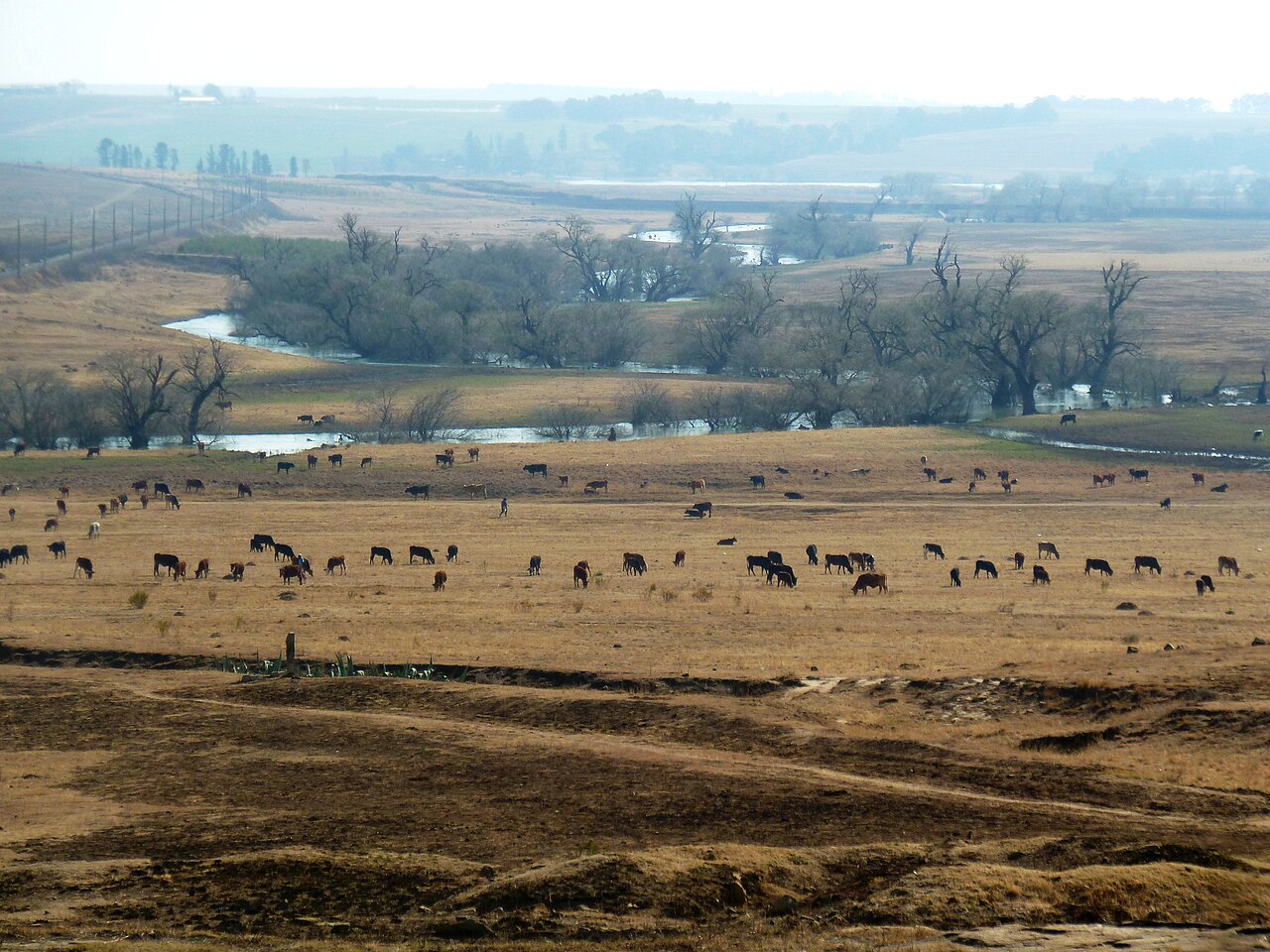
Municipalities in South Africa's Western Cape are answering informal farming with law enforcement instead of support, argues Nobulumko Nkondlo, a member of the provincial legislature who sits on its Portfolio Committee of Agriculture, Economic Development and Tourism, in a column for Food For Mzansi. The views are the writer's own.
Many small-scale and informal farmers cannot get the most basic requirement of farming, land, she writes, so they keep livestock on municipal land, open ground and roadsides. "When does landlessness become a crime?" she asks.
She gives examples from her oversight work. In Witzenberg, on 20 July 2026, more than ten emerging farmers with more than 300 sheep and cattle were given a 14-day notice that animals grazing on municipal land could be impounded, although they had used the land for years. In Thembalethu, near George, farmers have faced impoundments and fines of up to R20,000 when animals are found on roads, enough to wipe out months of income. In 2025 about 900 pigs were culled in Zwelitsha, Bredasdorp, amid concerns about African swine fever, and farmers questioned how the process was handled.
Nkondlo does not argue against by-laws or animal health rules, which she calls important for protecting the sector. Her point is that rules without a way to comply create a cycle: no land, no formal recognition, no support, continued non-compliance and more enforcement.
Her remedy is for municipalities to make land available, identify grazing areas, provide basic infrastructure, set up clear registration and talk to farmers before enforcement reaches a crisis. Townships, she writes, were designed as dormitories for cheap labour, not as productive spaces, and that legacy still shapes where small farmers can work.
Photo: JMK / Wikimedia Commons (CC BY-SA 3.0)
Source: Food for Mzansi

Comments
(0)