
Winter has not yet set in, but migratory birds are already arriving at wetlands across Paschim Medinipur district in West Bengal, from the banks of the Kansai river to lakes at Samat and Dalpatipur, the Kolkata daily Ei Samay reports.
Bird researchers have noted two things this season. One is a strong showing of glossy ibis. Researcher Ospita Patra said about 20 to 22 were seen at Garhpratapnagar near Ghatal, six at Samat and two at Dalpatipur. The species was first recorded in the district in 1878 by an Irish bird enthusiast, Valentine Bell.
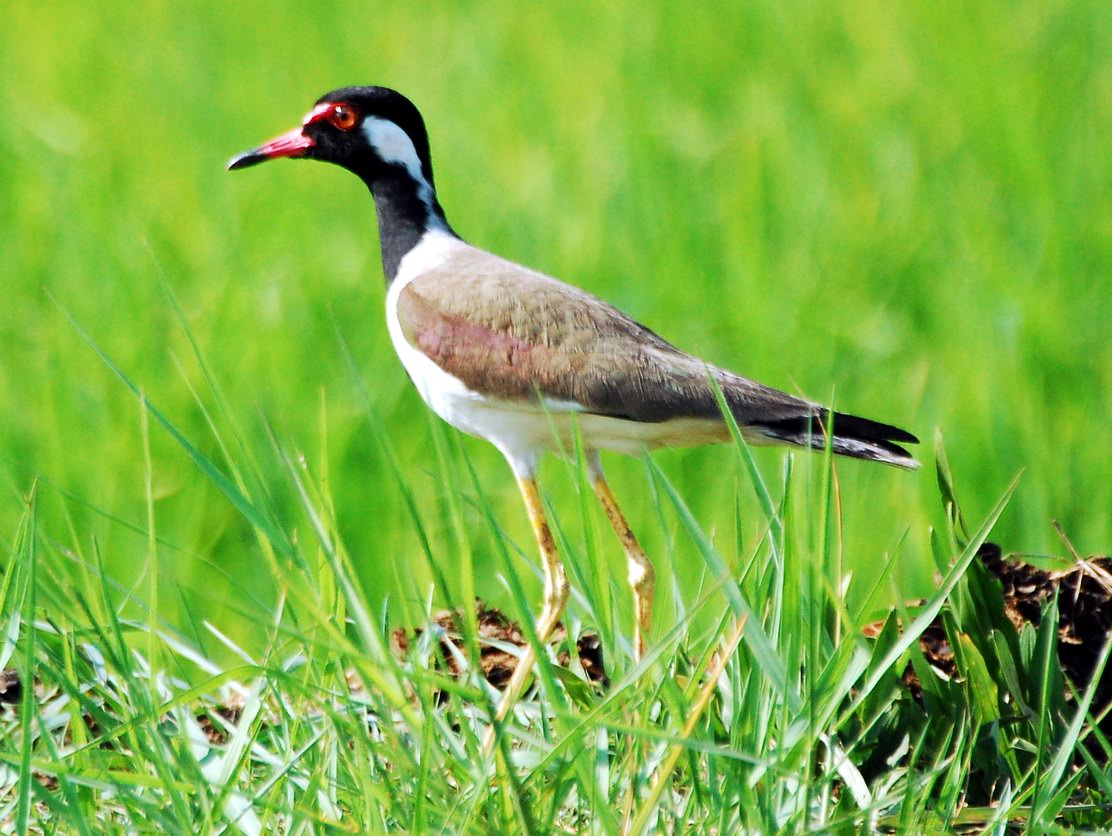
The other is three lapwing species seen together: the grey-headed lapwing, the yellow-wattled lapwing and the red-wattled lapwing, all photographed in one frame at a bend of the Kansai near Kankabati in Medinipur Sadar block.
Other birds on the wetlands include whistling ducks, golden plovers, snipes, white wagtails, green and common sandpipers and wood sandpipers, with orange-headed thrushes in the bamboo groves. Birdwatchers say this shows several of the district's wetlands are still in good health.
Suman Pratihar, a professor at Keshpur College who works on bird counts with the West Bengal Biodiversity Board, cautioned that many wetlands have been destroyed, so migrants no longer come everywhere and many flocks are seeking out new sites. Birdwatchers expect numbers to grow as winter deepens.
This report is based on Ei Samay correspondent Debarghya Bhattacharya's story.
Photo: a red-wattled lapwing (illustrative), Challiyan / Wikimedia Commons (CC BY-SA 2.5)
Source: Ei Samay

Comments
(0)