
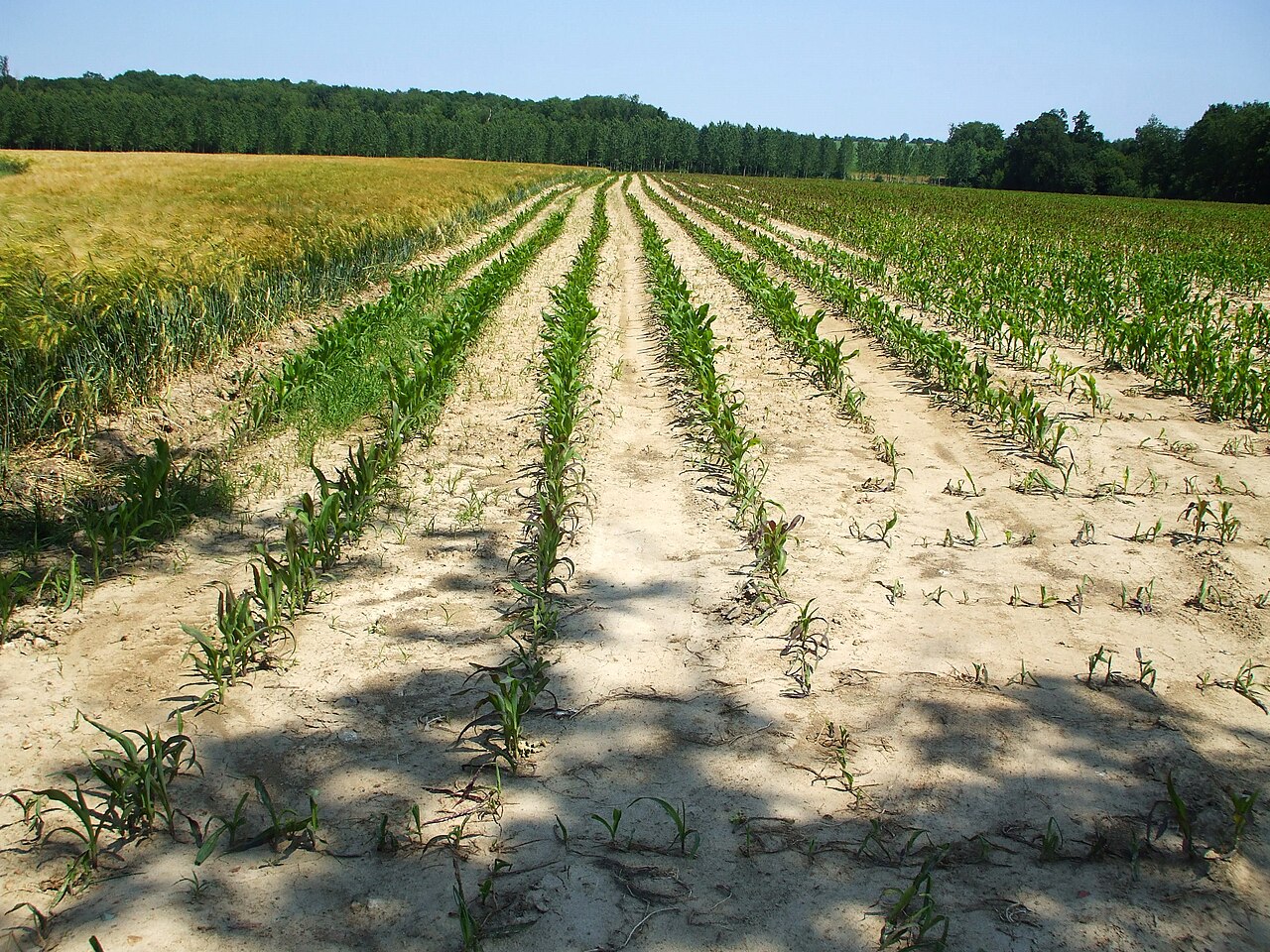
Much of the research behind claims that maize and wheat can be grown with far less water does not stand up, according to a meta-study by Wageningen University & Research. Of 208 field experiments examined, the oldest from 1983, only 10% contained enough data to assess the crops' water productivity properly.
Water productivity, the yield a crop produces per unit of water evaporated, became a focus around the turn of the century, and differences in measured values led to claims that agriculture could save 20 to 40% of its water. The Wageningen team checked whether each study reported biomass, whether the link between biomass and crop transpiration could be verified, and whether the water balance was measured accurately.
The results were stark: 160 of the 208 studies (77%) reported no biomass data, and 27 more used a simplified water balance that did not properly account for net rainfall or irrigation. Only 21 studies, 11 on maize and 10 on wheat, were left with reliable data. Within those, water productivity varied much less than previously assumed, suggesting that much of the reported variation came from inaccurate experiments rather than real differences between crops.
The finding echoes a relationship shown by Wageningen researcher C.T. de Wit in 1958: crop growth rises in a straight line with the water a crop evaporates. That link can be nudged, the researchers say, by good nutrient supply, better ground cover that limits evaporation from soil, and how water stress is managed, but the scope is limited. "Producing more food will therefore also require more water," said lead author Gerardo van Halsema, calling it an important if not encouraging insight for water resources.
The team proposes stricter, uniform standards for field experiments and publications, especially more accurate measurement of biomass and crop transpiration in rain-fed and irrigated farming, so future studies can be checked and compared and the real room for water savings in maize and wheat can be judged.
Photo: Isl@m (maize field hit by drought, Haute-Marne, France) / Wikimedia Commons (CC BY-SA 3.0)
Source: Wageningen University & Research

Comments
(0)