
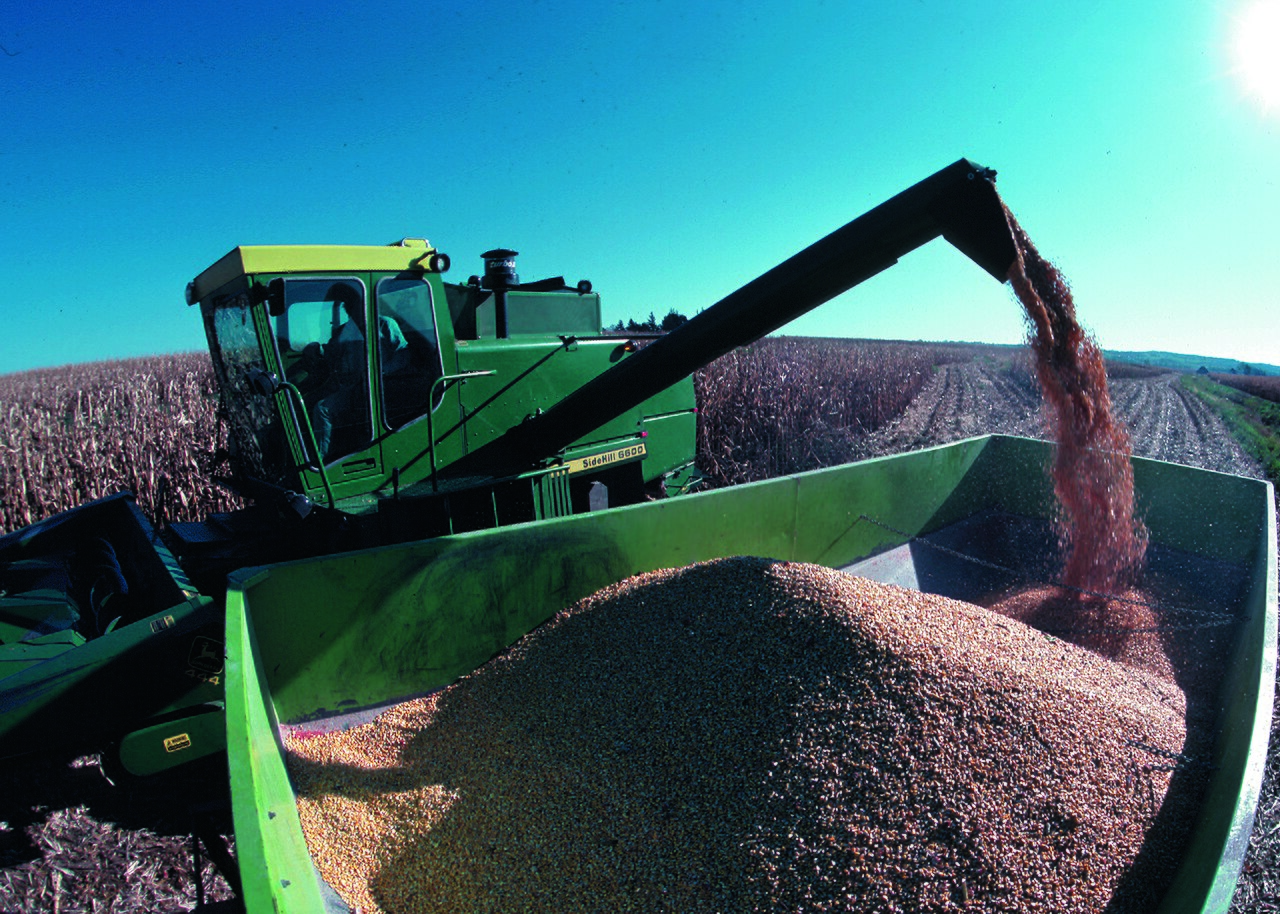
The US Department of Agriculture's October crop estimates raised the corn yield where traders had expected a cut, and December corn futures fell about 20 cents on the day to settle near $4.80 a bushel, an eight-week low and roughly 13 percent below the three-year high touched in early September, Global Agriculture reports.
The higher yield added about 234 million bushels to US corn production, taking it to just over 16 billion bushels: about 5.5 percent below 2025's record harvest, but still the second-largest crop on record. Ending stocks for 2026-27 were raised by 282 million bushels to 1.849 billion bushels, well above the roughly 1.67 billion analysts expected, and the stocks-to-use ratio rose to 11.3 percent from 9.7 percent in September.
USDA also put the soybean yield at a record 53.1 bushels an acre, up from 52.8 in September. November soybean futures first fell to a six-week low, then closed modestly higher. Domestic crush held at 2.78 billion bushels, a record for the sixth year running. For wheat, US ending stocks were raised to 740 million bushels while world stocks edged lower.
The survey behind the report covered about 8,300 producers between 24 September and 5 October, during a slow harvest. Corn was 23 percent harvested nationally on 4 October against a five-year average of 27 percent, and soybeans 25 percent against 33. Iowa's corn harvest was only 7 percent done, but its yield estimate held at 219 bushels an acre, against 210 last year; Nebraska's rose 11 bushels to 188 and South Dakota's 6 bushels to 151.
Brady Huck, principal and adviser at Empower Ag Trading, said the yield assessment was the reverse of what most traders had positioned for, and that the lower prices could draw renewed buying from China and Mexico, two of the largest buyers of US corn and soybeans.
Photo: Tim McCabe, USDA Natural Resources Conservation Service / Wikimedia Commons (public domain)
Source: Global Agriculture




Comments
(0)