
The US Department of Agriculture has awarded $1.8 million for research on expanding alternative crops, through the Supplemental and Alternative Crops competitive grant program run by its National Institute of Food and Agriculture (NIFA). The fiscal 2026 money goes to four projects.
The projects are led by Kansas State University, New West Genetics Inc., Pennsylvania State University and Texas A&M University. The program backs crops used for food, livestock feed, oils and industrial products, and the work may be done in conventional farming, organic production or a mix of the two.
Because growing conditions differ from one part of the country to another, researchers are trying to work out which crops can succeed in which regions and to develop production systems and management practices that suit local conditions. They will look at crop performance, market opportunities and ways of fitting new crops into operations already running.
The program covers both research and Extension, tying university scientists, industry partners and agricultural professionals to farmers looking for practical answers. One of its stated goals is to get useful information and new technologies to growers faster, so they can decide with better evidence whether to add a crop.
Farmers are dealing with shifting market demands, weather problems and production costs, and alternative crops offer a way to diversify and to reach new markets. USDA says the funding can strengthen domestic agriculture and increase the supply of food, feed and renewable materials. Results will reach farmers as the projects report them.
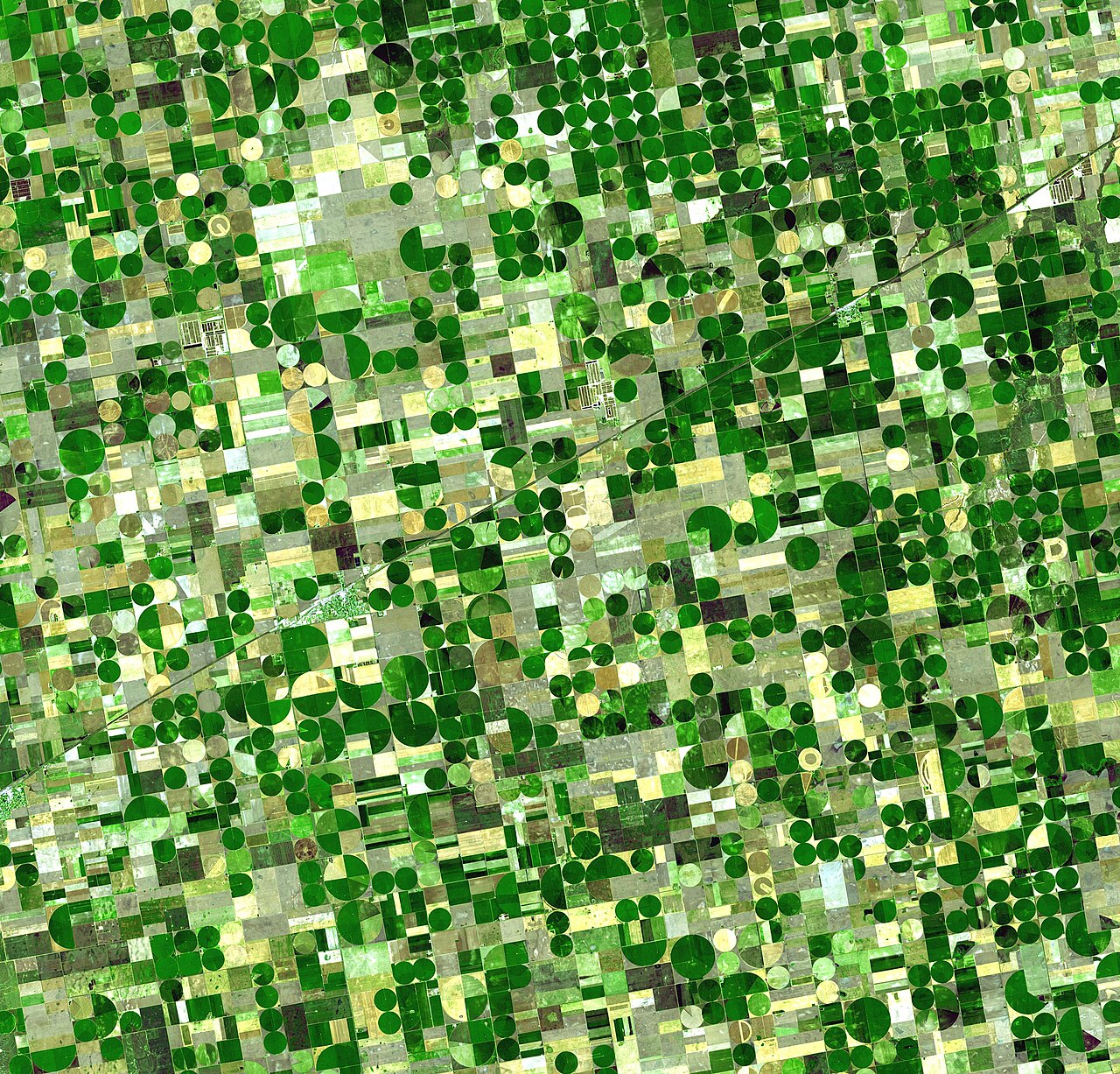
Photo: NASA / Wikimedia Commons (public domain), a satellite view of crop fields in Kansas, 2001
Source: Farms.com

Comments
(0)