
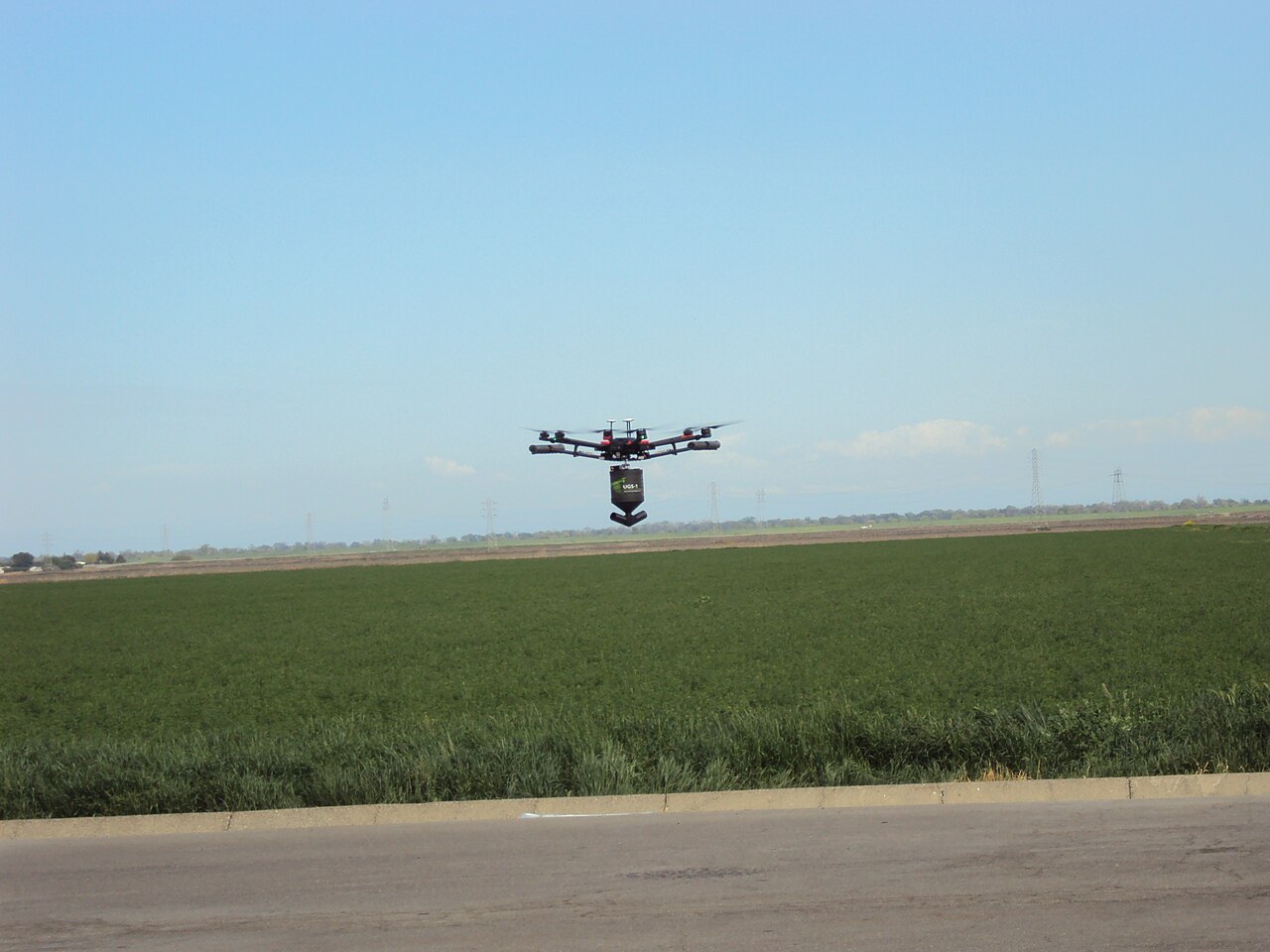
The US market for agricultural spray drones, the small aircraft that spray pesticides and spread seed over fields, is "very much in flux", according to the American Spray Drone Coalition (ASDC), as federal restrictions on foreign-made drones squeeze supply before American manufacturers can fill the gap.
Sales of new spray drones in the US fell by 60% in 2025, from 8,950 units in 2024 to 3,711, said ASDC president Eric Ringer. He put the drop down to US Customs and Border Protection periodically blocking shipments from the Chinese maker DJI over forced-labour allegations, which DJI calls "categorically false". "That was not because of a lack of demand. That was because of a lack of supply," Ringer told AgFunderNews.
The pressure is building. About ten months ago the Federal Communications Commission (FCC) banned sales of new models of foreign-made drones and critical components. A further FCC proposal in July targets "military-grade" foreign drones, but its definition covers drones over 55 lbs, those with LiDAR or thermal imaging, and aerosol drones that dispense pesticides. DJI said in its comments that this describes every agricultural drone that can spray pesticides or spread seed.
US-built alternatives are coming but cost more: US-sourced batteries and motors are "orders of magnitude more expensive" than Chinese parts, Ringer said. Firms building or assembling spray drones in the US include Exedy Drones in Michigan, Revolution Drones, founded by North Carolina farmer Russell Hedrick, Texas-based Hylio, Agri Spray Drones in Missouri and Ceres Air in Vermont.
The ASDC has asked the FCC to exclude FAA Part 137 agricultural spray drones from the proposal and allow a multi-year transition. Its survey found 49% of agricultural operators unwilling to pay a premium for US-made hardware, so it proposes using tariff revenue from foreign drone imports for buyer rebates on compliant US technology.
Use is still growing even as sales fall: registrations of spray drones rose 45.6% in 2025 and the area sprayed rose 58.7% to 16.4 million acres. DJI's share of registrations fell from 83.8% in 2023 to 52.4% in 2025 as XAG, EAVision and Talos gained ground. Ringer warned that drone adoption in Brazilian agriculture is now outpacing the US.
Photo: R6, State & Private Forestry, Forest Health Protection / Wikimedia Commons (public domain)
Source: AgFunderNews (reporting by Elaine Watson)

Comments
(0)