
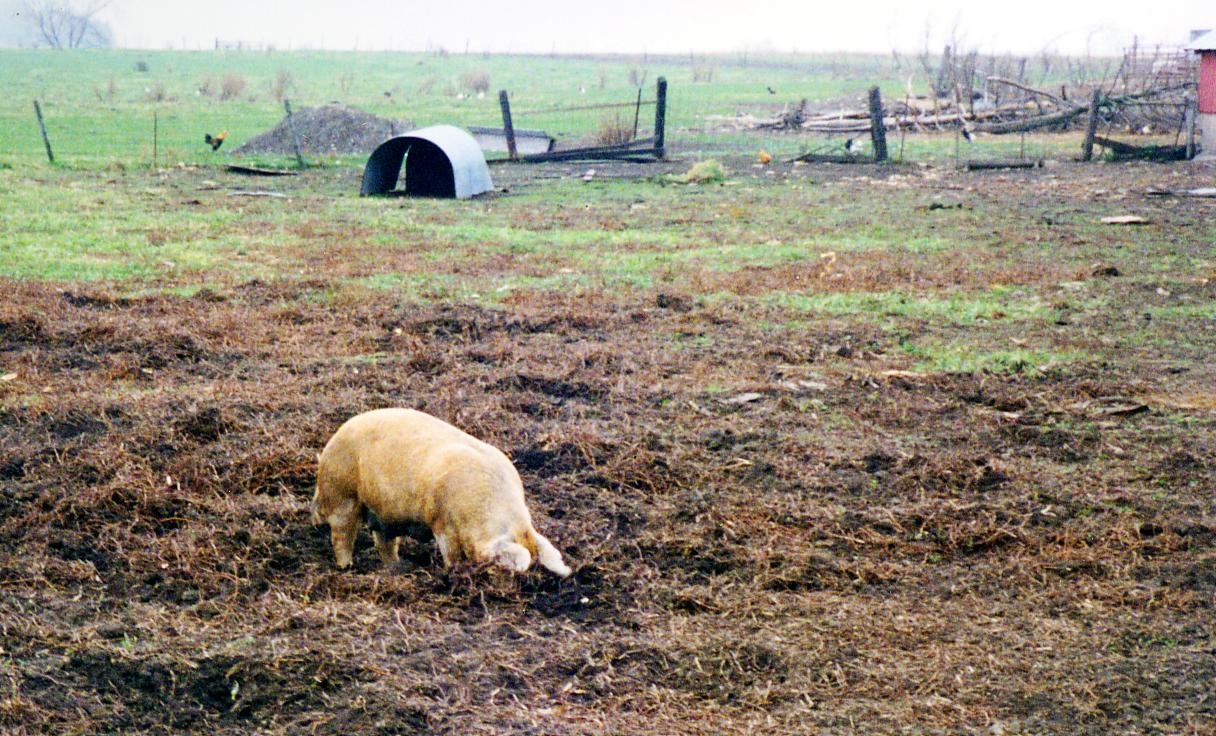
The US hog market is sending mixed signals: supplies are tightening as farmers resist expansion, yet falling futures suggest pork demand may be weakening faster than supplies are shrinking, American Farm Bureau Federation economist Bernt Nelson writes in a Market Intel analysis.
USDA's September Hogs and Pigs report put the 1 September inventory at 74.3 million head, about 2 percent below a year earlier. The breeding herd, at 5.87 million head, is down 1 percent and the smallest since 2013, and the June-August pig crop of 34.5 million was down about 1.5 percent. Nelson says the data show neither expansion nor the broad liquidation that usually cuts supply.
Heavier animals explain why supplies stay ample. August federally inspected slaughter fell 2.1 percent to about 9.9 million head, but average dressed weight rose about 3 pounds to 212 pounds, so pork output fell less than 1 percent, and USDA expects 2026 production of 27.77 billion pounds, nearly 1 percent above 2025. Cold storage stocks of pork are up 12 percent.
Exports, about 30 percent of US pork production, are softening. USDA cut its export forecasts to 7.11 billion pounds for 2026 and 7.19 billion for 2027. July shipments to Mexico, which takes roughly 40 percent of US pork exports, fell 2 percent as Mexican output grows, and exports to South Korea fell nearly 30 percent as Spain and other European suppliers gained share. Hams made up nearly 14 percent of August export loads, more than double a year earlier, as exporters moved cheaper cuts.
Prices reflect it: August live hogs averaged $69.43 per hundredweight, nearly 11 percent below a year earlier, and the wholesale cutout $98.83, down more than 14 percent, with hams and bellies sharply lower. USDA projects hog prices near $65 in 2026 and $64 in 2027, leaving many farmers near break-even, while the University of Illinois farmdoc team estimates swine feed costs could rise nearly 10 percent in 2027. With feed making up 70 to 75 percent of operating costs, Nelson warns that falling hog prices and rising feed costs together could quickly trigger herd liquidation.
Photo: Phillip Capper / Wikimedia Commons (CC BY 2.0)
Source: American Farm Bureau Federation

Comments
(0)