
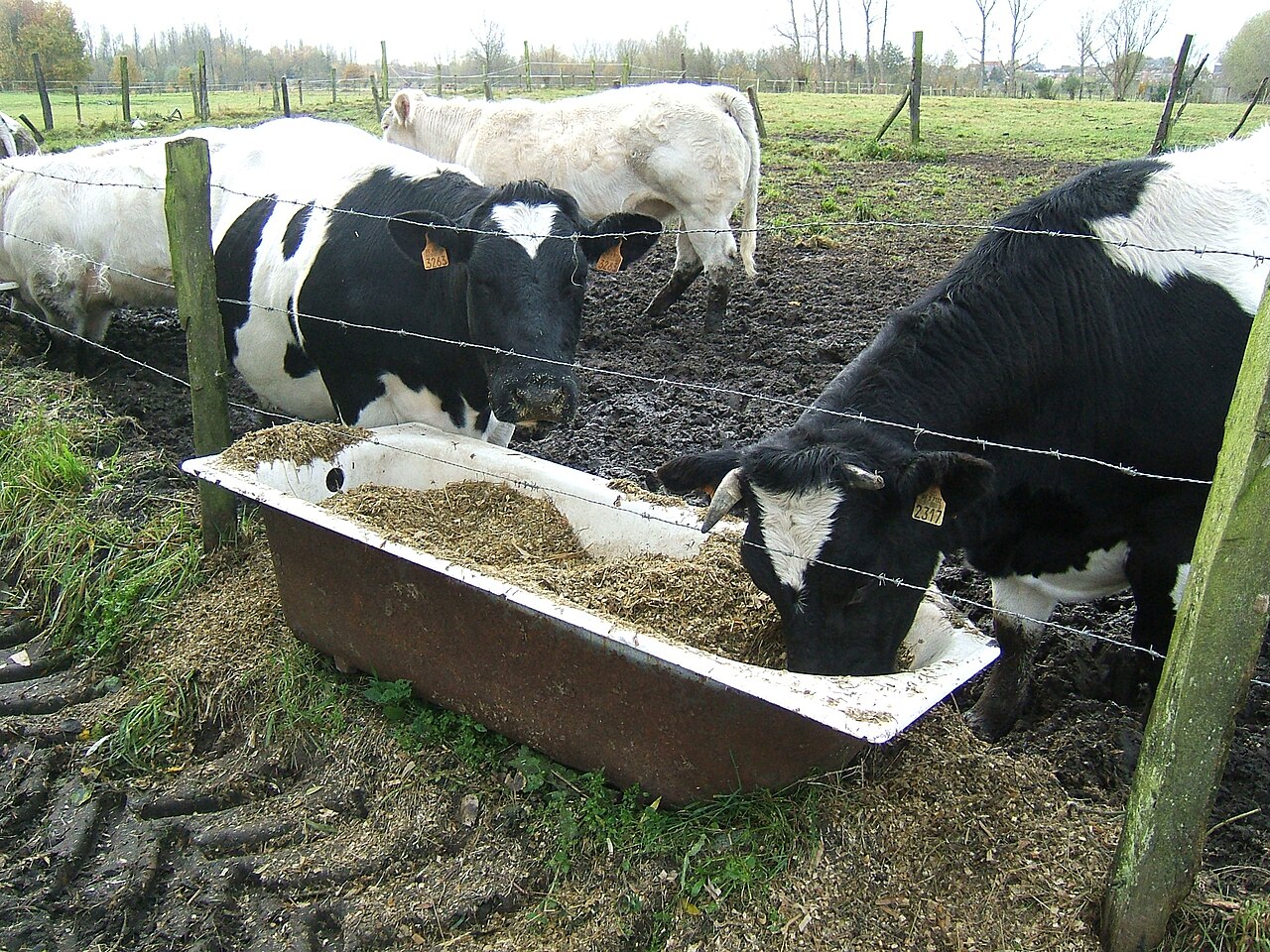
Roasted soybeans can fill the protein gap in corn silage diets for growing cattle, a University of Nebraska-Lincoln trial suggests, giving producers an alternative when distillers grains are scarce or dear, Farms.com reports.
Corn silage is a common base for growing-cattle rations but typically holds only 6.5 to 8.5 percent crude protein, said Erin Laborie, a Nebraska Extension educator. Most of it is rumen degradable protein (RDP), which rumen microbes break down; only about 16 percent is rumen undegradable protein (RUP), which passes to the small intestine and, with microbial protein, makes up the metabolizable protein cattle need for growth. Too little, and growth is held back.
Distillers grains are the usual fix because about 63 percent of their crude protein is RUP, but their price and supply vary. Soybeans carry about 40 percent crude protein plus fat; raw soybeans have relatively little RUP, about 20 percent of their protein, while roasting can raise that share to 50 percent or more.
The researchers fed growing heifers silage-based diets for 84 days with raw whole soybeans, roasted soybeans or modified distillers grains, each at 7, 14 and 21 percent of diet dry matter.
Heifers on modified distillers grains ate the most and gained the most weight, but those fed roasted soybeans converted feed most efficiently. Across all three protein sources, the 21 percent inclusion rate generally gave greater gains and better feed conversion than 14 percent.
The results show soybeans can supply both protein and fat in growing-cattle diets, the researchers say. Roasted soybeans may have the edge because of their higher RUP, but raw whole soybeans can also be considered when their price and availability make them competitive with distillers grains.
Photo: Peter Van den Bossche / Wikimedia Commons (CC BY-SA 2.0)
Source: Farms.com
Comments
(0)