
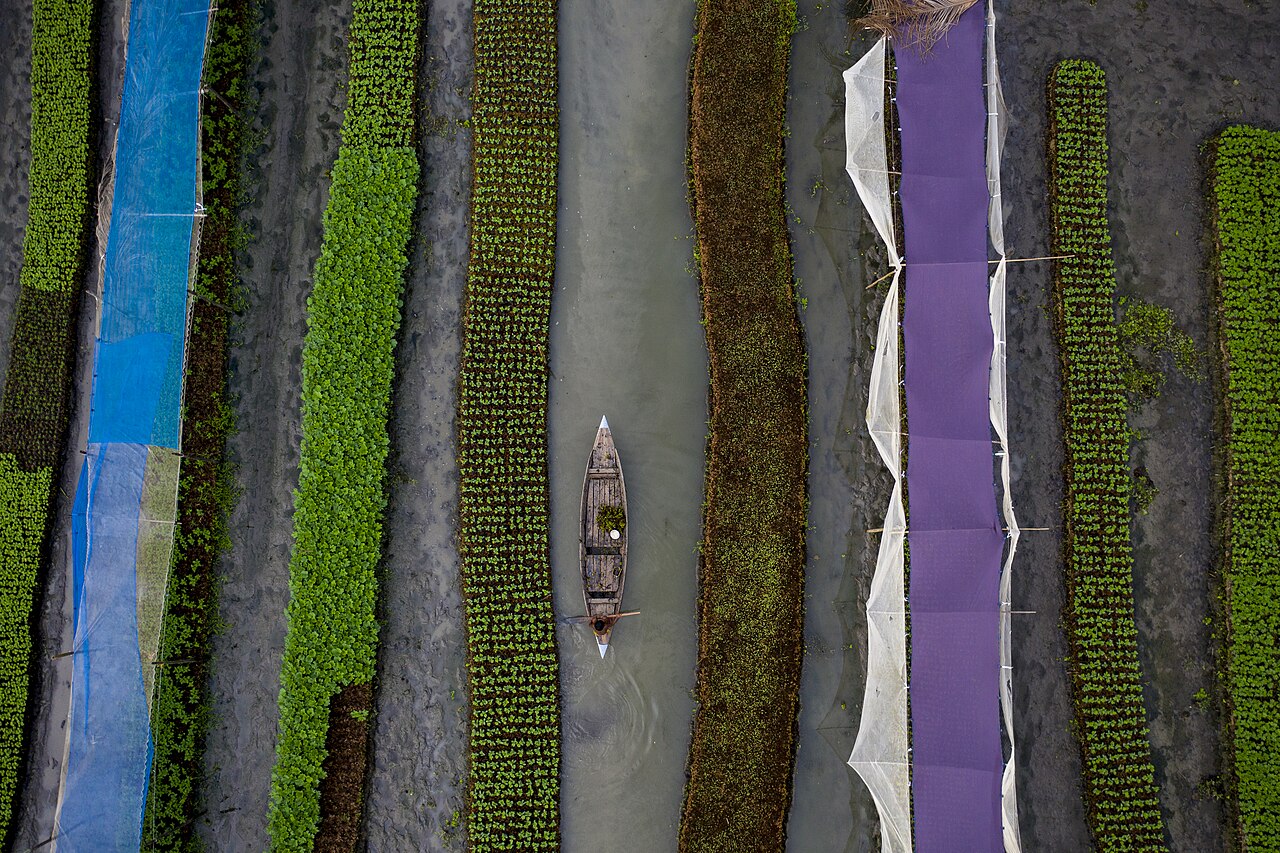
In the wide wetlands of Bangladesh's south, farmers raise vegetable seedlings on floating beds made of water hyacinth and duckweed. The method, known locally as dhap farming, has been practised for about 150 years; the work follows the rise and fall of the tide, and many farmers live on selling the seedlings.
Thirteen pictures by Prothom Alo photographer Saiyan follow the whole cycle. It begins with a boat piled with duckweed for building the beds, and sellers taking duckweed to market.
Farmers then prepare the beds in the wetland. Once the doula are made, they are carried off for sowing, and vegetable seed is sown on the beds. Young seedlings are lifted into baskets and planted out, and a worker spreads duckweed over the growing seedlings.
Among the floating beds, each person is busy with a task from a boat. Finished seedlings are carried in baskets on people's heads and loaded into boats for sale.
The last pictures are of the trade: farmers and traders bargaining, a trader buying seedlings from a grower, and traders setting off with their load in an engine boat.
Prothom Alo's photographs are not reproduced here; the picture shown is a general view of a traditional floating vegetable garden in Bangladesh.
Photo: Azimronnie / Wikimedia Commons (CC BY-SA 4.0)
Source: Prothom Alo

Comments
(0)