
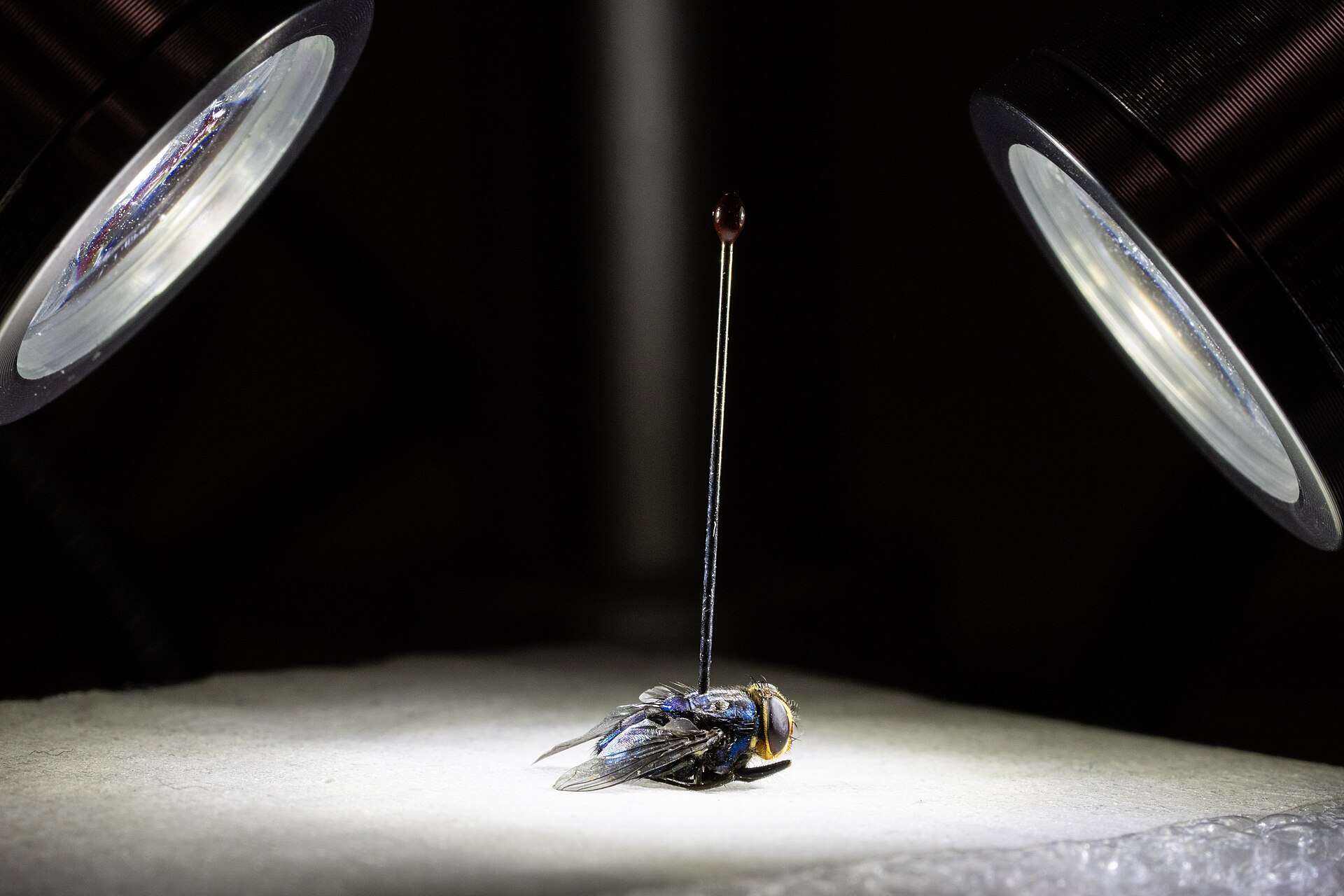
New World screwworm, the flesh-eating fly that has returned to the southern United States, may soon be fought with flies sterilised by electricity instead of radioactive cobalt-60, and found by traps that use artificial intelligence to tell one fly from another. Texas A&M AgriLife Research said on 11 November 2026 that an electron beam, or eBeam, sterilised screwworm pupae in early tests without harming their ability to fly. A day later, the University of Texas at Arlington (UTA) gave an update on its project, funded by the US Department of Agriculture (USDA) and first announced in August, to build an AI "smart trap" that keeps wild female flies and lets sterile ones go.
The two announcements came as the pest kept spreading. On 13 November, Arizona identified its seventh case, in a horse near Tucson, according to the public radio station KJZZ. UTA, citing USDA's case dashboard, put the national count at more than 120 confirmed animal cases as of 12 November, most of them in Texas; Texas Public Radio's tracker, also citing USDA, gave 128 for the same day. Neither new tool is in use yet. The eBeam finding comes from a university announcement, not a peer-reviewed paper, and the smart trap is not expected to exist as a prototype before next spring.
Still, both target the weak points of the method that defeated the screwworm once before: the supply of sterile flies, and the speed at which officials learn where wild flies are. Here is what the scientists say they have shown, and what it means for livestock farmers from Mexico to South Asia.
Why the New World screwworm is so feared by cattle farmers
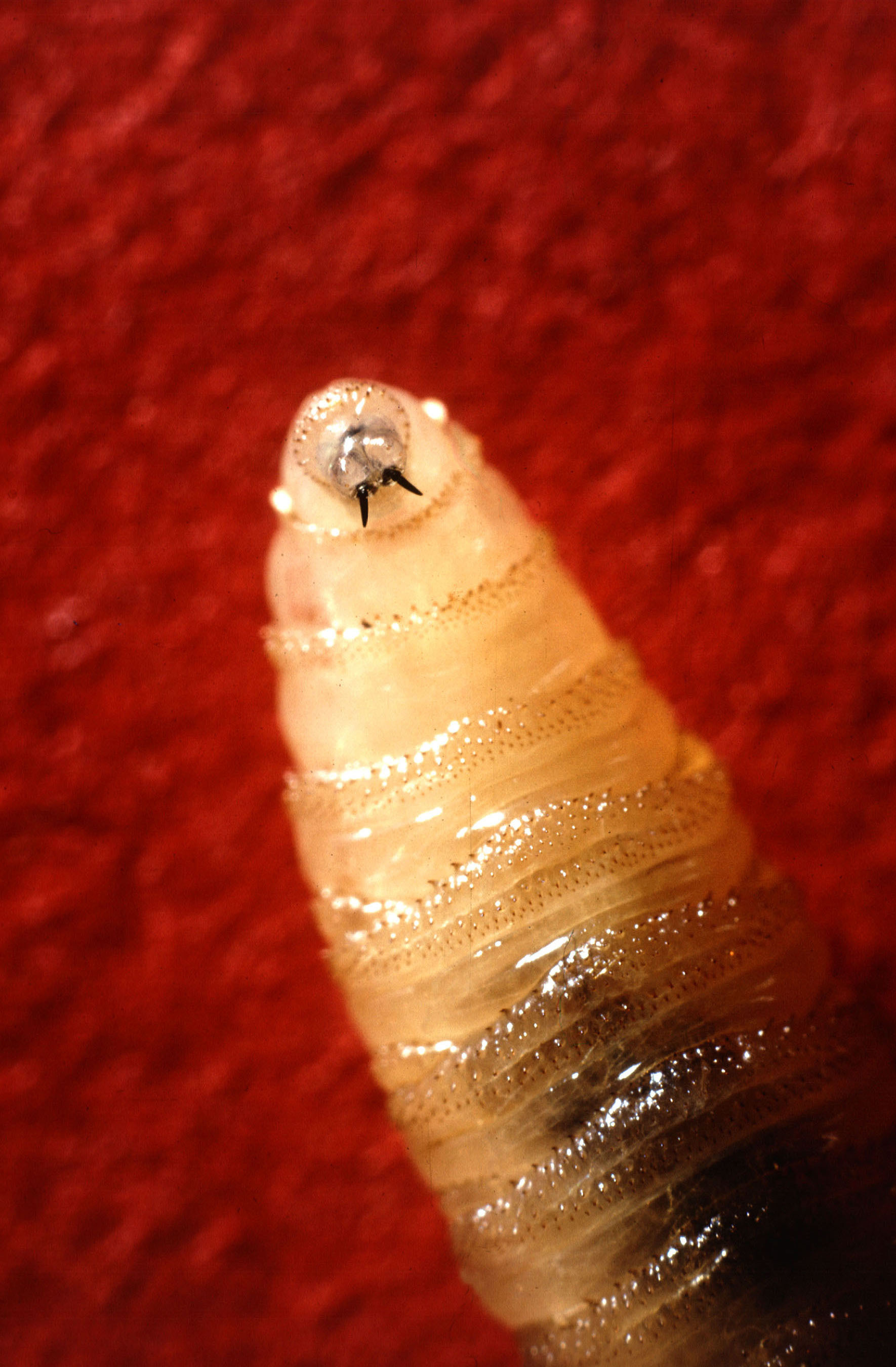
The New World screwworm, Cochliomyia hominivorax, is a blowfly whose larvae feed on the living tissue of warm-blooded animals. A female lays her eggs in an open wound or a moist body opening, such as the navel of a newborn calf. The maggots that hatch burrow into the flesh, and the wound attracts more flies. USDA says an untreated infestation can kill an animal within ten days. Cattle, horses, sheep, goats, dogs, deer and, rarely, people can be infested. USDA describes the current risk to people in the United States as very low and says the pest is not a food safety issue.
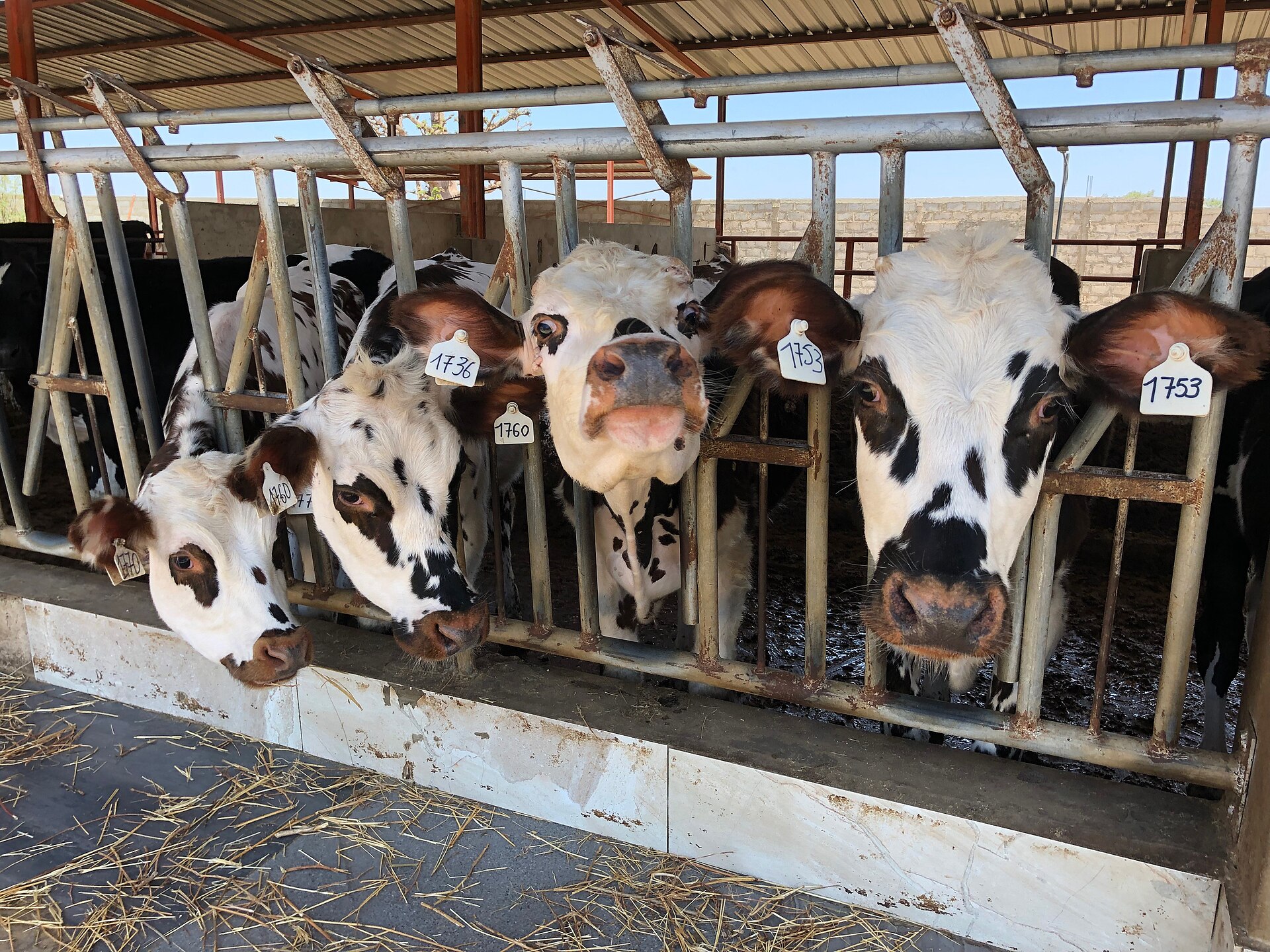
The money at stake is large. Economists at Texas A&M AgriLife Extension estimate that a large outbreak in Texas could cost the state's cattle industry about $2.1 billion.
The first Arizona case was confirmed by USDA's Animal and Plant Health Inspection Service (APHIS) on 28 October, in a dog in Cochise County. By mid-November, local reports gave counts of five, six and then seven cases as new detections were confirmed.
How the sterile insect technique beat screwworm in the 1950s and 1960s
The weapon against the screwworm is not a pesticide but a fly. In the sterile insect technique, millions of flies are reared in a factory, sterilised as pupae and released from aircraft or ground stations. The sterile males mate with wild females, whose eggs then do not hatch. Because a female screwworm mates only once in her life, every sterile mating removes a whole brood. Released week after week in large enough numbers, the sterile flies drive the wild population down until it disappears.
The idea is credited to the USDA entomologist Edward F. Knipling. USDA first used the technique against screwworm in 1957, and the pest was declared eliminated from the United States in 1966. Mass releases then pushed the fly south through Mexico and Central America to a permanent barrier in Panama, where a jointly run plant still breeds sterile flies to stop the pest coming back north.
The method also worked far from the Americas. When the New World screwworm turned up in north-western Libya in 1988, the Food and Agriculture Organization of the United Nations (FAO) and the International Atomic Energy Agency (IAEA) organised a campaign that released sterile flies from 1990. Cases fell sharply in early 1991. A 1996 study in the Journal of Medical Entomology by E. S. Krafsur and D. A. Lindquist, which weighed the role of winter weather, concluded that the sterile fly releases substantially reduced cases before eradication was declared in October 1991; some later accounts date the formal declaration to 1992.
The weakness of the method is supply. The fly has moved north again through Central America and into Mexico, and the plant in Panama, which APHIS says produces about 100 million sterile flies a week, cannot cover the whole front. Experts quoted by Reuters in July said about 500 million a week are needed. Every part of the chain, from rearing to sterilising to finding where wild flies remain, is now being re-examined.
Texas A&M's eBeam result: sterilising screwworm flies without cobalt-60
Sterile flies for screwworm programmes have traditionally been made by exposing pupae to gamma rays from radioactive isotopes such as cobalt-60. The isotope does the job, but it brings costs: radioactive sources must be guarded, shipped and licensed, and they decay over time.
An electron beam does the same work with electricity. A machine called an accelerator speeds up electrons and aims them at the product, and the beam can be switched off when it is not needed. In its release of 11 November, written by Adam Russell, Texas A&M AgriLife said eBeam needs no radioactive material, which reduces safety, security, cost and logistical burdens. It also said eBeam can complete sterilisation in seconds, where cobalt-60 takes minutes, and that beam strength and exposure time can be tuned for each use.
The team at the National Center for Electron Beam Research (NCEBR) at Texas A&M, led by its director Suresh Pillai, handled dosing and logistics. Aaron Tarone's group in the Department of Entomology checked whether treated flies could still reproduce, fly and complete their life cycle. The researchers tested a range of doses on New World screwworm pupae over several rounds, after earlier work on a close relative, the secondary screwworm Cochliomyia macellaria. According to the university, sterility was the only effect they saw: the treated flies could still fly and complete their life cycles. Pillai said further testing will refine the dosing.
"We've demonstrated that eBeam can do what cobalt-60 does against the New World screwworm," Pillai said in the release.
The work is part of USDA's New World Screwworm Grand Challenge. When USDA announced the first awards on 16 June 2026, about $105 million for 40 projects chosen from 226 applications seeking some $664 million, it described the Texas A&M eBeam study as separate work that had already begun. As part of one funded project, the university says, the NCEBR will help two companies build prototype eBeam platforms for wider use in sterile fly programmes.
Readers should weigh the claim for what it is. No paper or dose data has been published, so the result has not been checked by independent scientists. Sterility and flight in a laboratory are the first tests; whether eBeam-treated males compete as well as gamma-treated males for wild females in the field, and whether a beam line can handle factory volumes, are the questions that decide whether the method changes anything.

UT Arlington's AI smart trap tells wild screwworm flies from sterile ones
Finding the flies is the other half of the problem. Today's screwworm traps catch every insect that the bait attracts. Staff must then sort the catch by hand, which delays confirmation that the pest is present. The traps also catch the sterile flies that the government is releasing, which UTA says can interfere with the release programme because a conventional trap cannot tell them apart.
The UTA project, led by its Smart Agriculture Research Center (SARC), aims to change that. Its smart trap is designed to distinguish wild screwworm flies from sterile ones, and females from males. It keeps the wild females, which lay the eggs, and releases sterile flies and other insects back into the environment. Traps would be linked in a network that sends real-time alerts, tracks locations and feeds predictive risk maps to APHIS.
"This project moves screwworm surveillance beyond today's 'collect first, sort later' trapping methods to AI-driven precision capture," said Shouyi Wang, the UTA associate professor whose earlier work on AI fruit fly traps underpins the design. He expects a prototype by next spring.
The project also covers the animals. Prasanna Gowda, research professor and associate director of SARC, said its AI diagnostic tools would let producers and veterinarians identify infestations faster and report them directly to the surveillance system with high-resolution pictures taken on smartphones.
UTA's grant was one of the 40 projects in USDA's roughly $105 million round. Its release of 12 November puts the project at $3.1 million; its first announcement, on 4 August, said more than $4.5 million. The work runs until June 2028, with fieldwork in several US states, including Texas, and in affected regions of Mexico. UTA says the goal is to hand APHIS a complete, field-tested system for nationwide surveillance. "Every earlier detection gives producers, veterinarians and animal health officials more time to act," Wang said.
A sterile fly supply chain stretched from Panama to Texas
The new tools would join a supply chain that has grown quickly in 2026. According to APHIS, sterile flies are produced at the plant run with Panama in Pacora, at about 100 million a week, and at a converted fruit fly facility in Metapa, in Mexico's Chiapas state, which was completed in late June and can produce 100 million a week at full capacity. A third production plant at Moore Air Base in Edinburg, southern Texas, is under construction. USDA expects it to start producing in 2027 at 100 million sterile flies a week and to reach about 300 million at full capacity; published targets for finishing construction have ranged from April to November 2027. APHIS says total production will approach about 500 million sterile flies a week once current investments are complete.
Sterile pupae are shipped chilled to dispersal centres, where they are dyed and hatched before release. APHIS lists dispersal facilities at Moore Air Base in Edinburg, Texas, able to handle up to 100 million flies a week, and in Tampico, Hermosillo and Tuxtla Gutiérrez in Mexico. On a single flight on 2 July 2026, according to a USDA photo record, a twin turboprop spread about two million flies over zones along the Texas border, flying GPS-guided grids at about 6,500 feet. On 10 November USDA began hiring 228 people for the Edinburg production plant, with a hiring event in McAllen, Texas, from 17 to 19 November.
In this chain, eBeam would change the sterilisation step at the production plants, and the smart trap would tell officials where to send flights first.
Genetically engineered male-only screwworm flies are still being tested
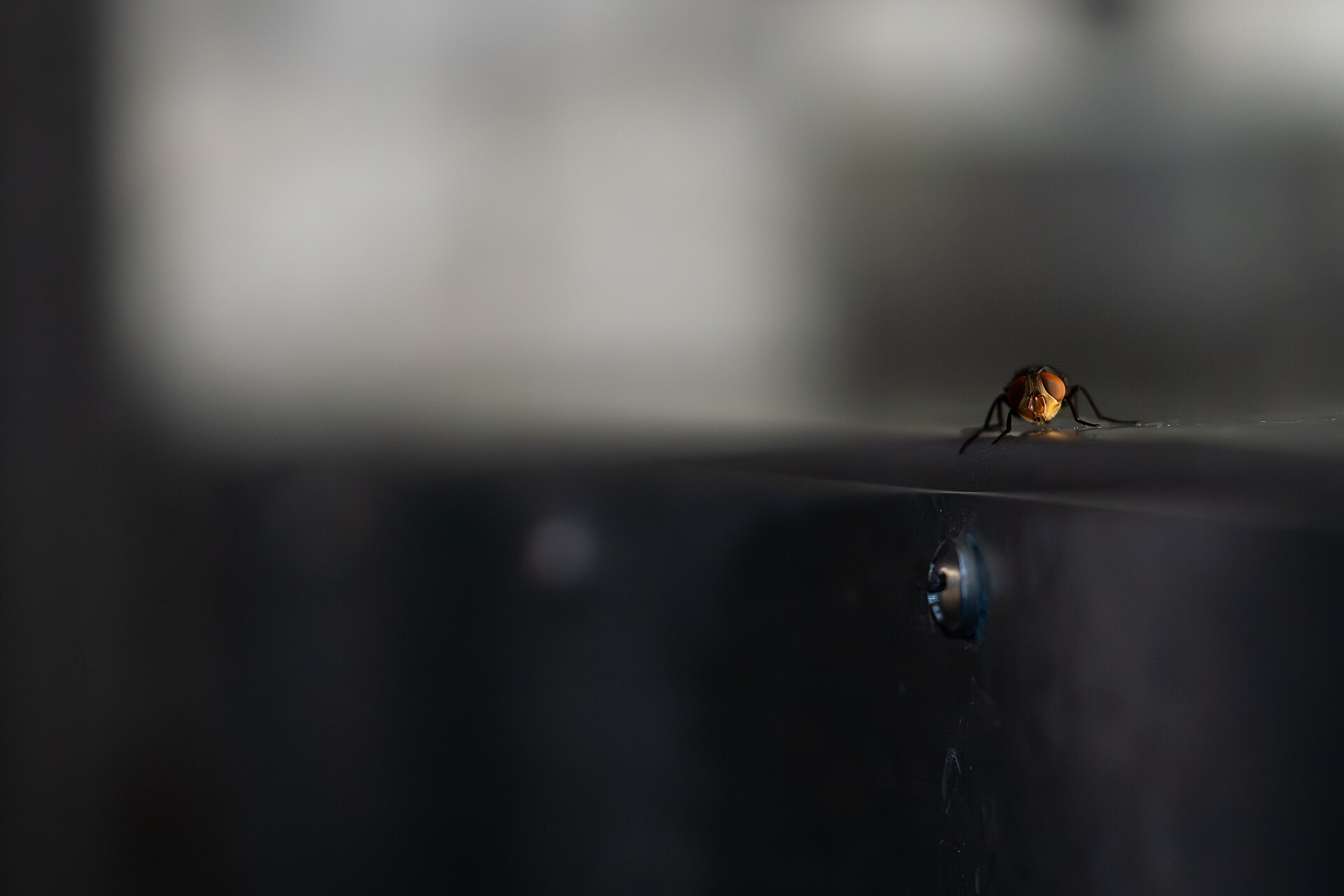
A third technology is further along the regulatory road. Reuters reported in July that USDA was preparing outdoor tests in Panama of NovoFly, a genetically engineered screwworm strain designed to produce only males, developed with input from Maxwell Scott, an entomologist at North Carolina State University. The flies would still be irradiated before release. Scott Hutchins, USDA's chief scientist, told Reuters it would "almost instantaneously double the number of sterile flies that we put in the fight". The US Environmental Protection Agency published a proposed decision to register the strain in June. Scott himself warned that the engineered flies might not fly well in the field. We have not found a public report of the field trial results.
What the screwworm fight means for Latin America, Africa and South Asia
The Americas outside the United States carry most of the burden. The fly is established in parts of South America and has spread north through Central America and Mexico, so livestock keepers there have lived with it far longer than Texas ranchers. The new dispersal centres in Mexico and the AI trap fieldwork planned there mean that improvements in Texas laboratories would be tested where the pest is most common.
Africa has its own experience. Libya's campaign showed that sterile flies can stop an invasion outside the Americas, and the IAEA and FAO have since helped Senegal use the sterile insect technique against the tsetse fly in the Niayes region, where, according to the IAEA, the population was suppressed by 99 per cent and farmers increased milk and meat production.
South Asia faces a different species. The Old World screwworm, Chrysomya bezziana, is endemic across Africa, the Indian subcontinent and Southeast Asia, and has spread into the Gulf region. A review from India describes it as the commonest of the blowflies whose larvae cause myiasis in livestock and poultry there. The IAEA notes that far less research has gone into the Old World species than into the New World one. If eBeam sterilisation and AI traps prove themselves against the American fly, scientists in Bangladesh, India and Pakistan would have new options to study, but the biology, rearing methods and costs would have to be worked out for their own species first.
Cost, power and proof: the limits of eBeam and AI traps
In our assessment, the attraction of eBeam for poorer countries is that it removes the need to import, guard and eventually dispose of radioactive cobalt sources. The trade-off is that an accelerator needs a steady supply of electricity and engineers to maintain it, which are not available everywhere that livestock suffer from screwworm.
AI traps have their own limits, which apply to any field AI system rather than being findings about UTA's design. Image recognition must be trained on large sets of flies, work in dust, heat and humidity, and keep running on solar power in remote pastures. The network that sends alerts needs mobile coverage. A trap that misses wild females would give false reassurance, and one that wrongly flags sterile flies would send scarce aircraft to the wrong place. None of these error rates has yet been published.
Finally, no new tool removes the need for scale. Even with eBeam and smart traps, the sterile insect technique only works when enough sterile males are released, over a wide enough area, for long enough. That is why the size of the new plants in Mexico and Texas, rather than any single invention, will decide how fast the fly is pushed back.
What happens next for eBeam sterilisation and screwworm smart traps
Texas A&M says it will now refine the eBeam dose and work with two companies on prototype platforms. Whether the fly plants adopt the method is for USDA to decide, and the field competitiveness of eBeam-sterilised males has not yet been shown. UTA's first smart trap prototype is due in the spring of 2027, with field validation through June 2028. The Moore Air Base production plant is expected to start producing in 2027. Until then, the response depends on flies from Panama and Mexico, on livestock owners checking wounds, and on quick reporting of suspected cases.
Old pest, new tools: why the sterile fly method matters again
Nearly seventy years after USDA first put Knipling's idea to work, the screwworm is again testing it. The method is the same, but the parts around it are changing: electricity in place of cobalt, AI in place of hand-sorting, and engineered strains that USDA hopes could double the sterile flies each factory supplies. For cattle farmers in Texas and Arizona, the tools matter only if they arrive in time. For farmers from Central America to North Africa and South Asia, they are a chance to see whether an old, proven defence can be made cheaper, faster and easier to run where it is needed most.
Photo: USDA / Wikimedia Commons (public domain). The top picture shows a dyed sterile female New World screwworm fly being examined at the USDA sterile fly dispersal facility at Moore Air Base in Edinburg, Texas, on 10 February 2026, as background.
Comments
(0)