
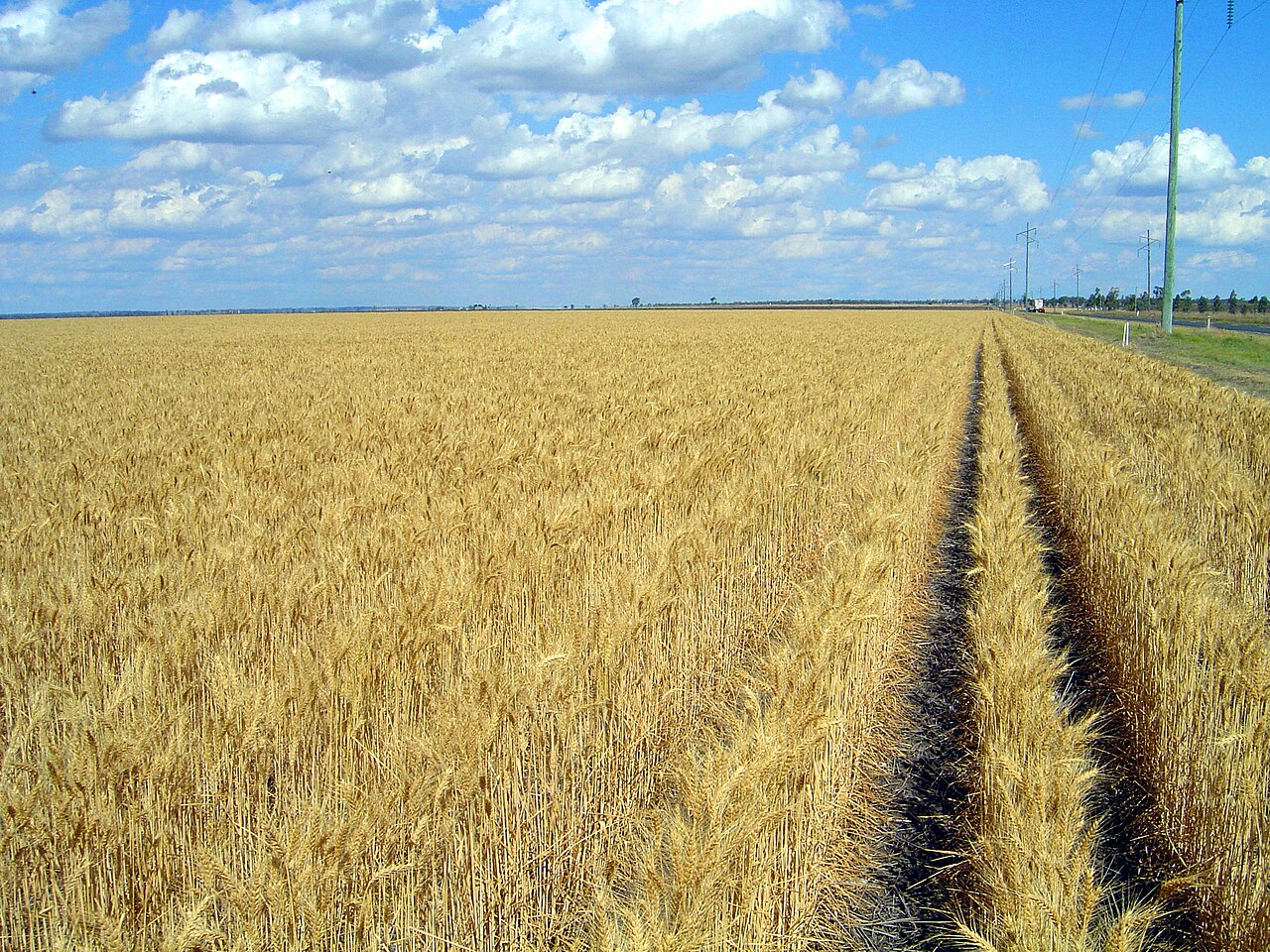
Researchers at the University of Queensland have built a sensor-carrying robot that measures something wheat breeders have long had to guess: how much water different varieties take from the soil as they grow, at what stage, and from what depth. The university's Queensland Alliance for Agriculture and Food Innovation (QAAFI) described the work on 3 November 2026 and credited researcher Dr Raul Gimenez with the measurement system.
The machine, called RootBot, is an autonomous high-clearance vehicle fitted with electromagnetic induction sensors that read soil moisture at several depths without disturbing the roots. The team combined its readings with drone sensing to follow water use across a field and through a season, something hard to do at scale with hand soil sampling.
Trials at the Gatton campus, south-west of Brisbane, in the 2024 and 2025 seasons tested 36 wheat varieties at different sowing densities. "We found cultivars differed in their total water use, when they used water, and the depth they took it from," Gimenez said in the release. Denser sowing raised early water use, light capture and canopy growth, but the release warns it can leave less water for grain fill, when it matters most for yield. The university did not publish the water-use figures or name the varieties.
Breeders usually judge drought tolerance from signs above ground, such as leaf rolling, canopy temperature or yield under stress. Routine data on the timing and depth of water use could let them match varieties to rainfall patterns, for example a variety that saves water for a dry finish.
Gimenez said the same system has been used in sorghum, chickpea and barley trials, with canola and maize next, and that the team is adapting it to measure nitrogen use by matching where active roots take water with where nitrogen sits in the soil. Parallel trials with Agriculture Victoria, Victoria's environment department and Western Australia's Department of Primary Industries and Regional Development will test whether the Gatton patterns hold on other soils.
The work is funded by the Grains Research and Development Corporation and the university, and was presented at the Agronomy Australia Conference in Darwin and ACB Breeders Week on the Gold Coast. No peer-reviewed paper was cited; the team is now simplifying the tool for commercial breeders and agronomists.
Photo: Rae Allen / Wikimedia Commons (CC BY 2.0)
Source: Global Agriculture

Comments
(0)