
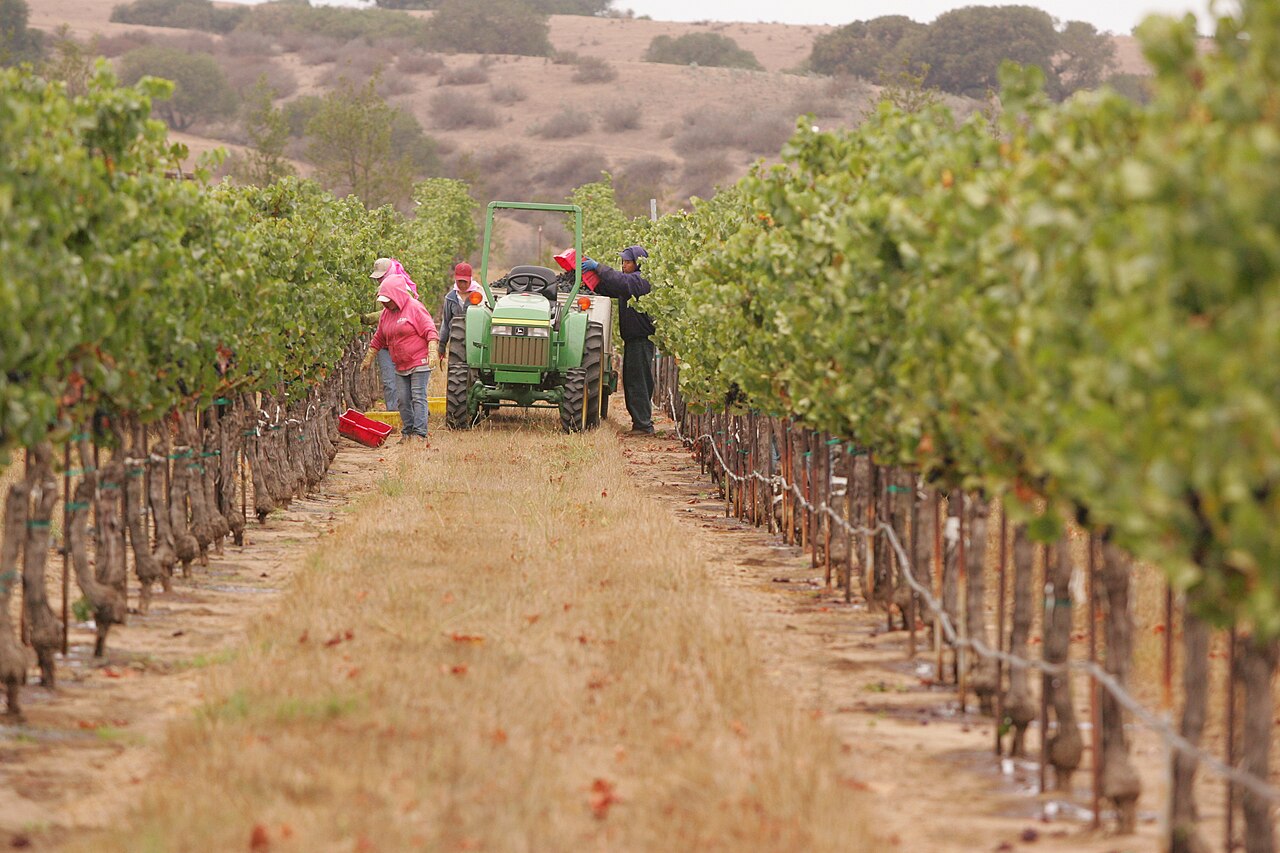
Naïo Technologies, a French maker of farm robots, has unveiled SANKA, an autonomous electric machine built to pull the mowers, cultivators and sprayers a farm already has, rather than to do one job like the weeding and seeding robots the company has sold since 2011. It was shown at the EIMA machinery fair in Bologna, Italy, on 10 November 2026, where the fair's technical panel gave it its "2026 Technical Evolution" award.
SANKA weighs 2.2 tonnes, runs on tracks and can carry up to one tonne of implements. It has the attachment points of an ordinary tractor: a three-point hitch, a power take-off shaft and a hydraulic block. Naïo presents this as a way to lower the up-front cost of automation, since growers do not need robot-specific tools.
The company, based in Escalquens near Toulouse, says the machine has been tested over four farming seasons. It steers with guidance software Naïo has developed for more than 15 years and RTK-GPS positioning accurate to the centimetre, and carries monitoring and human-detection cameras so that it can work without a supervisor, by day or night. Naïo says it can work alone for a full working day at up to 6 kilometres an hour, on slopes of up to 30 percent, with energy costs under 1.30 euros a hectare.
Its tracked undercarriage was developed with Michelin under a research partnership the two firms began in 2024, using the tyre maker's work on farm tracks and light snowmobile tracks, with a weight-balancing system meant to keep traction on rough or sloping ground and to compact the soil less than wheels. Naïo has not published compaction or traction figures.
The carrier is aimed at wide-row vineyards, orchards, soft fruit, nurseries and agrivoltaic sites, where solar panels stand on working farmland, with mechanical weeding and tillage as its main tasks. Naïo says it has placed more than 350 of its single-task robots on five continents.
SANKA is moving to pre-series production, with first deliveries planned for the second half of 2027. The project was funded under the French government's France 2030 programme, with support from the public bank Bpifrance, the impact investor Mirova and the Occitanie region. Naïo has not published a cost comparison with conventional tractors or its own robots.
Photo: Hahn Family Wines / Wikimedia Commons (CC BY 2.0)
Source: Global Agriculture

Comments
(0)