
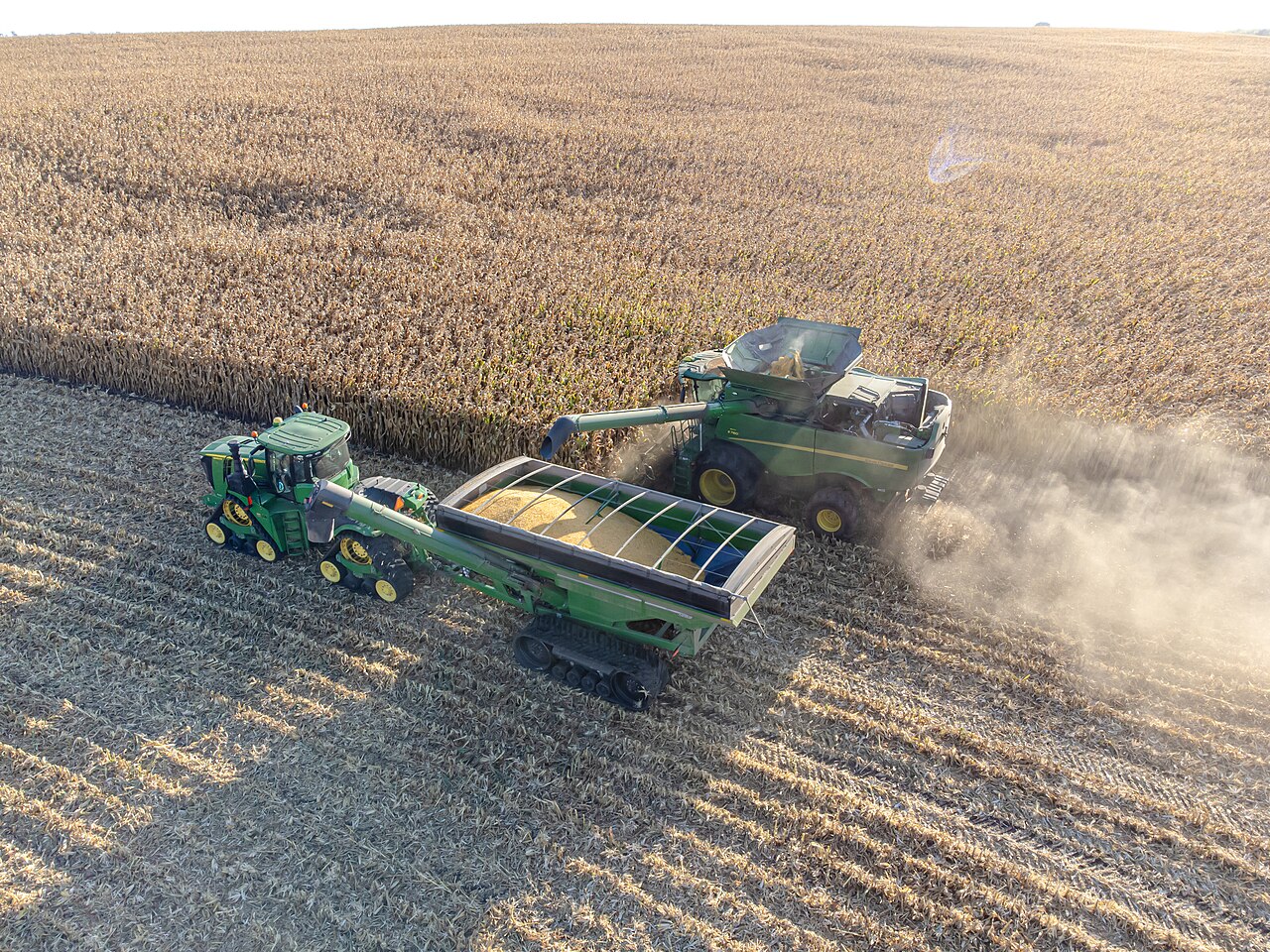
Fields sprayed with fungicide from a high-clearance sprayer had consistently less tar spot than fields treated by drone, Maryland farmer Chris Weaver has found as his corn harvest gets under way. He reported the result in DTN's View From the Cab series, in which two farmers keep a diary of crop conditions through the season.
Tar spot arrived late in the season on Weaver's farm near Finksburg. "While the overall health of our crop reduced losses, I saw definite differences in efficacy against the disease in fields where fungicides were applied by drone," he said. Drone seeding of cover crops over the standing crop also did poorly this year, while fields direct-seeded after barley came up strongly. The thin stands are now being interseeded with a mix of triticale, rye, crimson clover and buckwheat, with seeding to stop around 15 November. "We're just not getting seed-to-soil contact with the drone," he said.
Weaver's corn has yielded between 220 and 260 bushels per acre so far, with grain moisture of 20% to 24% this week, and the crop has stood well through strong winds. Yields were lighter where deer fed: in one field left without the plant-based deer deterrent he sprayed elsewhere around field edges at the V6 stage, yields fell to 145 bushels per acre. Lime spreading and soil biologicals are next on his list, and he hopes to start on soybeans this week.
In Minnesota, Tyler Rath, who farms near Belgrade, has had a harder season. The first frost came on 2 October and nipped the tops of some double-crop soybeans, and rain has slowed both corn and edible bean harvest. Wet soils cut his kidney bean rodding speed from the usual 20 to 22 acres an hour to 5 or 6. "The last rain event cost me $25,000 in edible bean quality loss in one field alone," Rath said, adding that this year he would probably have done better with commodity corn and soybeans.
Rath began corn harvest on 3 October in dryland sand fields, where drought had weakened the stalks; some yielded only 100 bushels per acre and will generate an insurance claim. His irrigated fields are far better, running from 260 to 280 bushels per acre with kernel moisture of 23% to 30%. He has also harvested the irrigated plots entered in the National Corn Growers Association Yield Contest.
Both farmers are also picking rocks. Rath said rodding brings stones to the surface and that a hydraulic rock picker has paid for itself, run along the clean strips between bean windrows before combining. Weaver, a no-till farmer, now uses a rock-picker blade on the front of his skid loader.
The report was written by Pamela Smith, DTN's crops technology editor.
Photo: Wikideas1 / Wikimedia Commons (CC0)
Source: DTN / Progressive Farmer
Comments
(0)