
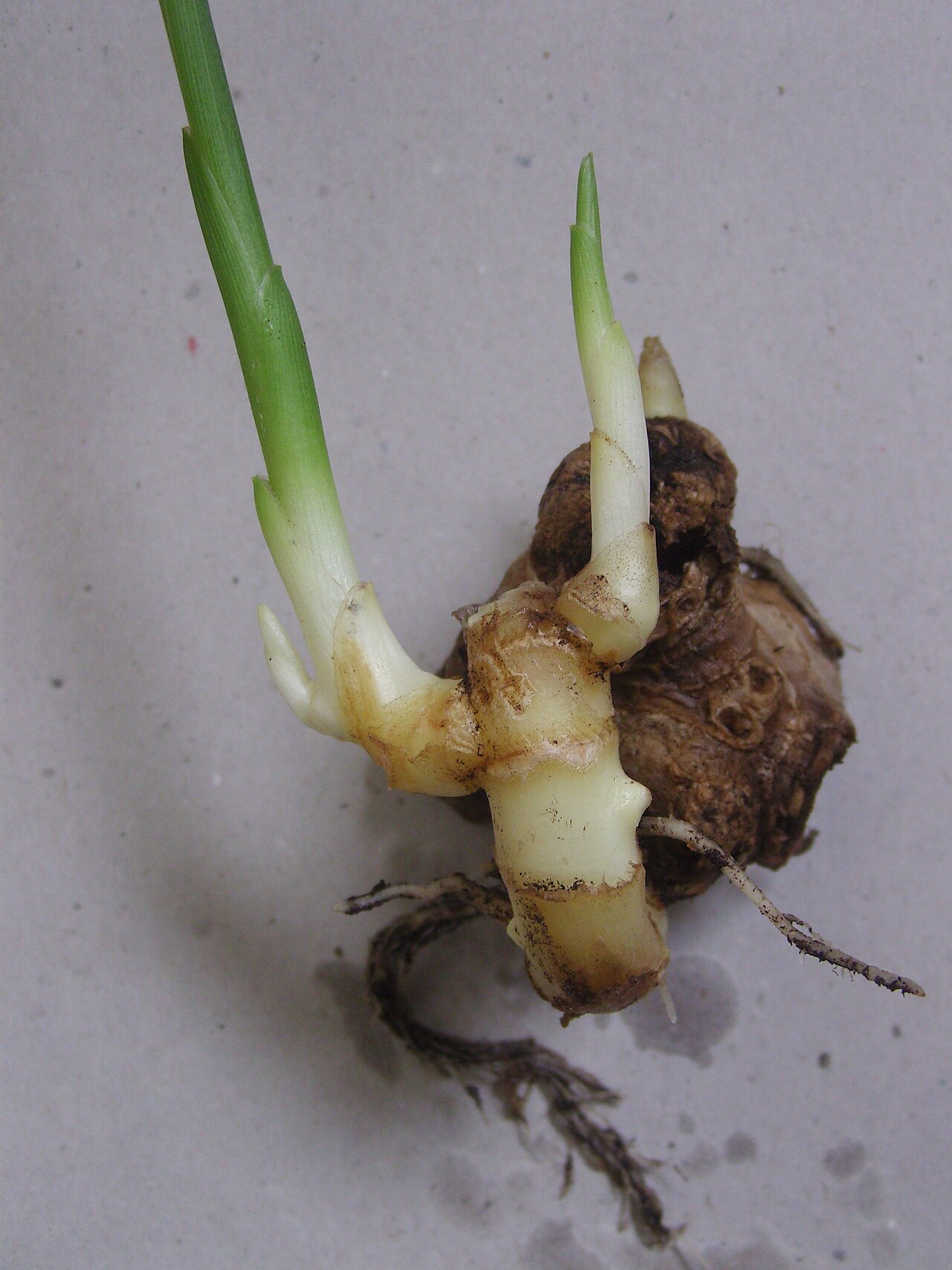
The Bangladesh government plans to become self-sufficient in ginger within three years, cutting the import bill for a spice the country cannot yet grow enough of. Improved varieties, quality seed, farmer training and the spread of ginger grown in sacks are at the heart of the plan, the state news agency BSS reports.
According to the Department of Agricultural Extension (DAE), demand for ginger in the 2025-26 fiscal year was 375,000 tonnes against production of 255,000 tonnes, a gap of 120,000 tonnes that is filled with imports.
In 2024-25 Bangladesh imported more than 141,000 tonnes of ginger from China, India, Myanmar, Indonesia and Thailand, at a cost of Tk 1,256.81 crore. India supplied 61,428 tonnes and China 43,038 tonnes.
Russel Ahmed, director of the DAE project on improved spice varieties and technology, said the programmes include more high-yielding varieties, quality seed production and supply, irrigation in hill areas, modern technology, and storage and processing of the harvest.
Dr M Masud Alam, chief scientific officer at the Spices Research Centre of the Bangladesh Agricultural Research Institute, said growing ginger in sacks suits small spaces such as a homestead yard. Planting only 50 grams of seed ginger can yield 1 to 1.5 kg per sack, he said.
Seed of the high-yielding varieties BARI Ada-2 and BARI Ada-3 is being distributed to farmers, he said. The average yield is now about 17 tonnes per hectare, and better varieties could raise it further.
Agriculture officials say sack ginger is also becoming a commercial prospect. Sohel Pradhan, a farmer in Chhotokuya village of Pirganj upazila in Rangpur, has planted ginger in 1,800 sacks around his pond this season and expects a good profit. If the plan works, officials hope to save foreign currency now spent on imports.
Reported by the Agricare24 desk from a BSS report.
Photo: Olli Salmela / Wikimedia Commons (CC BY-SA 3.0)
Source: Agricare24
Comments
(0)