
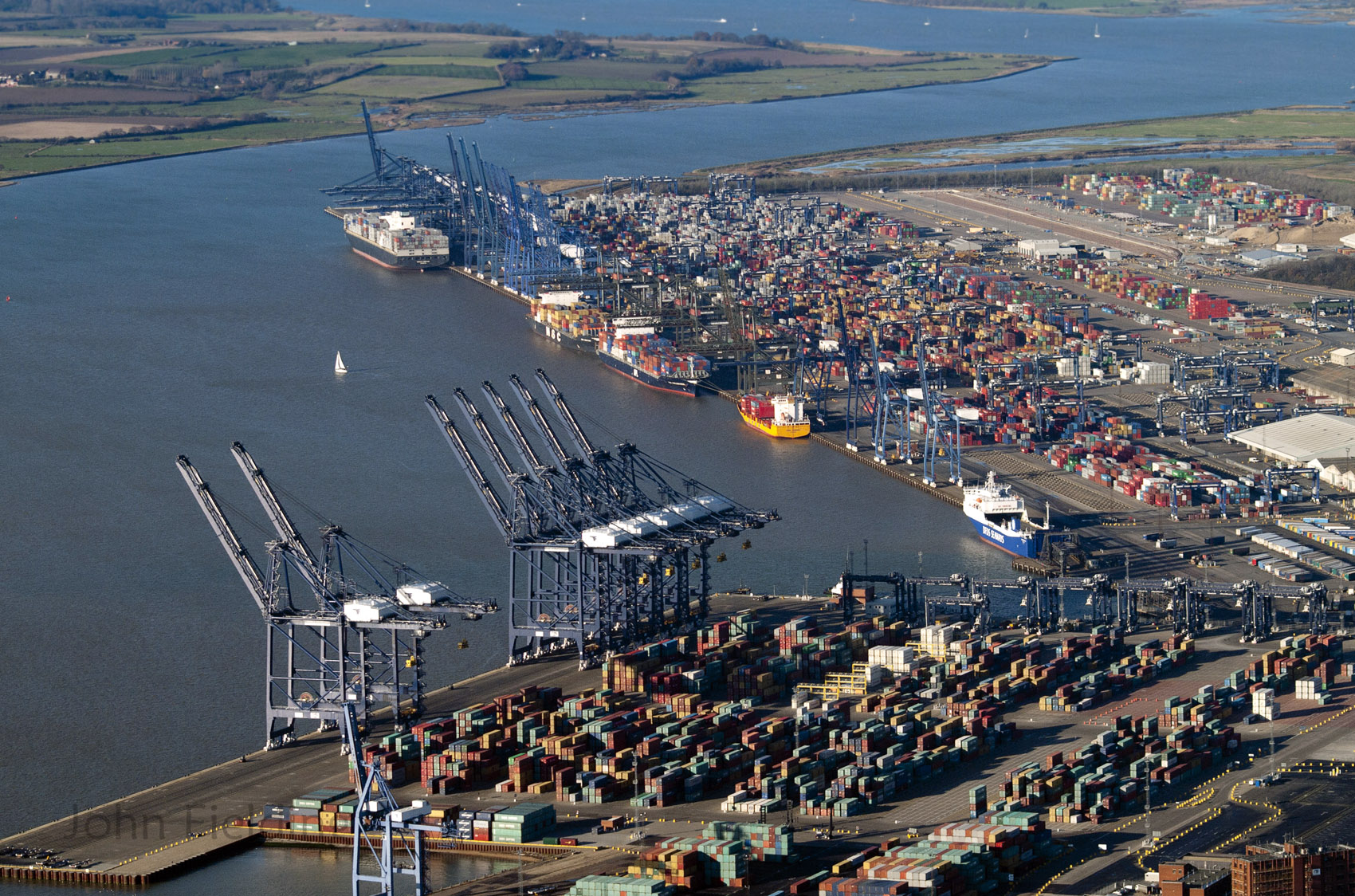
Britain's food regulators have published a step-by-step route for exporting lab-grown meat, even though no cultivated meat has yet been cleared for people to eat in the UK. The guidance, released on 12 November 2026 by the Food Standards Agency (FSA) and Food Standards Scotland (FSS), tells companies that grow meat from animal cells in Great Britain what they must do to ship it to countries outside the European Union.
The document is a process map rather than a new law. It pulls together the requirements of five public bodies, among them the Animal and Plant Health Agency (APHA), the Department for Environment, Food and Rural Affairs (Defra) and HM Revenue and Customs (HMRC). It takes a company from the first question, whether a destination country accepts cultivated meat at all, through export health certificates and customs declarations to the cold chain, labelling and paperwork.
The timing is what makes it notable. British start-ups can now read an official route to markets such as Singapore, the United States or Australia, where some cultivated products are already legal, while the domestic approval of cultivated meat for human food is still pending.
What the UK export roadmap for cultivated meat asks of companies
The guidance, published on GOV.UK as "Process for exporting cell-cultivated products of animal origin from Great Britain to non-EU countries", sets out five main steps. First, the exporter and its importer must check whether the destination country permits cultivated products, how it classifies them and whether it has published import conditions. If no market access exists, the company is told to contact APHA's Centre for International Trade, which can advise whether government-to-government talks are needed.
Second, the production site must be registered with its local authority as a food business and meet any extra listing that the importing country demands. Third, the company must confirm that the product meets the destination's rules: what kind of novel food approval or taste-trial permit is needed, which sanitary and phytosanitary (SPS) conditions apply, and how the product must be labelled. Fourth, it must find out whether an export health certificate is required. Fifth, it must file an export declaration through HMRC's Customs Declaration Service.
The most revealing lines are about what does not yet exist. "Cell-cultivated products do not currently benefit from internationally recognised sanitary and phytosanitary classifications or established export certification arrangements," the guidance says, so there are no standard certificate templates for them. Applications are "likely to be assessed on a case-by-case basis". Where no certificate exists, a company must ask APHA to draft one, usually after filling in a questionnaire on the expected volume and value of its trade. Drafting and agreeing such certificates "is complex and can take a long time", the guidance warns, and does not always result in trade.
The agencies also stress the limits of their own document. The FSA said the guidance "does not guarantee market access will be achieved or replace the current route to export". Exports to the EU are not covered, and Northern Ireland may follow different rules.
"Businesses have told us that understanding the cross-government export process was a priority, so we have worked across government to explain the path to export cell-cultivated products from GB to non-EU markets," said Dr Thomas Vincent, Deputy Director of the Sandbox and Innovation at the FSA. "The market for cell-cultivated food is growing internationally, so this guidance will help companies understand what they need to do to access new markets and grow their businesses."
Why no lab-grown meat is on sale to Britons yet
The roadmap is the latest product of the Cell-Cultivated Products Sandbox Programme, a two-year project in which the FSA and FSS work alongside companies and universities to learn how these foods are made before judging them. The agencies received £1.6 million from the Department for Science, Innovation and Technology for the sandbox, which began in early 2025 and runs until February 2027.
The FSA's page on the programme lists BlueNalu, Gourmey, Hoxton Farms, Mosa Meat, Roslin Technologies, Vital Meat and Vow as participating companies. The agency said it expected about 15 applications for cultivated products within two years, and it committed to finishing the safety assessment of two of them inside the sandbox.
Those assessments are not yet complete. The FSA's programme page, dated June 2025, states that cultivated products "are not currently available to buy in the UK", and Cultivated X reported on 12 November that domestic approvals remain pending. According to Green Queen, which reported on 4 November, the FSA is assessing human food dossiers from Ivy Farm Technologies, Aleph Farms, Mosa Meat, BeneMeat and Parima, the company behind the Gourmey and Vital Meat brands, with Parima's application the furthest advanced.
Meanwhile the agencies have been publishing the rulebook in pieces. In December 2025 they said cultivated products made from animal cells are to be treated as products of animal origin, although they are not defined as "meat". In July 2026 they added guidance on hygiene, on describing cell lines and production, on preparing stronger applications and on taste trials, and on 30 September 2026 guidance on growth media and toxicological hazards. The export map builds on that classification: because the cells are harvested from a bioreactor and processed, the finished foods count as processed products of animal origin.
Pet food has moved faster, because it follows a separate route through Defra and APHA. In July 2024 Meatly's cultivated chicken became the first cultivated meat approved for pet food in Britain, and dog treats containing it went on sale in February 2025 in a limited run at a Pets at Home store in London. In early November 2026 the Oxford company Ivy Farm Technologies became the second firm cleared for the pet market, with cultivated Wagyu beef, Green Queen and Food Manufacture reported.
How cultivated meat is made, and why exporters need a classification
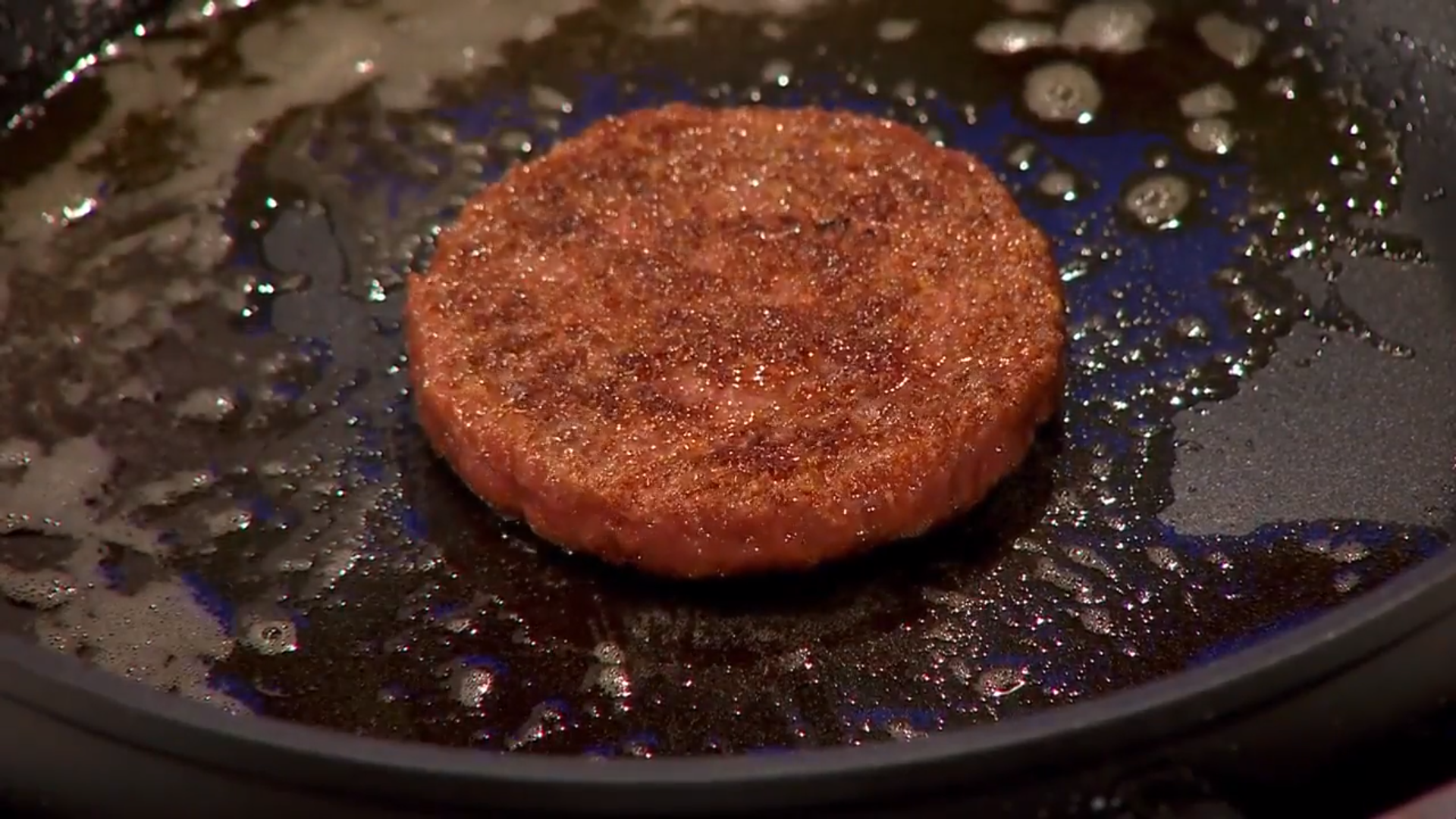
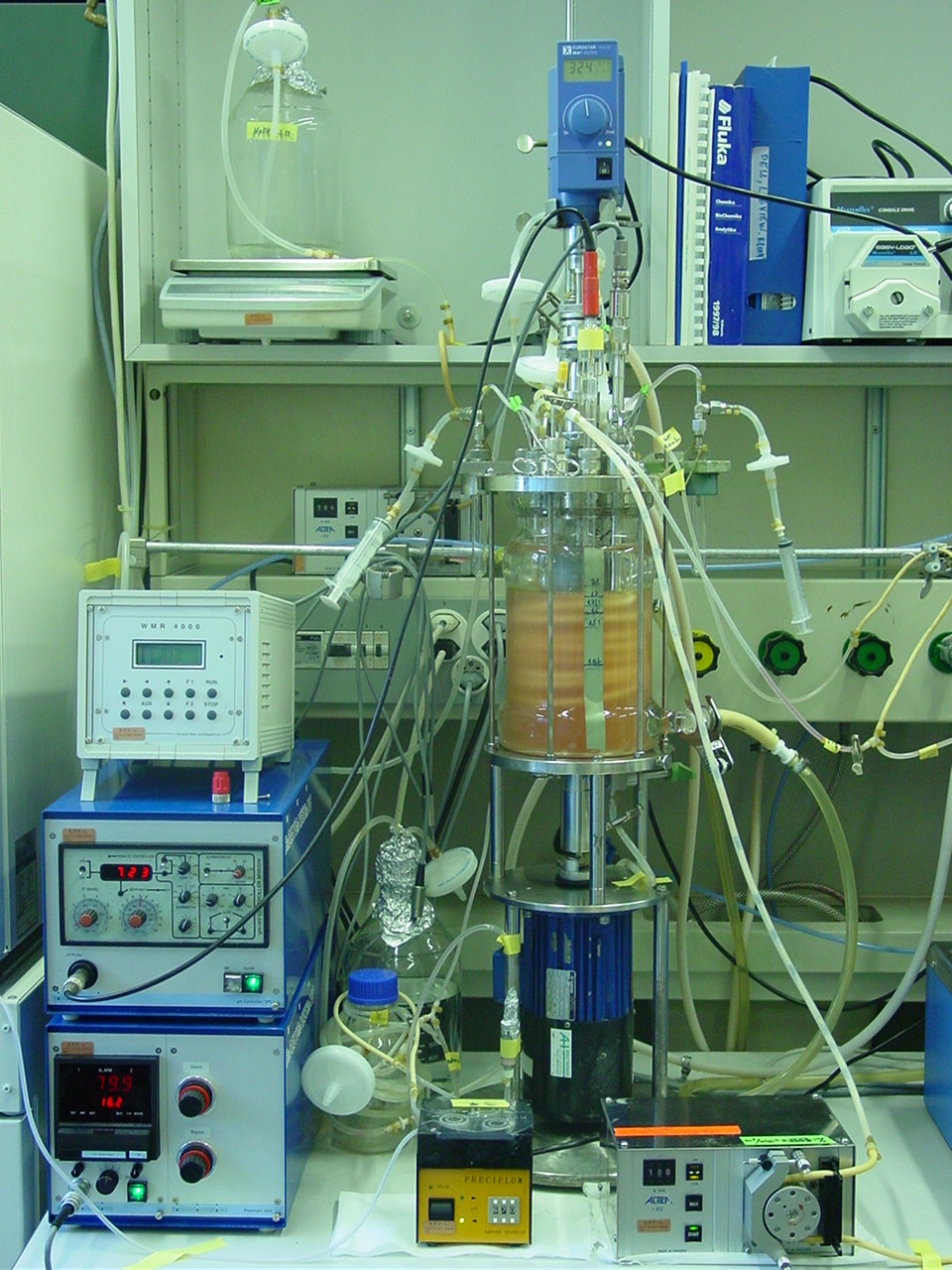
The FSA describes the technology in four steps. Stem cells, which can develop into many specialised cell types, are taken from a live animal. They are placed in large tanks called bioreactors, filled with nutrient-rich liquids that copy conditions inside an animal's body so the cells multiply. The culture medium is then changed so the cells develop into muscle, fat and connective tissue. Finally the cell mass, known as biomass, is harvested and made into products such as burgers, often mixed with plant ingredients.
That process explains why trade officials struggle with it. Rules on food of animal origin were written for animals that are raised, slaughtered and inspected, and export certificates usually vouch for the health of a herd or the hygiene of an abattoir. A cultivated product has no herd and no slaughterhouse; its risks lie in the cell line, the growth medium and the sterility of the tank. The UK guidance therefore borrows the framework for products of animal origin while admitting that other countries "may classify cell-cultivated products differently".
A shared global view of the hazards does exist. In April 2023 the Food and Agriculture Organization of the United Nations (FAO) and the World Health Organization (WHO) published *Food Safety Aspects of Cell-Based Food*, written particularly for food safety authorities in low- and middle-income countries. According to Food Safety News, it identified hazards ranging from foreign matter, veterinary drugs, microbial toxins and additives to residues, allergens, microplastics and pathogens, and found that many of them are already known from conventional food, although new hazards from new materials and ingredients cannot be ruled out. It said a case-by-case approach may suit safety assessments, the same approach the British guidance expects at every border.
Where cultivated meat can already be sold
Singapore became the first country to approve cultivated meat for human consumption in 2020, when its food agency cleared Eat Just's GOOD Meat chicken. It has since added Vow's cultivated quail in April 2024 and Parima's cultivated duck in April 2026, according to industry reports. Israel cleared Aleph Farms' cultivated beef in January 2024, and Aleph Farms has since also won approval in Singapore.
In the United States, a joint review by the Food and Drug Administration and the Department of Agriculture cleared cultivated chicken from UPSIDE Foods and GOOD Meat in June 2023, and later products from Wildtype (salmon), Mission Barns (pork fat) and Believer Meats, which shut down in December 2025, according to a February 2026 survey by FoodNavigator. Australia followed in June 2025, when Vow's quail became the first cultivated meat cleared by Food Standards Australia New Zealand (FSANZ). On 6 October 2026 the FSANZ board approved Gourmey's cultivated duck as an ingredient for products such as pâté, a decision that takes effect only if food ministers do not ask for a review within 60 days.
Approval is not the same as a market. The Good Food Institute, a non-profit that promotes alternative proteins, lists Singapore, the United States and Australia as the places where cultivated meat can be sold, with products under review in the EU, Switzerland, the United Kingdom, Thailand, Hong Kong, South Korea and elsewhere. A backlash has grown at the same time. Italy's parliament voted in November 2023 to ban the production and sale of cultivated meat, and US states have passed bans or moratoriums, starting with Florida in 2024. In September 2025 Texas became the seventh, with a ban running until September 2027 that UPSIDE Foods and Wildtype challenged in federal court. A British exporter therefore faces a patchwork in which a product may be legal in one market, under review in a second and banned in a third.
What it means for Asia, the Gulf and developing countries
Most of the markets that have said yes are in Asia and the Pacific, which is where a British exporter is likely to look first. In South Korea, the start-up SeaWith plans a cultivated beef plant in Uiseong County worth about US$15 million, Green Queen and Cultivated X reported this week, a sign that Asian producers intend to compete rather than only import.
The Gulf is moving too. In October 2026 three Abu Dhabi bodies, the Quality and Conformity Council, the Agriculture and Food Safety Authority and the Investment Office, published a guideline that lets companies run controlled tasting trials of novel foods, including cultivated meat, before full approval in the United Arab Emirates. They cited the emirate's mixed population as a reason to test products there across different cultural groups.
For Muslim-majority markets, religious acceptance matters as much as food safety. In 2024 the fatwa committee of the Islamic Religious Council of Singapore (MUIS) ruled that cultivated meat can be halal if the cells come from a halal animal, the whole production process is halal and the final product is safe to eat, while noting that certification guidelines still had to be written. Exporters aiming at Malaysia, Indonesia, the Gulf or South Asia will need to answer those questions, and the roadmap's advice to check product-specific labelling rules will often mean halal labelling.
For most developing countries, including Bangladesh, cultivated meat is still a distant question: the Good Food Institute does not list them among the jurisdictions reviewing products. That is where the FAO and WHO work matters. Their report drew on case studies from Israel, Qatar and Singapore and said that in most countries cultivated foods can be handled within existing novel food frameworks. Countries without such frameworks would start from scratch if a product arrived at their ports, and an exporting country's paperwork, such as Britain's new map, is likely to shape what their officials ask for.
For livestock farmers in developing countries, the near-term effect is small. Cultivated meat is produced in small volumes and at high cost, and the products cleared so far are mostly premium items or ingredients. The longer-term question is whether protein grown in tanks will one day compete with poultry, beef and fish in the cities those farmers supply. No source the Online Desk reviewed puts a date on that.
Costs, trust and trade politics stand in the way
Money is one barrier. Crunchbase News reported on 12 November that investors who put large sums into lab-grown meat several years ago are now favouring other protein businesses, and that lab-grown meat has yet to produce a success story. Meatly closed a Series A round this spring to build what it calls Europe's largest cultivated meat facility, the report said, without giving the amount.
Public trust is another. FoodNavigator has reported that a UK parliamentary briefing had found in 2025 that no peer-reviewed study had directly examined the effects of eating cultivated meat, and that a Deakin University survey of 1,540 Australian adults found perceived benefits shaped acceptance even more than perceived risks. Dr Vincent of the FSA said in July that "consumer safety is non-negotiable".
The biggest uncertainty is Britain's relationship with Europe. A planned UK-EU agreement on SPS rules, meant to remove post-Brexit checks on food trade, could require novel foods sold in Britain to pass the EU's own approval process, which Green Queen reported can take up to six years. The FSA reportedly warned around 600 approval holders and businesses that the deal could void UK authorisations. A temporary exemption for novel foods is reported to be under discussion, but "this has not been publicly confirmed by the UK government, the European Commission, or member states", Linus Pardoe, senior UK programme manager at the Good Food Institute Europe, told Green Queen. The Czech company BeneMeat has paused its UK plans while it waits.
The UK-EU summit on 20 November and the sandbox's end in February 2027
Two dates will decide how useful the roadmap becomes. The first is the UK-EU summit due on 20 November, where the SPS talks are expected to conclude; the FSA has said it will update businesses afterwards. If novel foods are carved out, Britain keeps its own approval route and the export map becomes one half of a full national system. If not, companies may need approval in Brussels before selling in Britain, while still using the British map for markets outside the EU.
The second is February 2027, when the sandbox ends and the FSA intends to have completed two safety assessments. A first UK approval for human food would make the export map far more practical, since importers may ask whether a product is legal at home, although the guidance notes that complying with UK law "does not create a right to export".
Elsewhere, the decisions to watch are the Australian and New Zealand ministers' response on Gourmey's duck, due by early December, the European Food Safety Authority's first opinions on cultivated products, and whether Abu Dhabi's rules produce the Gulf's first public tastings. None of these outcomes is certain.
A rulebook written before the product reaches the plate
The export guidance is a modest document with a clear message. Britain wants its cultivated meat companies ready to sell abroad as soon as importing countries say yes, and it is building the paperwork in advance. The agencies admit that the route is untested, that each market will decide for itself and that certification may take a long time.
For the wider farm and food world, the significance lies in the habit it sets. Regulators in Singapore, Australia, the Gulf and now Britain are writing the rules for meat grown from cells one document at a time, and those who write first are likely to shape how others ask the same questions about safety, labelling and trade. Livestock producers, food safety agencies in developing countries and consumers all have a stake in how those rules turn out.
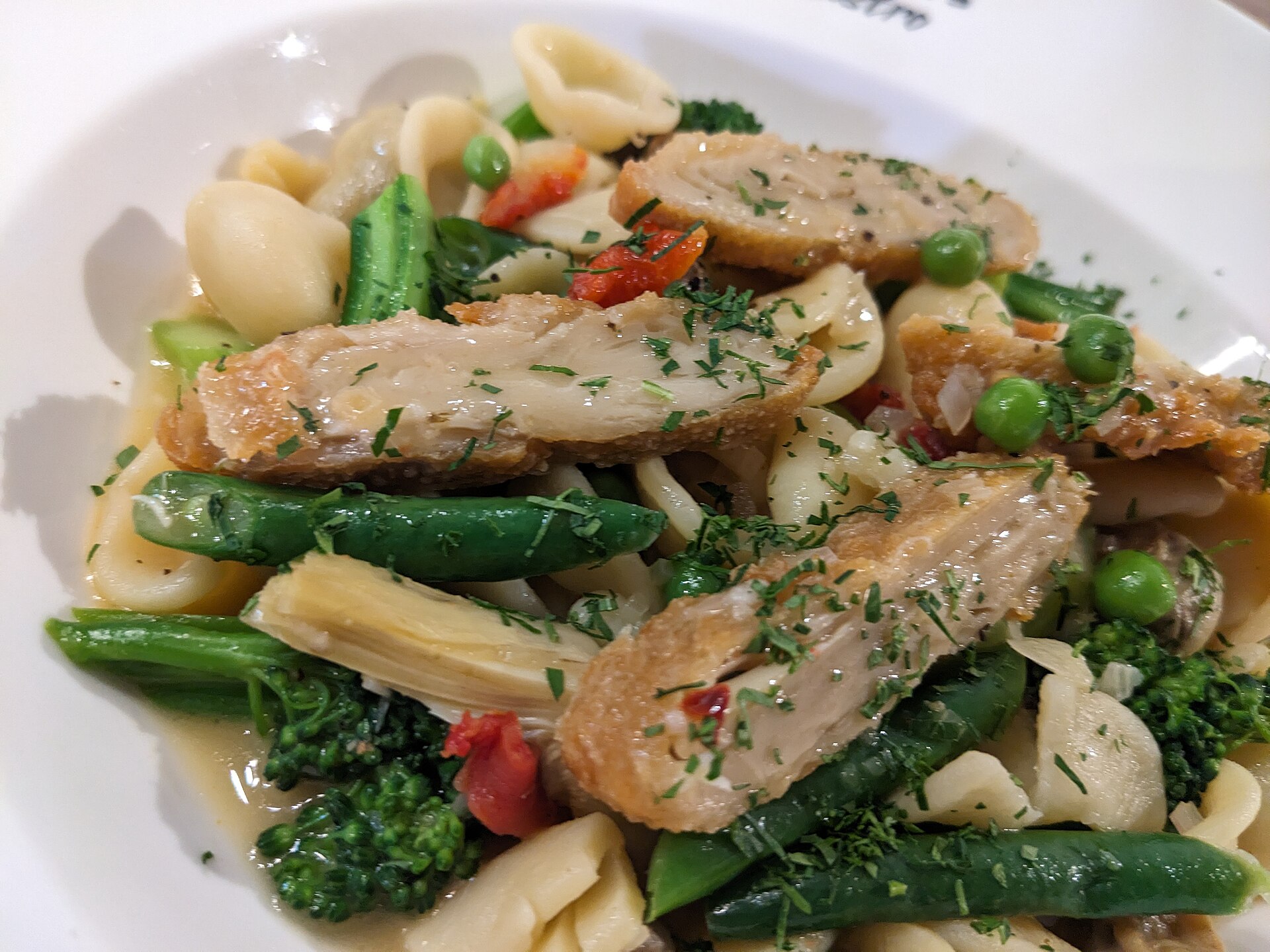
Photo: Jpatokal / Wikimedia Commons (CC BY-SA 4.0). The top picture shows a pasta dish with strips of GOOD Meat cultivated chicken, served at Huber's Butchery in Singapore in June 2023, as background.
Comments
(0)