
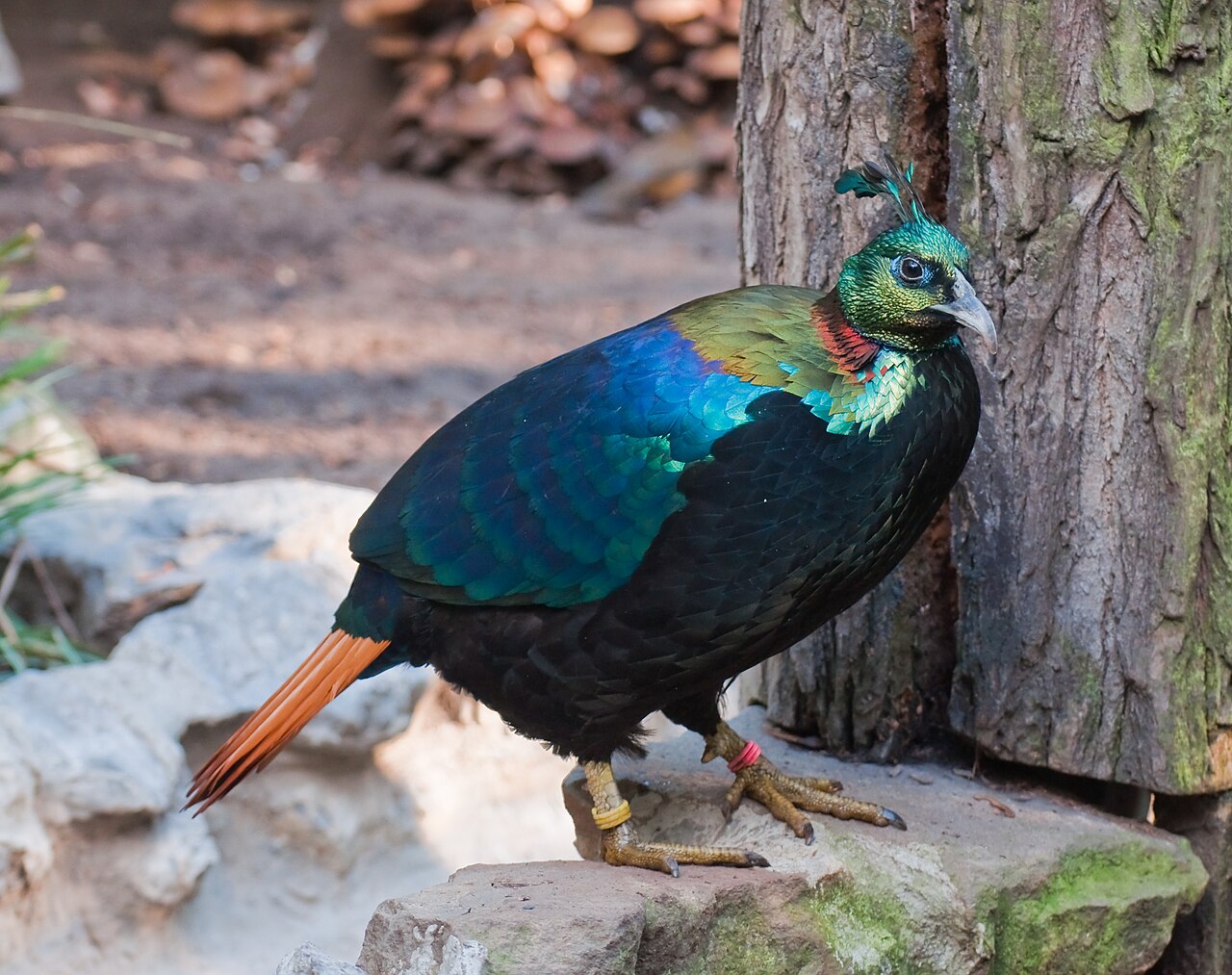
Amid the cars and tourists of Uttarakhand in India, the Himalayan monal is raising the pitch of its call. Rajiv Lochan, Dinesh Kumar Sharma and Anand Kumar of Hemvati Nandan Bahuguna Garhwal University placed recorders in two valleys of the Kedarnath Musk Deer Sanctuary for a year from April 2023 and gathered more than 700 monal calls.
In Chopta, crowded with tourists and vehicles all year, the birds called at higher frequencies and more briefly than in quieter Madmaheshwar. The change keeps the calls from being buried under the low rumble of traffic and crowds. Rajiv Lochan cautions that it is too early to say the species' voice has changed for good.
A second study by the researchers used climate models to project that by 2100 the bird's habitable range in Uttarakhand and Himachal Pradesh will be smaller and less stable. The IUCN Red List still rates the monal as least concern.
On Dhaka, Ashikur Rahman Samee, a teacher in the zoology department at Dhaka University, said horns, generators and construction machines drown out birdsong and that many birds have left familiar places. With straw and grass hard to find, birds build nests of polythene, twine and plastic, which trap heat and tangle chicks' feet. A 2022 United Nations Environment Programme report ranked Dhaka as the world's noisiest city, at 119 decibels.
Inam Al Haque, founder of the Bangladesh Bird Club, said he does not know whether bird behaviour is changing because no one has studied it here. He noted that diclofenac could be banned because it was known for certain to be killing vultures, whereas nobody knows why the masked finfoot is declining. Perhaps about 300 adult finfoots survive, many of them in the Bangladesh part of the Sundarbans.
An IUCN assessment in 2015 counted 566 bird species in Bangladesh, with 19 lost over the past century. Samee wants long-term monitoring not tied to project deadlines, room for native trees and water in city plans, and enforcement of the noise pollution law. In Tanguar Haor more than a hundred houseboats have appeared in a few years; in August this year the Sunamganj district administration stopped them from entering critical parts of the wetland.
Photo: H005 / Wikimedia Commons (public domain)
Source: samakal

Comments
(0)