
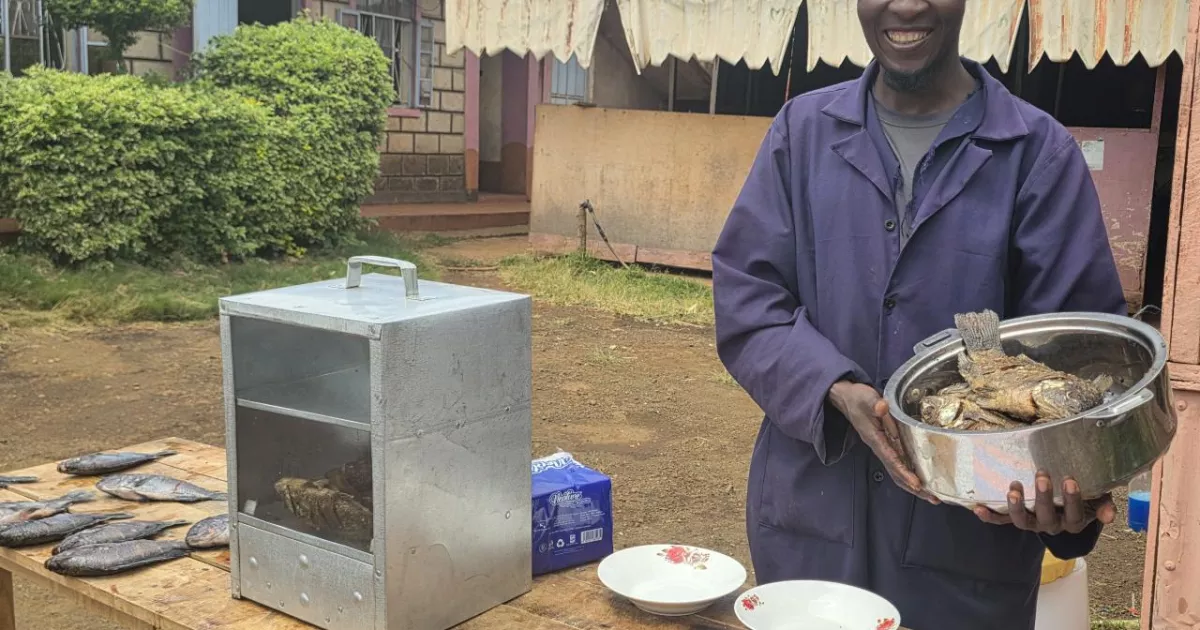
At Muriri shopping centre on the lower slopes of Mount Kenya, in Meru County, Jeremiah Mwilaria sells fresh and deep-fried tilapia from a stall that did not exist five years ago. Locals call him Jere wa Samaki — Jeremiah the fish guy. When he left teaching in 2022 to sell fish in a community where fish rarely reached the dinner table, many thought he had lost his mind.
"I started with only two kilograms of fish, about six fish a day, and often struggled to clear my stock," he says. "Currently, I buy up to twelve kilograms a day, and I can hardly keep enough fish for my customers." The hard part was never supply. It was persuading people to eat fish at all — most were put off by the smell and the small bones, until enough of them tried it and came back.
His stall is a small sign of a larger shift. A field spot check by the Climate-Resilient Aquaculture Systems for Africa project, run alongside a baseline study, found rising demand for fish across Nyeri, Meru and Tharaka Nithi counties.
The national figures show how much room there is. According to the Kenya Fisheries Service, farmed fish accounted for only 19 per cent of Kenya's 168,424 tonnes of fish output in 2024. A WorldFish-led study of 5,258 fish-farming households, 1,308 of them in central Kenya, found real scope to expand pond production if the bottlenecks in production and marketing are dealt with.
Underneath the demand is a climate story. Unpredictable rainfall, long dry spells and falling harvests are pushing families in central Kenya to look past crops and livestock, and aquaculture is emerging as the climate-smart alternative that pays.
Eighty kilometres away outside Chuka town in Tharaka Nithi County, Nancy Mbae rears catfish in a lined, raised pond and sells them fresh, deep-fried, or processed into fish oil. She markets through WhatsApp and Facebook rather than word of mouth. She chose catfish for a specific reason: "I once invested in tilapia, but the poor-quality fingerlings, sourced from local hatcheries, took long to reach market size, making the business unprofitable. I still believe tilapia has a huge market potential if farmers can have access to quality seed and feed."
Her instinct matches the data — tilapia was 78 per cent of Kenya's farmed fish production in 2024 against 14 per cent for catfish. And the gap she names is the same one Mwilaria names: "All we need is better access to reliable water supply, quality fingerlings, affordable feed and practical training." He has never had formal training in aquaculture; he learned handling, value addition and customer service from YouTube, other traders and years of trial and error.
The CASA project, run by WorldFish with support from the Gates Foundation, is working on exactly those links — production, access to finance, market linkages, processing and policy.
Source: CGIAR
Comments
(0)