
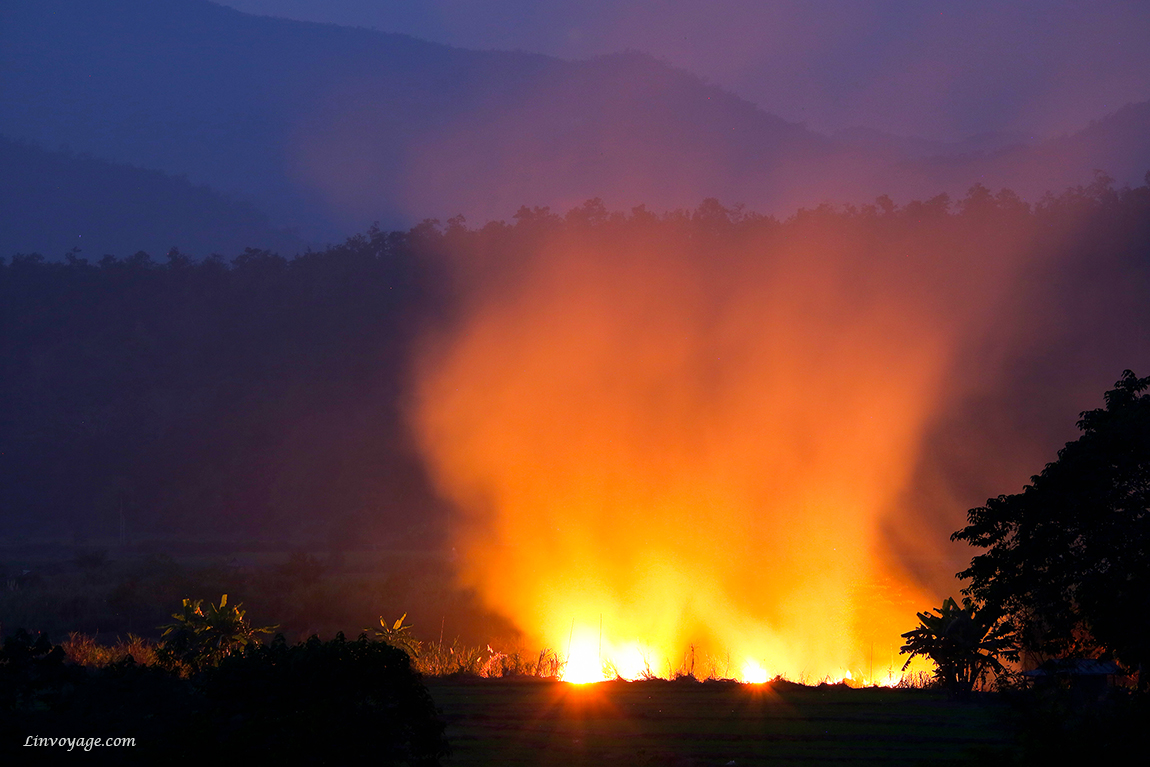
A rice farmer in central Thailand has tested a tractor and mulcher that chop rice straw so it can stay on the field or be worked into the soil, instead of being burned after harvest.
Pichai Tosa, who grows rice and mung beans in Nakhon Sawan province and heads a local rice production group, trialled a New Holland TT3.50 tractor with a mulcher during the 2026 harvest. The trial was featured by the machinery maker CNH, which owns the New Holland brand, in its A Sustainable Year series.
Open burning is the quickest way for rice and sugarcane farmers to clear a field, but it pollutes the air, adds to greenhouse gas emissions, and the heat at the soil surface can kill soil microorganisms and burn off soil carbon. About 4.8 million tons of rice straw are burned every year on the plains of central Thailand alone, according to the source.
"Farmers simply did not have that knowledge that the practice was harmful to the environment. But nowadays, new technologies and innovations have come in, giving us better options," Tosa said.
Mark Brinn, CNH's managing director for Southeast Asia and Japan, said the trial showed how equipment, training and local partners can turn crop residue "from a disposal challenge into a useful agricultural resource". CNH runs a similar residue programme in India, its Sustainable Environment Solution, which combines mechanised baling with farmer training and field demonstrations.
Photo: Phuket@photographer.net / Wikimedia Commons (CC BY 2.0)
Source: Global Agriculture

Comments
(0)