
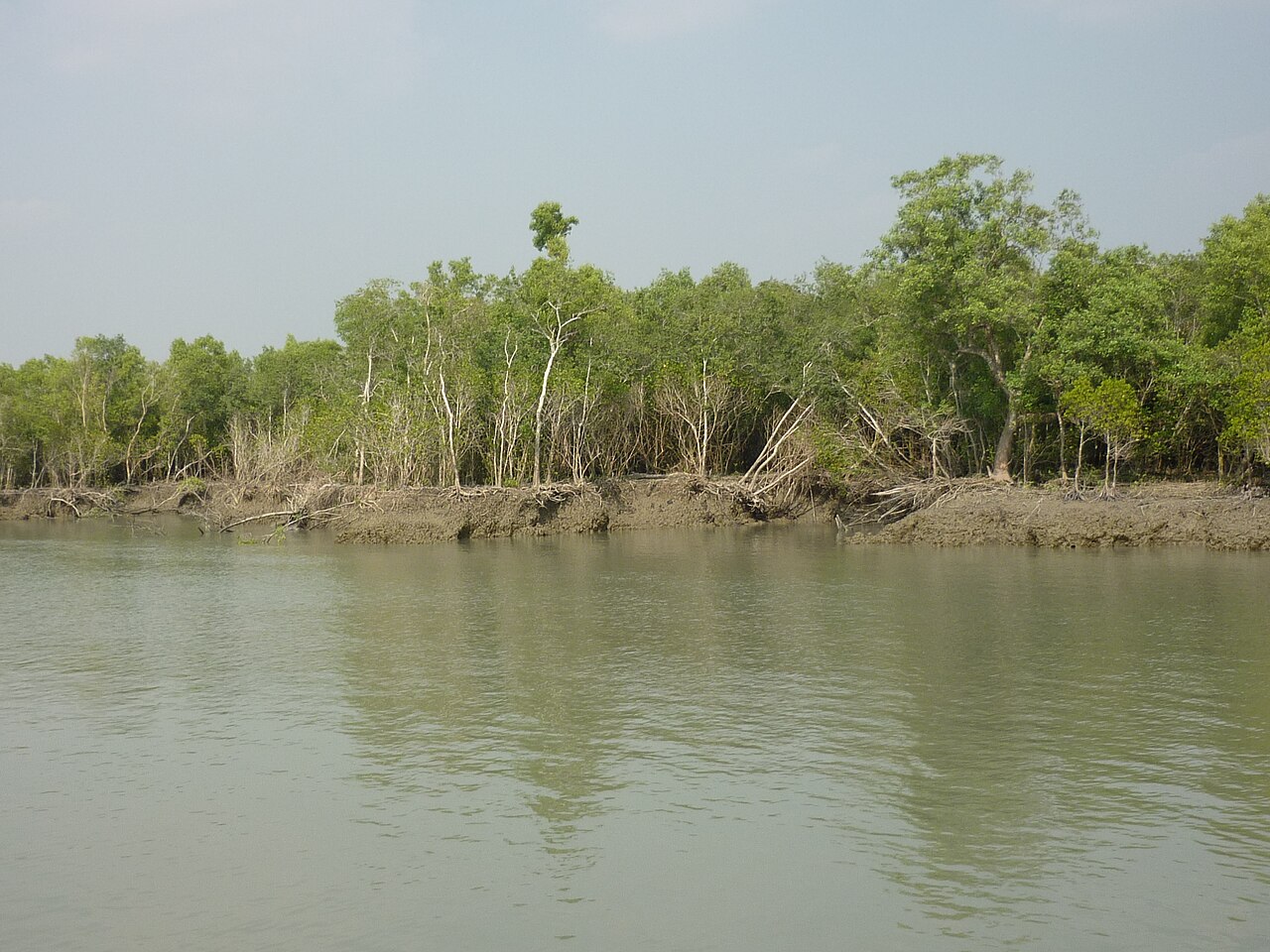
Nearly four in ten sundari trees in the Sundarbans (39 per cent) have top-dying disease, Prothom Alo reports. Of roughly 330 million sundari trees in the mangrove forest, 129.5 million are affected and 20.24 million severely, and the forest's capacity to absorb carbon has fallen by 15 per cent. The findings come from "Ecological Monitoring of the Sundarbans" (2024-25), a study by CEGIS, an institute under the water resources ministry, and the Arannayk Foundation, presented at a workshop at the Forest Department on 14 September.
Top-dying attacks the leaves first, then dries out the branches, and finally destroys the main trunk. By the study's data, 83.03 million trees are less than 25 per cent affected, 25.08 million are 25 to 50 per cent affected and 20.24 million more than 50 per cent affected. About 200 million are healthy.
The research was led by Swapan Sarker, professor of forestry and environmental science at Shahjalal University of Science and Technology in Sylhet. He told Prothom Alo that 120 permanent survey plots have been kept in the Sundarbans since 1986, and the figures come from changes recorded in their trees. The disease has eased slightly since 1986, he said, but severely affected trees have risen from 11.92 million to 20.24 million. Rates are higher in high and medium salinity zones, although it is not yet scientifically established that salinity alone is to blame.
Experts point to rising salinity, reduced freshwater flow, siltation, changing tides and climate change. The study places the central and western Sundarbans at high salinity risk. Of the forest's 53 compartments, Patkostam, Kaga Dobeki and Gewakhali in the Khulna range are the worst affected.
The forest is also losing its ability to regenerate. Seedling density fell from 2,689 per hectare in 1986 to 776 in 2022, a drop of about 71 per cent in 36 years, and above-ground biomass has declined 15 per cent over three decades. Professor Khaled Misbahuzzaman of Chittagong University said singra, amur and goran are spreading in some places where sundari once dominated.
Md Amir Hosain Chowdhury, the chief conservator of forests, told Prothom Alo this is the first baseline study of the Sundarbans. Cutting down affected trees, tried in the 1980s and early 1990s, did not work and was stopped. Experts are calling for continuous research. The report is by Prothom Alo's Mostafa Yousuf.
Photo: David M. / Wikimedia Commons (CC BY 3.0); damaged mangrove forest in the Sundarbans, 2009
Source: Prothom Alo

Comments
(0)