
Tackling the drinking water crisis on the coast needs technology suited to local conditions and proper upkeep of existing water sources, and protecting the Sundarbans needs better coordination between government agencies and clearer responsibility for the forest. That was the message of a discussion on "Coastal water crisis and the Sundarbans ecosystem" organised by Prothom Alo at the Friendship regional office in Mongla on Sunday, 11 October.
Professor Anwarul Kadir, chairperson of the Sundarban Academy, said groundwater in the south-west varies from place to place, salty in some areas and iron-laden in others, so one national technology will not work. Noting that oil, waste, noise and artificial light from ships passing through the forest harm wildlife and plants, he proposed a single ministry for the Sundarbans. Professor Md Kamruzzaman of Khulna University said many pond-water treatment and rainwater-harvesting systems fail for lack of maintenance, and tourism should not grow without regard to the forest's carrying capacity.
Imran Ahmed, conservator of forests for the Khulna region, said drones and intelligence work have been stepped up against forest crime, and foot patrols in place of boat patrols are recovering more deer snares, but the department lacks boats to reach incidents quickly; a plan to buy 10 vessels last year did not happen. A Z M Hasanur Rahman, divisional forest officer of the Sundarbans West division, said snack packets from boats plying Khulna to Koyra and Mongla are a major source of plastic in the forest. Md Rezaul Karim Chowdhury of the East division said rising salinity could shift the ranges of the Irrawaddy dolphin and the freshwater Ganges river dolphin.
Local people described daily hardship. Kamala Sarkar, a forest-dependent woman from South Kainmari in Chandpai, said water is short not only for drinking but for cooking, bathing and livestock, and women fishing in salt water suffer health problems. Israfil Boyati of the Dhangmari dolphin conservation team said fish are poisoned in the forest's rivers and canals and that water reaches villages where people purify it with alum to drink. Nur Alam Sheikh of the group Sundarban Rokkhay Amra called for old ponds to be restored, new ones dug and government and district council ponds opened for drinking water.
Prothom Alo editor Matiur Rahman said the Sundarbans protected coastal people during cyclones Sidr and Aila, and that arsenic and lead are being found in coastal water, with contamination even in stored rainwater. Mohammad Nehal Azmat Mohi, a project coordinator at WaterAid Bangladesh, said installing safe-water technology is not the end of the job; it needs regular maintenance.
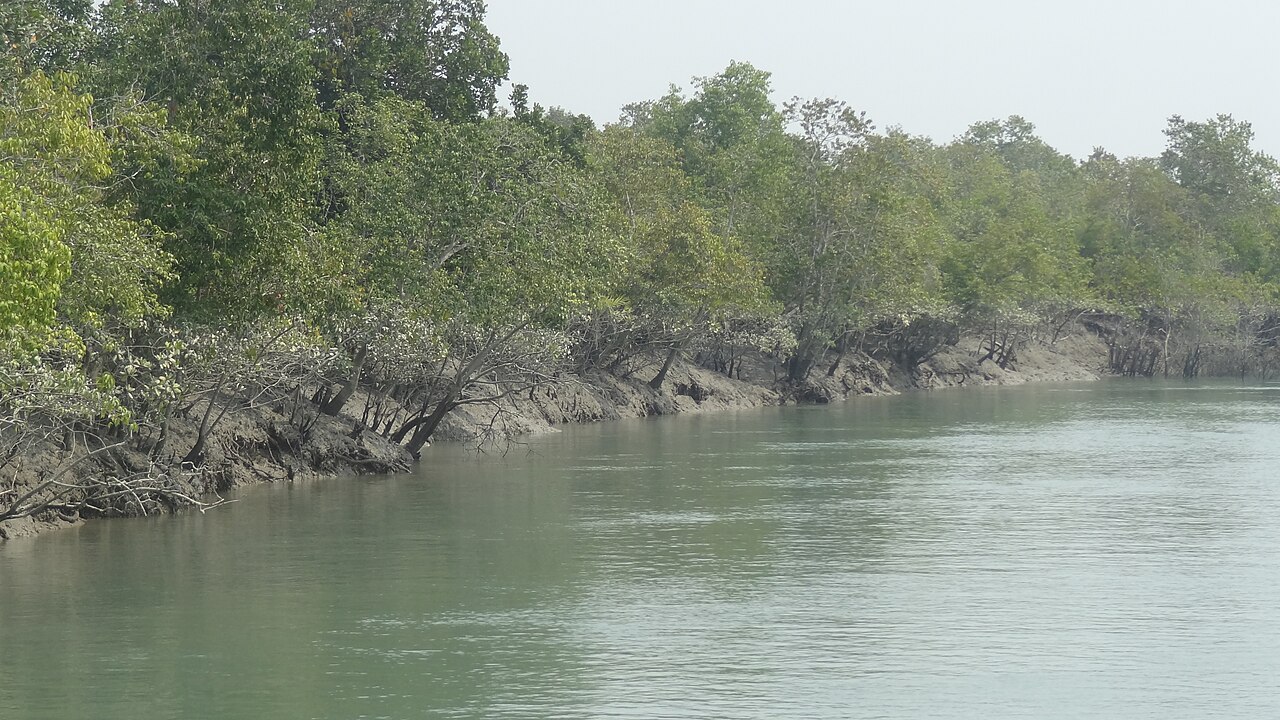
Photo: mangroves and river in the Sundarbans. Photo: Amartyabag / Wikimedia Commons (CC BY-SA 3.0)
Source: Prothom Alo



Comments
(0)