
Airborne spore detectors can tell a farmer that a fungal pathogen is in the field before any symptom shows, sometimes two weeks ahead, but the companies building them are still working on the next question: what the farmer should do with the number. Toronto-based Spornado's field samplers collect airborne fungal material on cassettes sent to partner laboratories for DNA analysis; it now has molecular tests for about 35 pathogens across 18 crops and units in roughly 25 countries. "They don't care that there's 5,000 spores in their field," said chief technology officer Michael Saleh. "They need to know what it means and what they should do on that day."
Keith Gabert, agronomy specialist with Alberta Canola, said fungicide decisions rest on the disease triangle of a susceptible crop, favourable weather and the pathogen; growers can judge the first two, but for airborne diseases such as sclerotinia the third "has been just a black box for us for decades", which is why many spray as a precaution when a good crop enters flowering in wet weather. A "no spores detected" reading could spare a field an unnecessary pass, though he cautioned that presence is not risk, since a few spores under ideal conditions may matter more than many under poor ones: "At the moment, I simply view it as refining the timing of a foliar fungicide."
Spornado chief executive Kristine White said the company first imagined cutting fungicide use, but the growers it works with wanted lower risk rather than fewer applications, and adopting a new tool is itself a risk. "Farmers care about ROI, at the end of the day," Saleh said. The company's low-cost units, 1,600 deployed worldwide, have built a large historical dataset that machine-learning specialists are now linking to disease that later appeared; by the 2027 season Saleh expects Spornado to give more direct spray-or-don't-spray guidance with a confidence level, though disease-specific validated risk levels are further off: "I can't offer that yet. No one can." Producer associations already run sampler networks in potato regions, and one US retailer used an early southern-rust detection to move fungicide stock closer to the Midwest outbreak that followed three weeks later.
Others take different routes. Australia's BioScout captures and images airborne material and identifies spores with computer vision and AI, presenting pressure as a traffic light; chief science officer Michelle Demers said rainfall, crop stage, variety and available fungicides all shape what a count means, and two stations were field-tested in 2026 at J.P. Wiebe Ltd, a potato and grain farm near MacGregor, Manitoba, through EMILI's Innovation Farms. Paramoria AgriScience, near Lethbridge, built the Spornik, a rugged wind-driven sampler for quarter-section Prairie fields, and tests for sclerotinia, fusarium head blight and stripe rust; it has found pressure surprisingly local, with adjacent fields giving very different counts. "Since there are no established thresholds, we are building those ourselves," co-founder Brent Puchalski said. Reporting by Glacier FarmMedia.
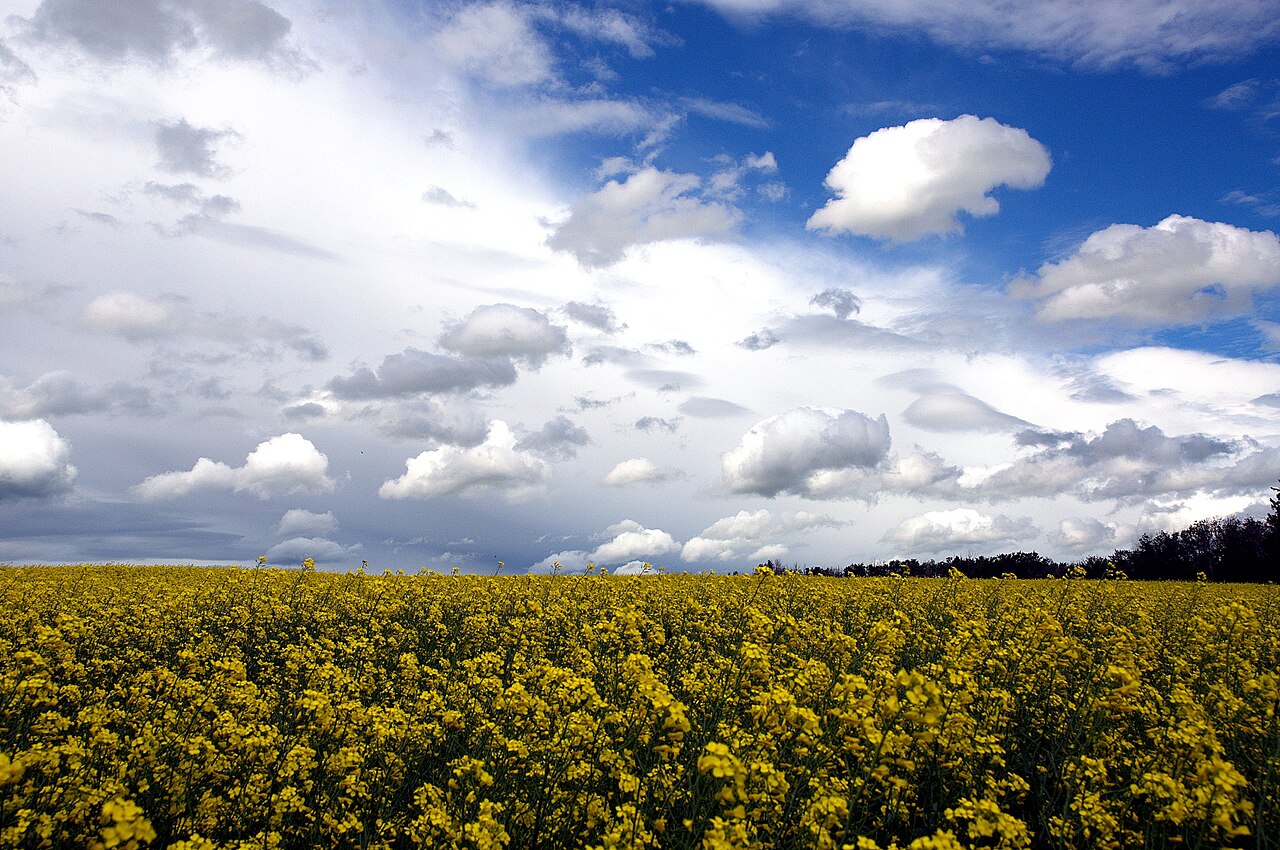
Photo: Darren Kirby / Wikimedia Commons (CC BY-SA 2.0)
Source: AG Canada

Comments
(0)