
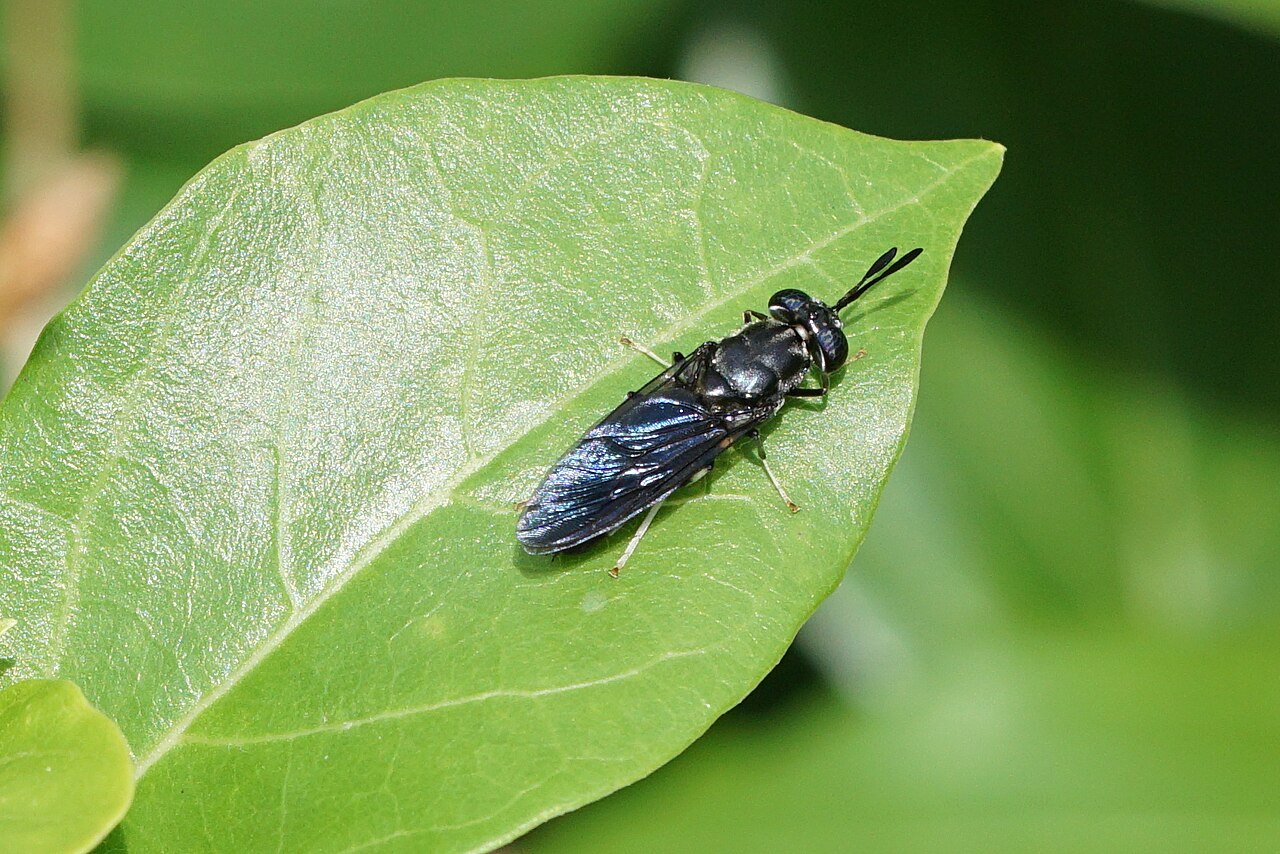
Researchers at the Hyderabad campus of the Birla Institute of Technology and Science (BITS Pilani) have developed a low-cost system that uses black soldier fly larvae to turn food waste into protein-rich animal feed. The institute says a unit costs Rs 2,500.
The larvae contain about 20 percent protein and 25 percent fat, which makes them a possible alternative feed ingredient for poultry, pig and fish farming. What is left behind, known as frass, could also be used to improve soil.
The system relies on the insect's appetite. The larvae eat vegetable, fruit and cooked food waste and turn it into nutrient-rich biomass during a feeding cycle of about two weeks, much faster than conventional composting, which takes weeks or months, said Prof. Sankar Ganesh Palani of the Department of Biological Sciences, who developed it with his research graduate Dr Atun Roy Choudhury.
"The black soldier fly is a harmless insect whose larvae feed on vegetable and fruit waste, cooked food and manure," said Dr Atun Roy. "They do most of their eating in a two-week larval stage, converting waste into body mass far more efficiently than warm-blooded animals."
The unit is built from materials sold in hardware shops: a vessel for egg-laying and hatching paired with a harvesting bucket. A 7-8 cm layer of coconut coir and sand filters the liquid that drains out, which is recirculated to keep moisture at 50-60 percent and to help mature larvae move into the harvesting bucket, reducing handling by hand.
In initial trials the researchers recorded about 2 kg of larvae a day over a 20-day period. The institute says the enclosed design also deals with smell, one of the main objections to processing organic waste on site, and that the system could be used by hotels, schools and colleges, hospitals and housing societies to handle separated wet waste close to where it is produced.
The report was written by Rajasree Singh.
Photo: Vengolis / Wikimedia Commons (CC BY-SA 4.0)
Source: Rural Voice
Comments
(0)