
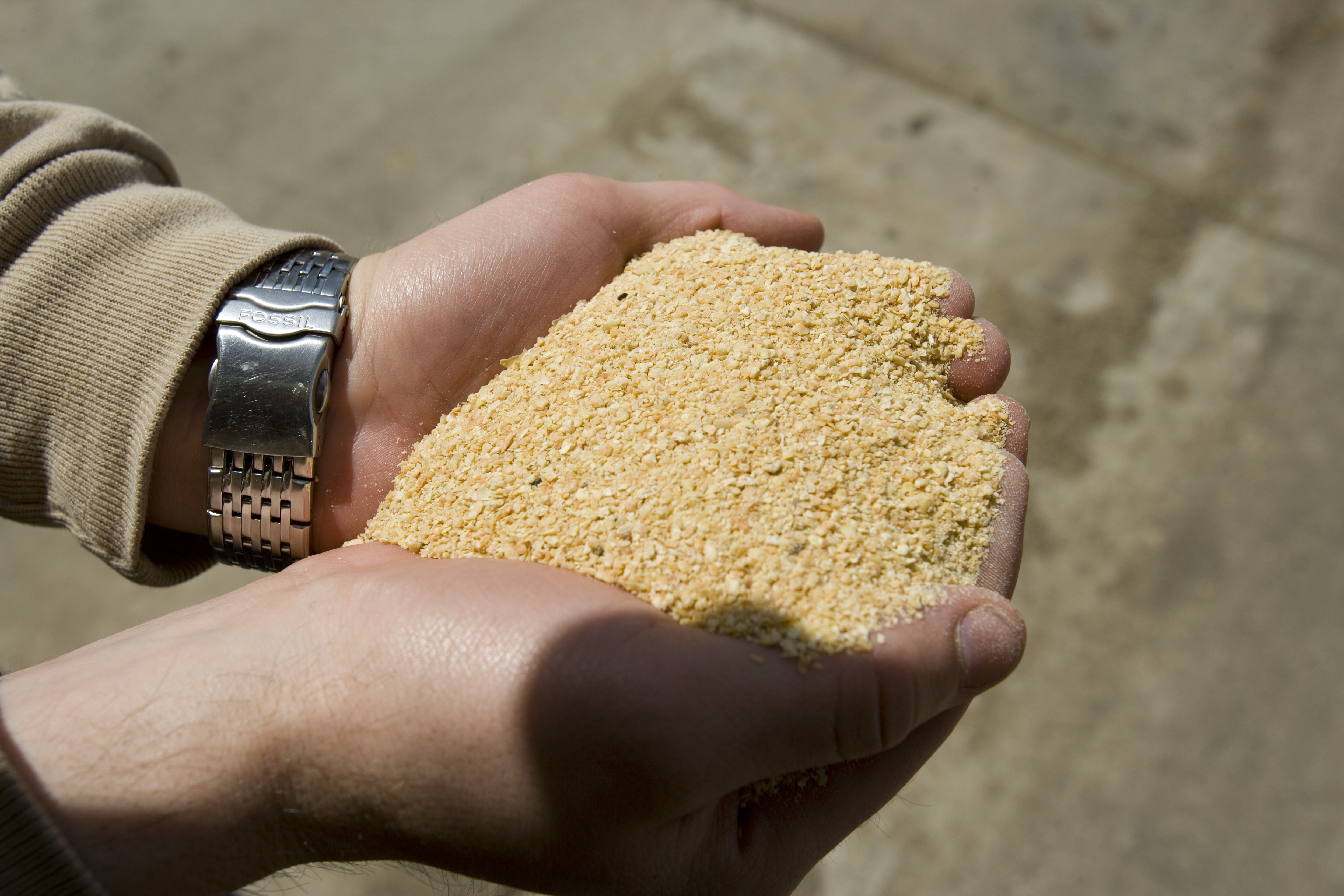
Pork producers who want heavier pigs next summer should be thinking about it now, according to research funded by the Soy Checkoff. Raising the share of soybean meal in grow-finish diets helped pigs keep performing through periods of heat stress, limiting the usual summer fall in carcass weights.
In a commercial trial, pigs fed the higher soybean meal diets produced carcasses that averaged 5.5 pounds (about 2.5 kg) heavier than pigs fed the operation's previous high-energy ration. The change also cut the feed cost per pig.
Tim Bardole, a soybean farmer and pork producer in Iowa, said the timing is the point: the pigs that will be sold next summer are in the barn this winter, when their diets are set. A farmer who waits for the heat to arrive before thinking about carcass weights, he said, has already missed the formulation decisions that count.
The practice is spreading. A 2026 Soy Checkoff survey found that 60 per cent of swine nutritionists, who between them represent about 3.6 million sows, have raised soybean meal levels in late-finishing diets to offset the summer dip.
The checkoff has also launched Feed4Profit, an online ration-analysis tool that lets pork producers and nutritionists work through the research and feeding resources.
Photo: United Soybean Board / Wikimedia Commons (CC BY 2.0)
Source: Michigan Ag Today

Comments
(0)