
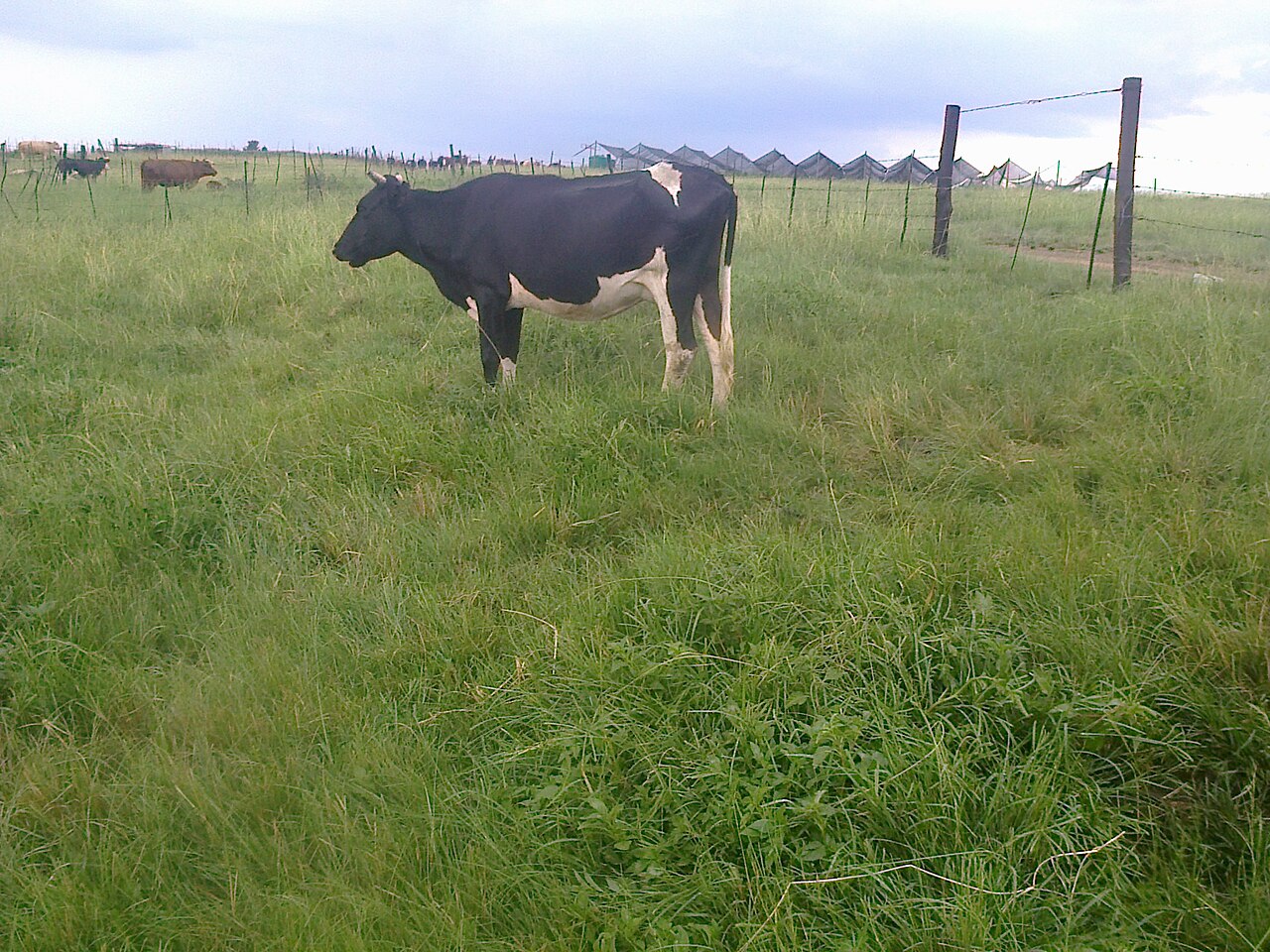
South Africa may have to learn to live with foot-and-mouth disease (FMD) for good unless the government improves surveillance and farmers do more to report infections and vaccinate their herds, dairy farmers told a panel at the Royal Show on Friday.
Andrew Morphew, a dairy farmer and spokesperson for the group FMD Response SA, said the country was nowhere near control. "If we continue on our current path, we will never control FMD," he said, adding that dairy farmers should prepare for an endemic setting in which regular vaccination and strict biosecurity remain essential.
His main worry was that nobody knows how far the virus has spread. There is no broad surveillance, he said, and vaccination now suppresses the clinical signs farmers used to rely on, so infected animals can pass the virus on without showing symptoms. Farmers also have little incentive to report suspected cases. The Department of Agriculture is responsible for surveillance, but only one laboratory, at the Agricultural Research Council, is authorised to test for FMD. Morphew called for more testing capacity and a published national surveillance plan.
He also said progress was being measured the wrong way. Counting doses administered is not the same as knowing how many animals are immune at a given time, he argued; the international benchmark to stop transmission is 80% immunity across the population, and with vaccine immunity lasting about six months, campaigns lose ground as earlier vaccinated animals become susceptible again.
Dairy farmer Tom Turner described what an outbreak cost him even though his own herd was vaccinated. The disease spread among neighbouring cattle and reached 100 of his cows, costing his operation about R960,000. Without vaccination, he estimated, the bill could have been about R12 million, which might have ended the business. Vaccinating his herd costs him about R400,000 a year.
Turner supports compulsory vaccination but doubts producers will pay for it voluntarily. "I cannot see farmers willingly spending R47 per cow twice a year," he said, suggesting the government will probably have to contribute. Both farmers stressed that biosecurity on one farm is not enough when the neighbours' cattle remain unprotected.
Morphew said uncertainty over whether vaccination will become compulsory, who will pay and how future outbreaks will be handled makes planning very hard, and that misinformation, cost and traceability worries keep some farmers away. He warned that fewer visible symptoms should not be mistaken for the disease going away: "When we believe the danger has passed, we relax our precautions. That is when the virus returns." The panel was reported by Lindi Botha for Farmer's Weekly.
Photo: Mthembu Mkhohlane / Wikimedia Commons (CC BY-SA 4.0)
Source: Farmers Weekly South Africa

Comments
(0)