
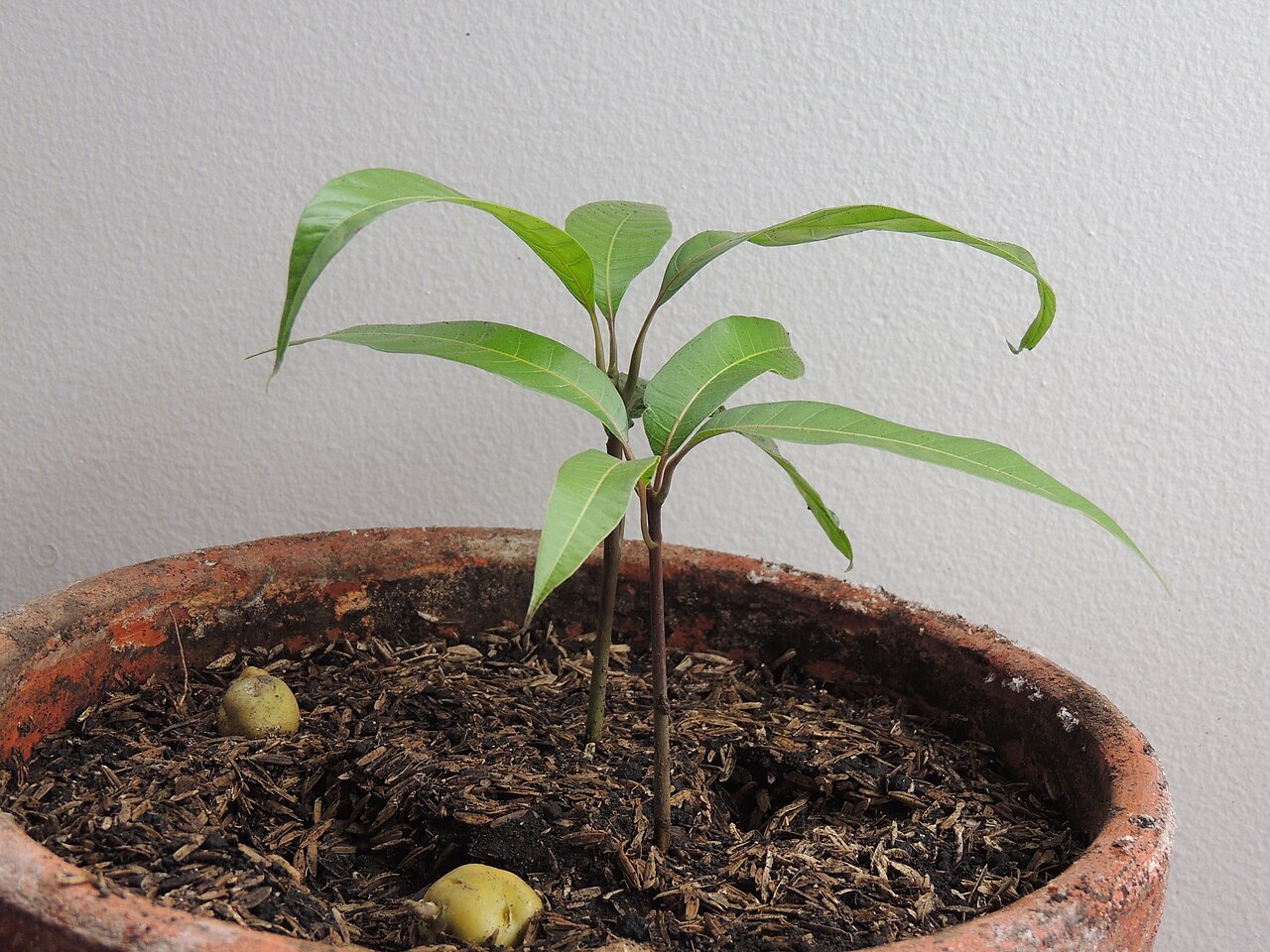
Short of ground, city households are turning to the roof — and the mango, the most loved of fruits, grows there too. Grafted saplings make it possible.
Why a grafted sapling
It establishes easily, fruits quickly, bears more than a seedling tree, and suits a pot and a small space.
The steps
- The site: a part of the roof that gets full sun and drains well.
- The container: a large pot or drum, 18–24 inches deep and wide, with holes in the base.
- The soil: 60 per cent loam, 20 per cent organic manure and 20 per cent sand, with a little TSP and potash.
- The plant: a good grafted sapling — Amrapali, Himsagar or Langra — set firmly and watered lightly.
- Water: keep the soil moist but never waterlogged; daily in summer, every two or three days in winter.
- Feed: organic manure monthly from the second month; potash at flowering.
- Pruning and care: remove dry wood and leaves; act quickly on disease.
- Pests: organic pesticide as needed, and pheromone traps.
- Fruit: in two to three years, picked carefully when ripe.
Why it is worth it
- Fresh, pesticide-free fruit, healthier than the market's.
- A use for small urban space, and a greener roof.
- Money saved, and a tree that pays for years.
- A cooler house and cleaner air.
- A hobby that calms the mind.
Photo: A mango seedling in a pot — SYFTV1 / Wikimedia Commons (CC0)

Comments
(0)