
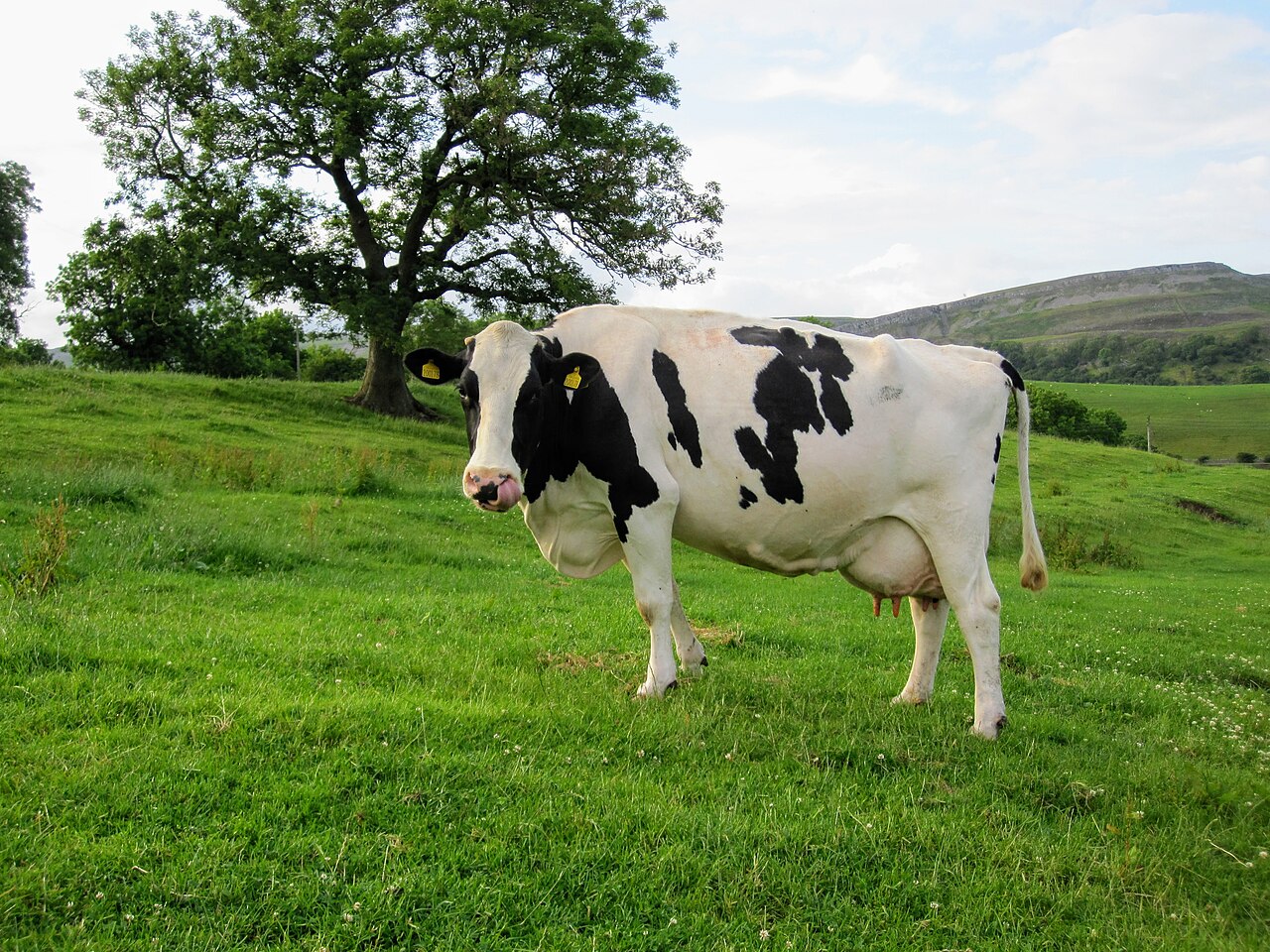
Cows at Sixty Acres Farm near Truro in Cornwall produced 12,351 litres of milk each at 4.43% butterfat and 3.35% protein in 2025, the highest yield in the UK on twice-a-day milking according to National Milk Records' annual production report.
Herd owner James Johns told Farmers Weekly he has never pushed hard for litres. "We don't actively chase yield. We do the essentials as best we can, and milk follows," he said. He farms the 305-cow herd with his father Andrew, his wife Marie and his sister Katy as tenants of the Trewithen Estate, on 303 hectares that include winter wheat and spring and winter barley, and supplies Rodda's creamery.
Feeding is kept simple. One total mixed ration, a 50:50 mix of grass and maize silage with 4.4kg of a rape-based protein blend, home-grown wheat and barley, minerals and fats, goes to the whole milking herd once a day. Grass is cut about four times between late April and September, and 81ha of maize is grown to carry 15 months of forage. Up to 5kg of concentrate is fed to yield in the parlour; the overall rate was cut from 0.35kg to 0.29kg a litre when Rodda's quotas reduced production by 8%, saving about 30 tonnes of concentrate a month for a drop of 2-4 litres a cow, to 38kg a day.
Breeding relies on artificial insemination with Semex sires and genomic testing of heifers from birth for more than a decade. Average profitable lifetime index has risen to £198 for the cows and £245 for the heifers. Johns said genomics can push traits to extremes, and small teats became a problem, so teat length is now a priority. The best animals get two or three services with sexed semen before 100 days in milk; after a 50-day waiting period the calving interval is 410 days, which he says suits high yielders.
The cows are housed all year on deep sand in flexible cubicles, with fans, brushes and water troughs cleaned three times a week; beds are cleaned twice a day because high yielders peaking at about 51kg leak milk. They are milked at 6am and 5pm through a 15/30 herringbone swingover parlour in four groups, so that no cow is away from the shed for more than an hour and a half.
Johns said he has never seriously considered milking three times a day: the routine works, and the extra labour of a third milking is a major deterrent. Milk fever in the herd sits below 5%, which he credits to keeping the dry-cow diet consistent.
Photo: Littledumpy34 / Wikimedia Commons (CC BY-SA 4.0)
Source: Farmers Weekly

Comments
(0)