
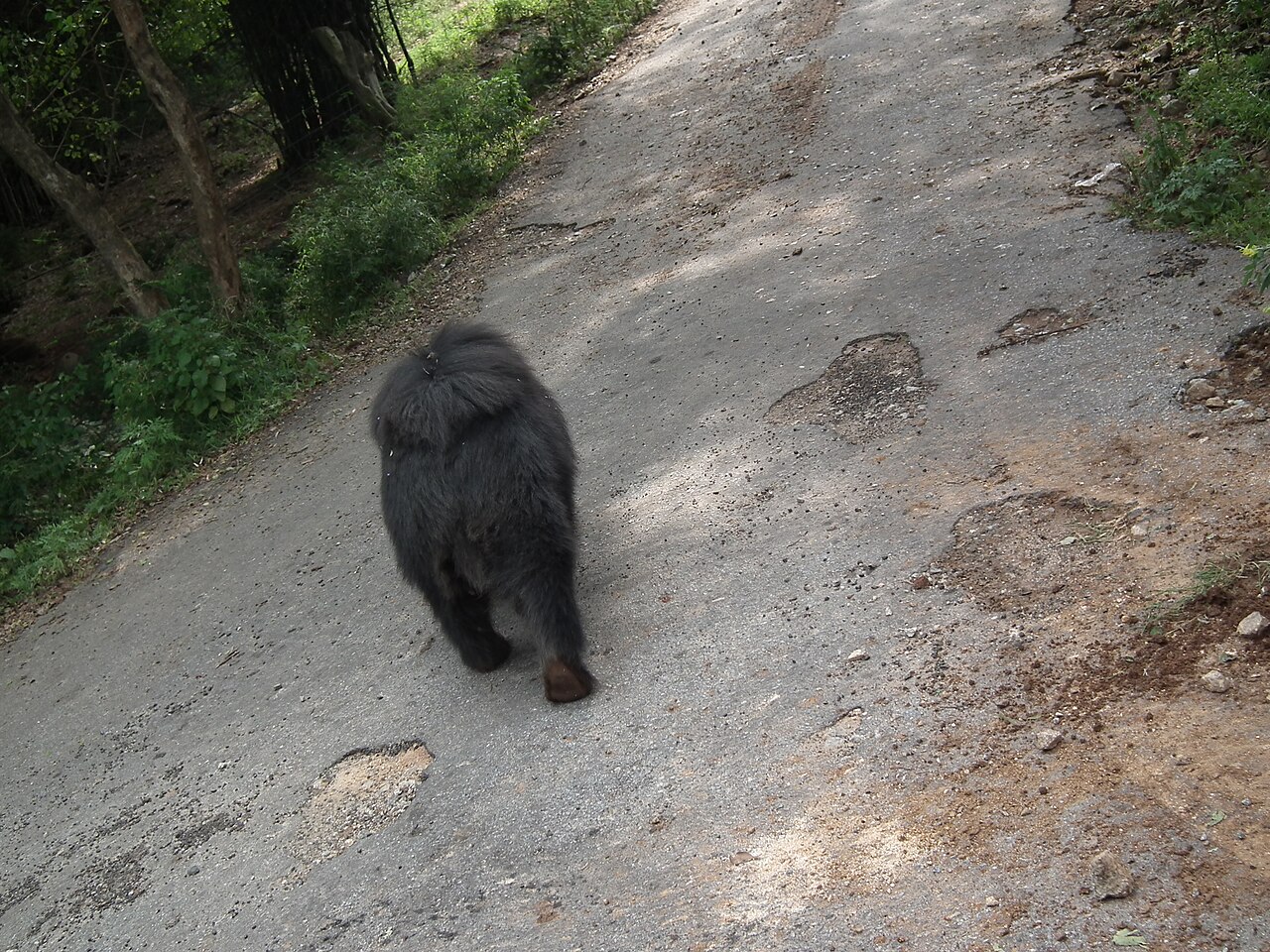
Female sloth bears with cubs in central India's Panna Tiger Reserve keep clear of other adult bears, choosing hotter and more rugged ground and shifting when they are active, a new study has found, Mongabay India reported. Published in Ecology and Evolution, it drew on camera-trap images from more than 47,800 trap nights over six seasons, two summers and four winters, between 2018 and 2021 in the reserve's core zone in Madhya Pradesh.
Lone adults preferred mixed forest and cooler habitats; females with offspring used hotter, rougher terrain and areas lone adults visited less. "Space-wise, they (females with offspring) are actually avoiding lone adults very distinctly," said lead author Sankarshan Chaudhuri, a project scientist at the Wildlife Institute of India. Sloth bears are mostly active from dusk to dawn, but mothers were slightly more active by day in every season, a fine split in time the team had not expected.
Mothers also avoided the Ken river and other riverine habitats, especially in summer; the researchers think this may protect cubs from large predators drawn to water. Only when fruit is plentiful in summer did the separation weaken. The cost may be heat stress: bears do not hibernate but rest in shelters by day, and mothers ended up in hotter places just when pregnancy and nursing raise their heat load.
Why they keep apart is not settled. The team suggests mothers may be avoiding competition for food or protecting cubs from infanticide, though Chaudhuri stressed there is no firm evidence that sloth bears kill cubs; random movement could not be ruled out either. The images came as bycatch from the All India Tiger Estimation cameras, and only 8.4% of bears detected were mothers with young.
Nishith Dharaiya, co-chair of the IUCN Sloth Bear Expert Team, who was not involved, called it an important contribution to the bears' breeding ecology, rarely studied in India. Because reports of conflict with people often involve females with cubs, he said, the findings can help understand bear activity around conflict-risk zones. The study did not cover the human-dominated buffer zone, which the authors say future work must include.
Reporting by Priyanka Shankar for Mongabay India.
Photo: Rameshng / Wikimedia Commons (CC BY-SA 3.0)
Source: Mongabay India

Comments
(0)