
Regenerative agriculture can raise smallholders' incomes while restoring soil and saving water, and India now has proof that it can also earn farmers carbon money, argues Dr M.L. Jat, Secretary of the Department of Agricultural Research and Education and Director General of the Indian Council of Agricultural Research (ICAR), in a column for Rural Voice. The views are the writer's own.
His example is an event in Ludhiana on 14 September 2026, where payments of more than Rs 2.9 crore were announced for about 2,550 farmers in Punjab and Haryana under Grow Indigo's Aadi initiative, developed with ICAR's technical guidance. The first issue covered about 30,000 acres and more than 50,000 credits; most farmers received Rs 4,000-15,000 for practices adopted in 2019-2022. The programme estimates the enrolled fields saved 45 billion litres of water and kept more than two lakh tonnes of crop residue from being burnt. Farmers could take an assured upfront payment or 75% of net carbon revenue after sale.
Jat stresses that a farmer's main return must come from a productive, economical and resilient farm, with carbon revenue as an addition. Cutting tillage alone is not enough: crops still need nutrients and protection, so farmers need combinations of practices tested for their fields. In the rice-wheat belt he names direct seeding, better irrigation, keeping residue on the field and timely wheat sowing; in rainfed areas, moisture conservation, legumes, trees and livestock.
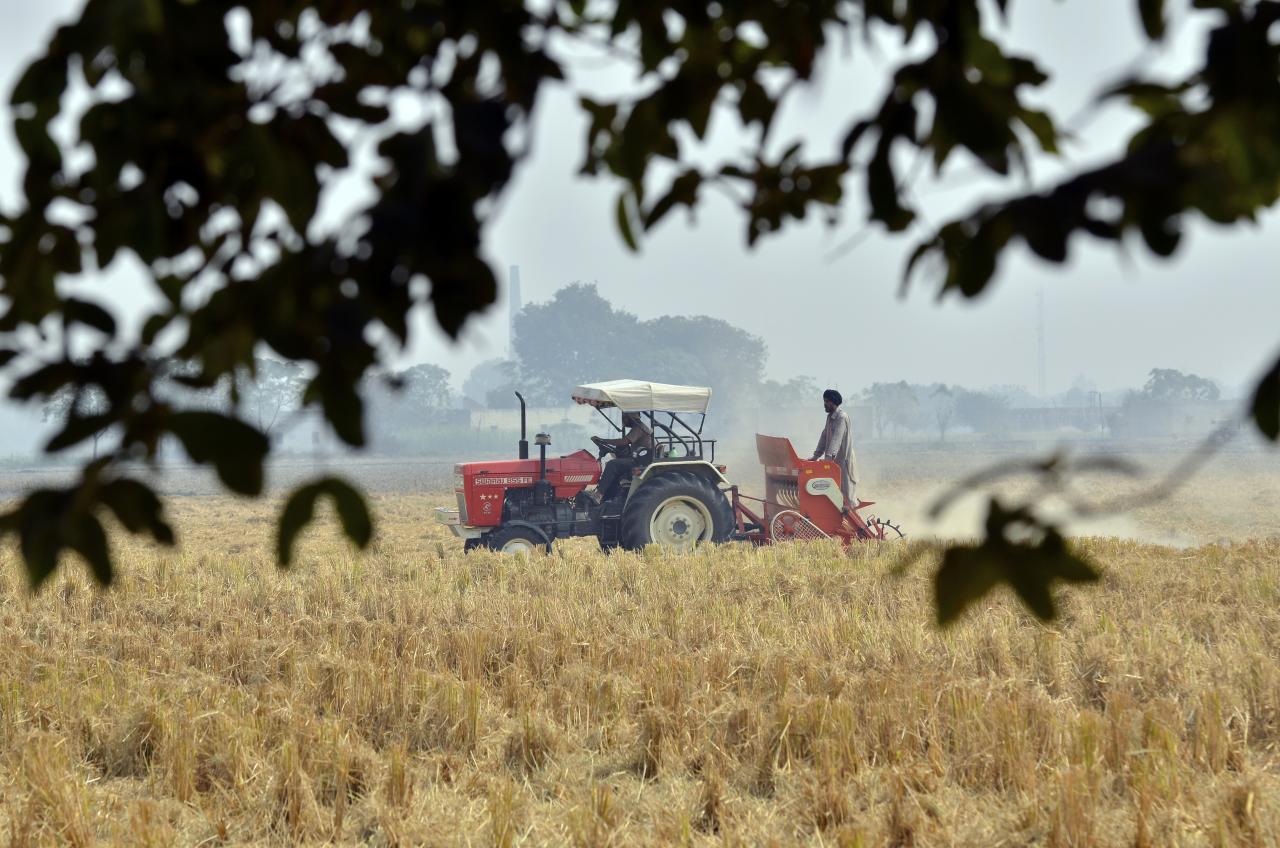
He points to government support: the National Mission on Natural Farming, approved in November 2024 with Rs 2,481 crore to 2025-26, along with schemes for organic farming, micro-irrigation, soil health cards and custom hiring centres for machinery. The agriculture ministry is backing 11 carbon pilot projects through ICAR and state agricultural universities. He cites Ransinh Kalan village in Moga, which has kept stubble burning at zero using Happy Seeder-sown wheat and residue management.
For smallholders to benefit, he argues, monitoring must be affordable, ideally shared through farmer producer organisations and cooperatives, contracts must be clear and in local languages on revenue shares, deductions and payment dates, and women and tenant farmers must have fair access. Credits must rest on independent verification and safeguards against double counting. The test of success, he writes, is the extra net income farmers keep, together with lasting gains in production and natural resources.
Photo: CIAT / Wikimedia Commons (CC BY-SA 2.0)
Source: Rural Voice
Comments
(0)