
Each farmer who drills a borewell is acting rationally, but all of them together are draining the water they depend on. That is the argument of Rishu Garg's book The Borewell Paradox: The Rationality of an Irrational Crisis, as Yogesh Kumar, who works on participatory development and water governance, describes it in a signed review in Down To Earth.
Kumar writes that the book refuses to blame the farmer. Its farmer reads the sky and the soil, weighs the risk of losing a crop and has bills to meet: the season's crop, school fees, household costs, debt and social obligations. When the family's survival is at stake and there is no other option, drilling deeper is a reasonable gamble. Seen across a whole landscape, the same choice drains future security.
Garg travels from the northern hills and western plains to the hard-rock aquifers of central India, the drying tanks of the peninsula and the Aravalli and Shivalik regions. In the reviewer's reading, these journeys show that water was once managed by local institutions and customs that treated access, sharing and recharge as social questions, not only engineering ones.
The mechanised borewell changed that. It let individual farmers tap water that lies under property lines but does not stop at them, so a shared aquifer could be captured by private investment. Technology, Kumar writes, increased the power to extract far faster than institutions increased the power to govern it.
The example he finds most telling comes from Ahmednagar in Maharashtra. Lined farm ponds built with government support are counted as a water-conservation success, but the lining stops the water seeping into the ground, and farmers fill the ponds from borewells. Water from a common aquifer becomes private storage while recharge falls. In summer, community wells and handpumps fail and tankers arrive while private ponds nearby stay full, yet the programme can still look successful on spending, structures built and beneficiaries reached.
Kumar uses this to make the book's point about measurement: a project can meet its own targets while the wider system declines. He urges people working on water, environment and rural development to judge a pump, pond, dam or borewell not only by what it does for its owner but by what it does to recharge, downstream users, neighbouring farmers and drinking-water security.
This is an opinion piece; the views are the reviewer's own.
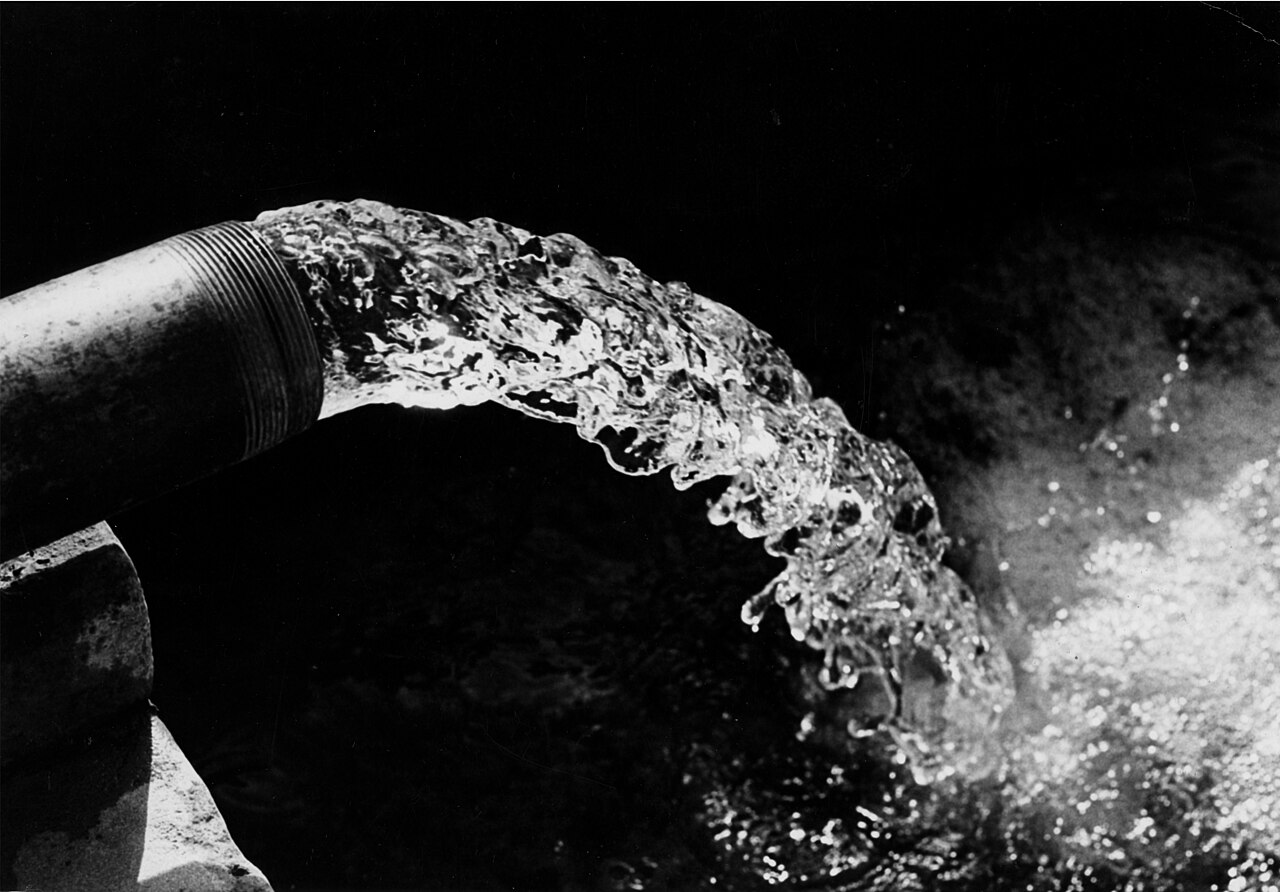
Photo: Wikimedia Commons (public domain), water from a tube well irrigating wheat in India in 1968
Source: Down To Earth

Comments
(0)