
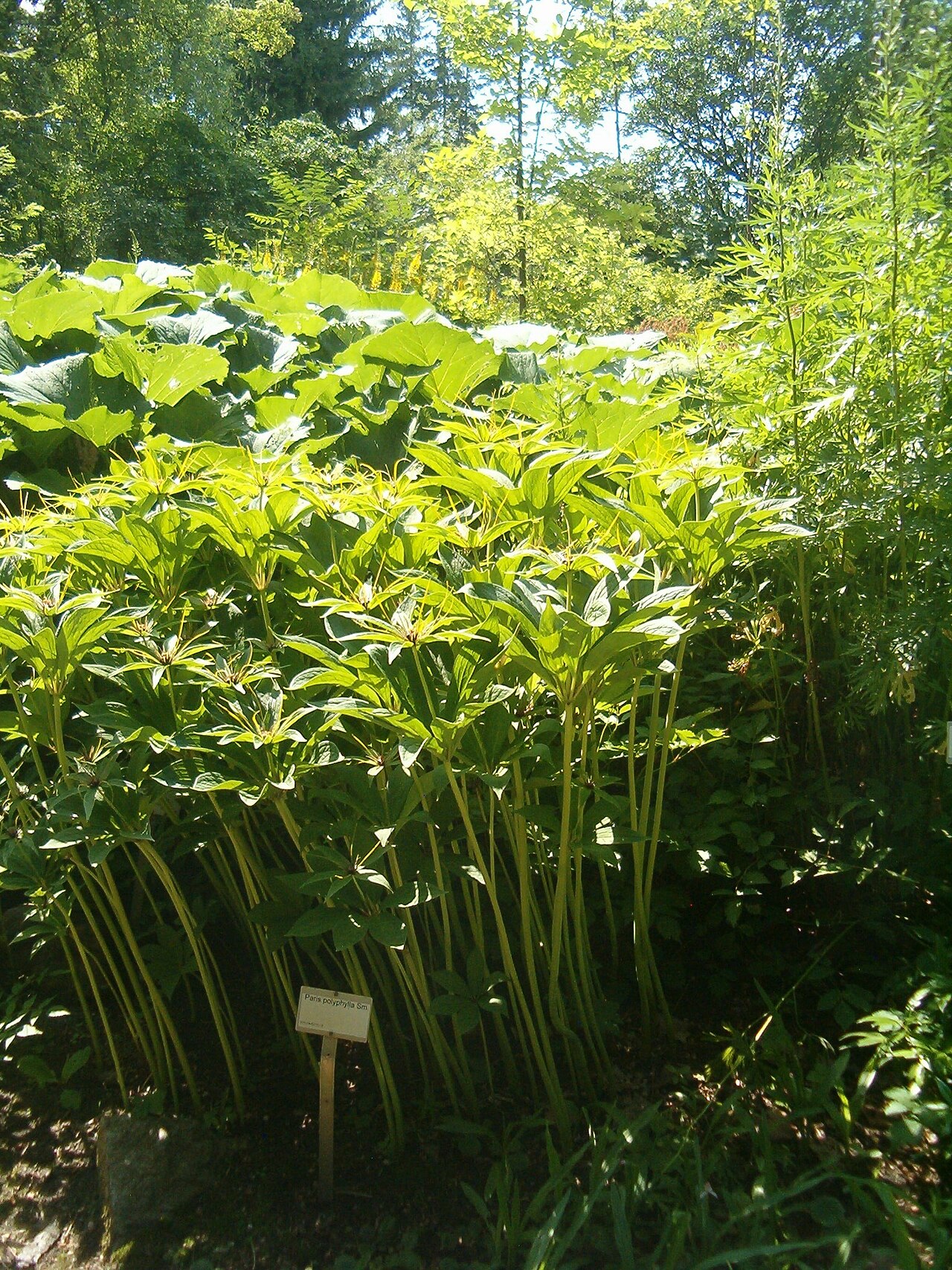
In a commentary for Mongabay India, Uttara Mendiratta, a researcher on wildlife hunting and trade and a consultant to the Wildlife Trust of India, Arunachal Pradesh conservationist Lokesh Mam and Nagaland filmmaker Thangsoi M. Khiamniungan argue that talk about illegal wildlife trade suffers from "plant blindness". More than 20% of plant species assessed for the IUCN Red List are threatened, a risk comparable to mammals, yet apart from timber and ornamental plants the plant trade goes largely unnoticed.
They looked at one species, Paris polyphylla, a slow-growing herb of high-altitude Himalayan forests listed by the IUCN as vulnerable. Collectors at two sites in northeast India told them local use was low, and that large-scale digging of its rhizomes began around 2015, paid by the kilo, driven almost entirely by outside demand. Trade peaked around 2020, when prices doubled. As easy clumps vanished, young men climbed ever steeper slopes; some were lost, and a few were never found.
Dried rhizomes go to middlemen. In Nagaland, the writers were told, consignments cross the India-Myanmar border on light "Burma Bikes". Middlemen also ask collectors, sometimes through WhatsApp groups, for other medicinal plants, orchids, mushrooms, Himalayan ginseng and insects such as Coridius stink bugs, which communities have long eaten in winter, as well as wildlife products. Loans for consignments, thefts and disputes have brought violence; in 2018 a minister told Arunachal Pradesh's assembly of assaults and a murder linked to the trade.
Both sites reported the near disappearance of the plant, and some residents believe wildlife that feeds on it has suffered.
The writers argue that protection on paper, under the Wild Life (Protection) Act 1972 or international listings, is not enough, and that strict bans can criminalise indigenous use without saving species; Kuth (Saussurea costus) kept being traded despite protection from 1985 and 1991. Farming Paris polyphylla is hard, because a harvest pays only after six to seven years and prices are set in distant markets. They favour village rules like those some Nagaland villages have adopted, and source-level monitoring by the communities with most to lose. Collectors report the plant recovering since trade slowed after 2020, which, the writers say, gives another chance.
Photo: BotBln / Wikimedia Commons (CC BY-SA 3.0)
Source: Mongabay India


Comments
(0)