
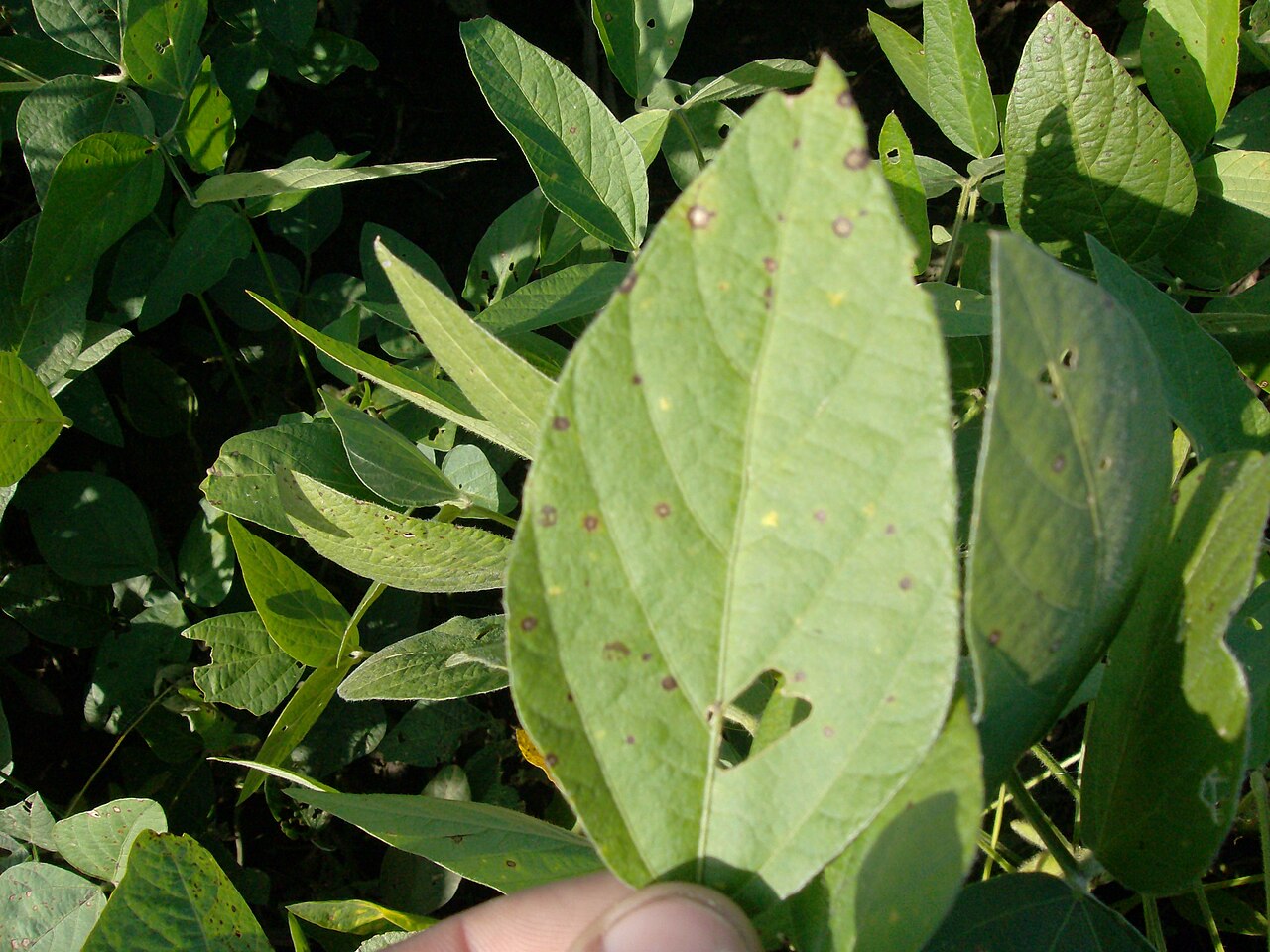
Researchers at Southern Illinois University Carbondale are building a robot and artificial-intelligence models to detect soybean diseases before symptoms appear, CropLife reports. The aim is for machinery companies to turn the predictive technology into affordable tractor or sprayer attachments for farmers.
Many soybean diseases are caused by soil-borne fungi that spread with rain, and by the time stems or leaves show symptoms the plant is too damaged to yield well. "Once the disease attacks the farmer's crops, the yield can be reduced to 60 to 70%," said Billy Ram, assistant professor of precision agriculture. Such fungi can stay in the soil for seasons, which makes prevention key.
Working in a field at the university farms infected with frogeye leaf spot, Ram and doctoral student Samuel Singh first flew a drone to make hyperspectral and multispectral maps, but its camera could not capture lesions on the undersides of leaves and low on the stem. "We're solving an engineering problem more than an agronomic problem," Ram said.
So they built a battery-powered, four-wheeled robot with GPS and several cameras aimed at the tops and undersides of plants. It can follow crop rows on its own from an uploaded field map. "The robot should be able to drive down the field, keep track of each plant, identify if the plant has a disease and which type, and then share what percentage of the crop is diseased," Ram said. The next step is developing the AI models to detect frogeye leaf spot.
Singh wants to produce maps of disease hot spots so farmers can apply fungicide to specific areas rather than spraying whole fields. The work is funded through the Illinois Soybean Center; Illinois is the top US soybean state, with 43,000 soybean farmers.
Photo: Maggilautaro / Wikimedia Commons (Public domain)
Source: CropLife
Comments
(0)