
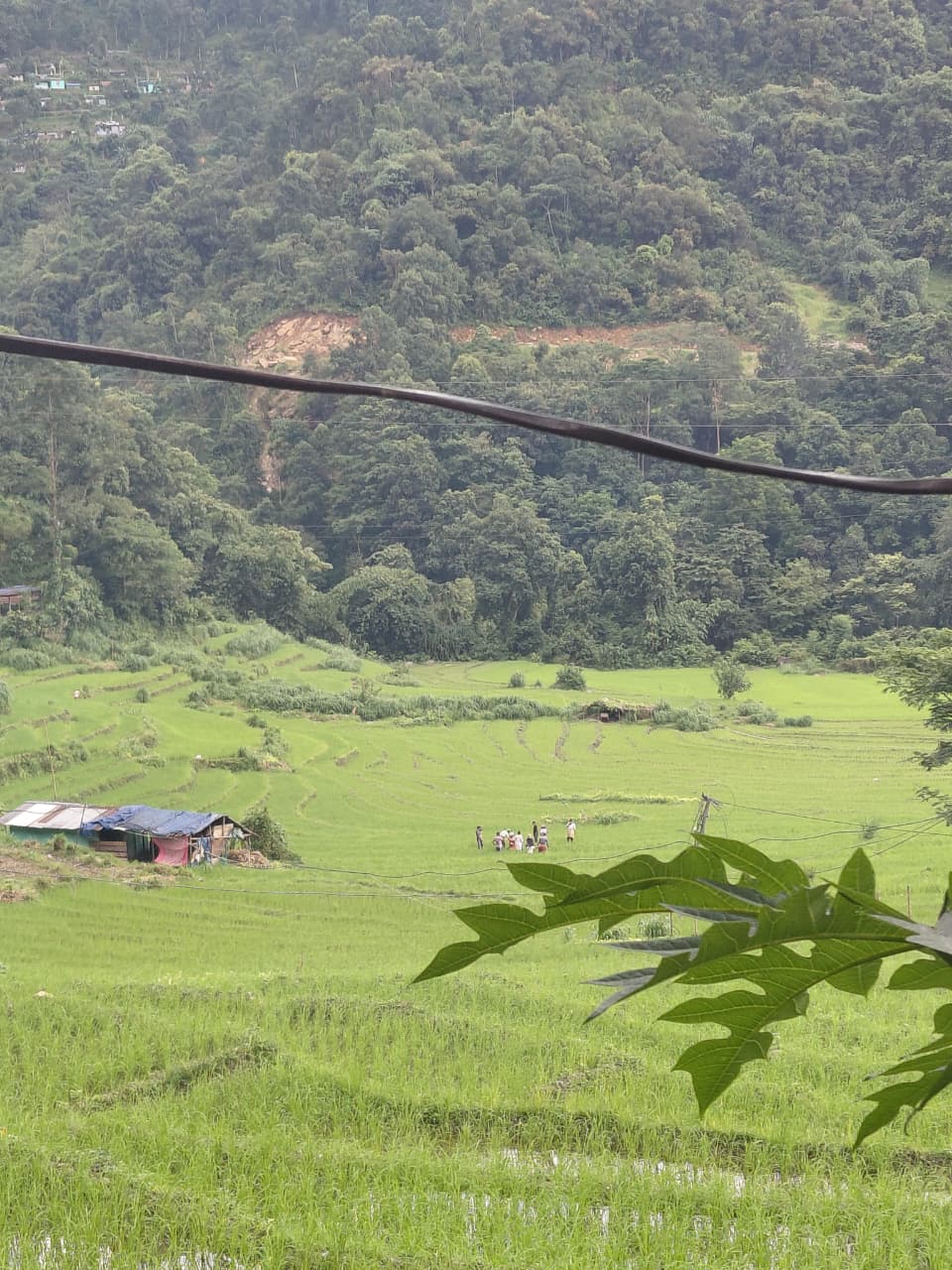
Traditional seed banks do more than insure against disaster: they keep the genetic diversity of locally adapted crops alive, along with the knowledge communities have built over generations. That is the argument of a World Food Day column in Down To Earth by Anushka Gurung and Sonam Yangchen Bhutia, who describe how households in Sikkim and nearby areas do it with what they have at home. The views are the writers' own.
Walls, ceilings and roof edges serve as drying surfaces. Cucumber and pumpkin seeds are spread out or pressed against walls, where timber in wooden houses offers a warm, dry surface that draws moisture out. Maize cobs are tied together and hung from ceilings, rafters or eaves, off the damp ground; chilli, tree tomato, garlic and beans are dried the same way.
Above the chula, the household stove, sits the bhar, a raised rack of bamboo and wood that holds local beans and pulses, firewood, medicinal herbs such as chingpheng and chiraito, and meat. Its steady heat and smoke dry the seeds slowly, and smoke and soot are traditionally believed to keep insects and moisture away. The nanglo, a bamboo winnowing tray, is used to sun-dry pulses, and a single tray can show how many kinds of seed one household keeps.
The writers link this to the kothey bari, the homestead garden, which they call a biocultural refugium: spring onions, garlic, turmeric, radish, cardamom, peas and leafy greens grow side by side with medicinal plants such as satuwa (Paris polyphylla), bamboo and forest trees that are cultivated rather than only gathered from the wild.
Such practices, they argue, are community-based conservation, resting on generations of knowledge about when to harvest, what to keep, how to dry it and when to sow it again. As food systems favour high-yielding hybrids, genetic erosion and cultural loss threaten resilience, particularly in places like Sikkim, which remains food-insecure. Preserving traditional seed, they write, is about keeping future choices open.
Photo: Cho21 / Wikimedia Commons (CC BY-SA 4.0)
Source: Down To Earth

Comments
(0)