
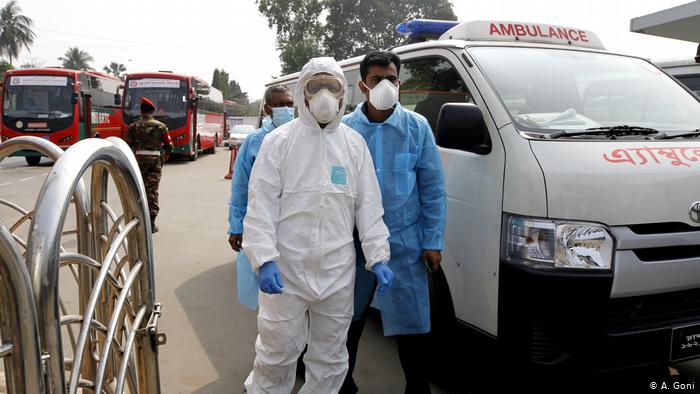
Covid-19 has thrown the whole world into turmoil, and no one can say how to escape it. The world's leading scientists and researchers are at a loss, and even powerful heads of state are helpless before this virus. In Bangladesh the coronavirus situation is steadily getting worse, and the number of infections has begun to grow geometrically. As I write, 12,85,261 people have been infected worldwide and 70,344 have died. According to the Directorate General of Health Services, the number of tested coronavirus cases in Bangladesh has reached 123, of whom 12 have left us. The numbers are rising alarmingly fast. When developed countries with advanced health care have stumbled so badly against the coronavirus, I cannot imagine what could happen in a state like ours. With our weak health sector, we should have taken a firm stand against the coronavirus. I want to say at the outset that I do not know much about the state's health care planning, policy and policymaking. I have usually thought only about agriculture and farmers. In this hard time I am writing about the problems I see, face and understand as an ordinary citizen and a media worker.
A head start lost
The coronavirus appeared in Wuhan, China, last December, and the first case in our country was identified on 8 March. Even leaving December aside, we had two months. In that time, with the help of the world's media, we learned how dangerous the coronavirus was, and we saw how China tried to resist it. But did we make any real preparation? As far as I know, the World Health Organization gave Bangladesh guidelines on 3 February on what it had to do to prevent the coronavirus. Astonishingly, it was nine days later that we managed to issue a letter for thermal scanning at immigration points. We arranged a few isolation beds in hospitals, but could not arrange PPE for doctors and nurses; we even saw notices telling doctors and nurses to arrange their own masks and gloves. Where we needed to run ahead of the virus, we took decisions very slowly. We were surprised to hear of a shortage of test kits. The truth is, we seem to have assumed the coronavirus would not come to our country.
From the media I learned that about six and a half lakh people entered the country by various routes between 21 January and 17 March. Did we screen these six and a half lakh people properly? In the second week of February I went to the airport to receive a friend, and at the immigration point I saw no testing or arrangements beyond a thermal scanner. Not only that: several people arriving from China told me at the time that they sat at the airport for hours waiting for a health check, but no doctor or anyone else was there to examine them, and in the end they left without any test. Learning of this, I had my news team run several reports on television. Could we not have put those who returned from Italy or other countries in the last week of February into institutional quarantine? They should have been quarantined even if it meant pitching tents in an open field. But at the time we noticed a lack of coordination among our government officials. Some returnees from abroad were taken to the Ashkona Hajj Camp, and we heard of mismanagement there too. We are perhaps now about to pay the price for this lack of coordination and mismanagement.
Health spending and the farmer
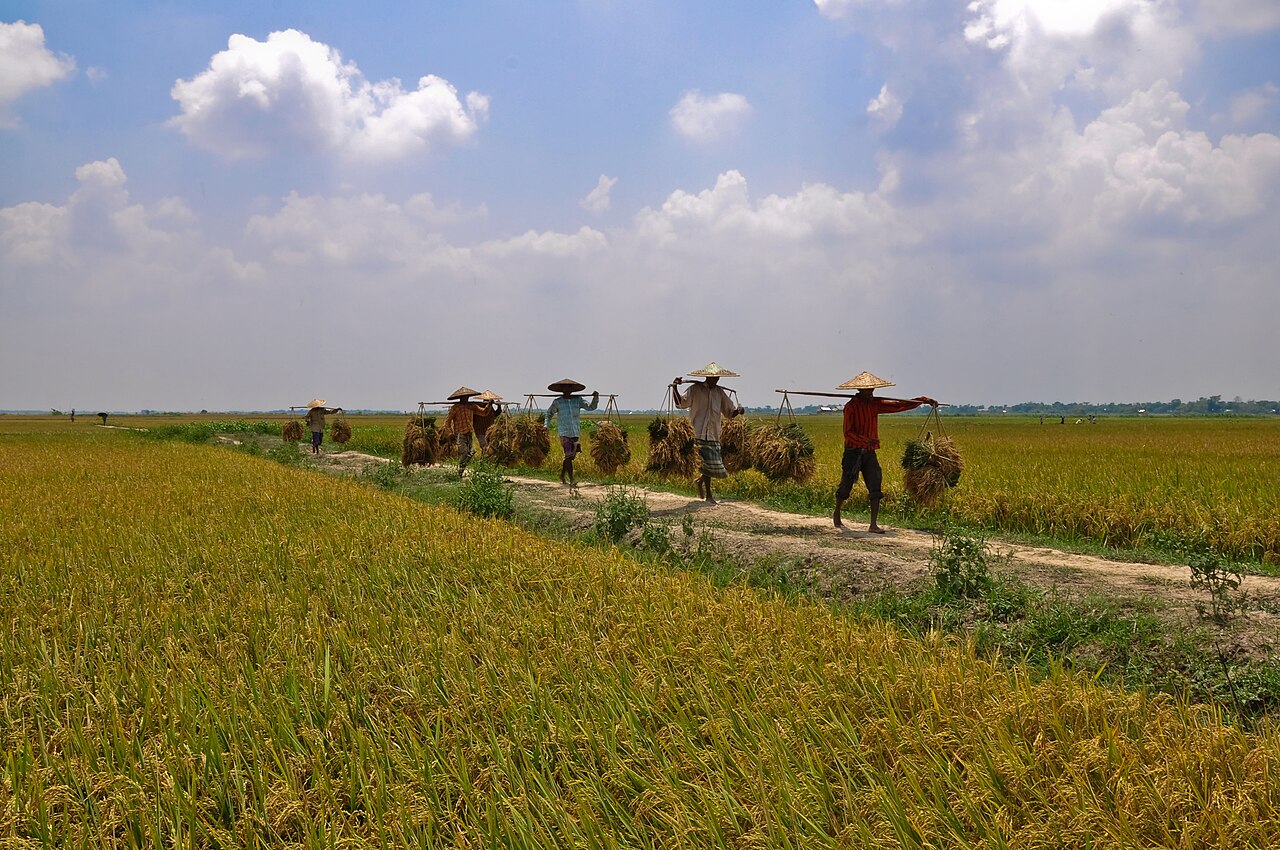
Do we know how much is allocated per person for health? An organisation called Doctors for Health and Environment has worked it out. In the 2019–20 budget, the operating expenditure of the Health Services Division was set at Tk 10,007 crore and development expenditure at Tk 9,936 crore, while the Health Education and Family Welfare Division was allocated Tk 3,457 crore in expenditure and Tk 2,332 crore in development spending, a total of Tk 25,732 crore. So the health allocation is 4.92 per cent of the national budget and 0.89 per cent of GDP. On that basis the budget allocation for health comes to just Tk 1,427.77 per person a year. We have never thought about the health sector. I have tried many times to raise the issue of farmers' health. Farmers have always been deprived of health care, and no one has made them aware of their health either. Every time, in recommendations for the agriculture budget and the farmers' budget, I have urged priority for expanding farmers' health care, to tackle farmers' occupational hazards and bring rural people under better health services.
Anyway, rather than talking about what should have been done in the past, we need to focus now on what should be done. Having declared a holiday, we sent lakhs of working people from Dhaka to the villages, and then forced them to come back to Dhaka, walking long distances through immense hardship. If any of them was infected, they have infected ordinary people in the villages; and if someone in their village was already infected and they caught it, they will now infect people in the city. This mismanagement has increased the risk of community transmission of the virus, and we have already had reports of community transmission. Our society and people are becoming more unsafe every moment. Above all, ordinary people are frightened and losing trust, and in this situation they must be given hope.
The other day I was reading a BBC report online. To mark a hundred years since the 1918 Spanish flu pandemic, a writer named Richard Gray wrote a long article in 2018. He noted that although the Spanish flu hit Alaska hard, some communities there managed to protect themselves. Finding out how they avoided infection, it emerged that these communities had completely cut off contact with the outside. No one could enter, and no one was allowed to leave. If someone absolutely had to come in from outside, they were kept in quarantine. There is perhaps no alternative to this for stopping the spread of a pandemic virus.
What must be done now
Countries such as Italy, the United States, Spain and Germany are reeling under the coronavirus. If we still cannot take well-planned measures, we will regret it later. We cannot do what China did against the coronavirus; we are nowhere near China in technology. The Chinese government has precise data on its citizens and was able to track their movements through smartphones. We cannot do that, so we must think of an alternative. One way or another, people infected with the coronavirus must be identified and isolated. Doctors, nurses and medical technicians must be prepared very quickly to handle any situation. At this moment many private hospitals and clinics are not providing health care, and many people are dying for lack of treatment even for ordinary illnesses. The government must take the initiative so that we can get out of such a situation.
As far as I understand, there is no alternative to testing in resisting the coronavirus. The emphasis must be on how to test as many people as possible as quickly as possible and separate those infected. I have heard it will take the world at least a year and a half to get out of this situation. In that case we need short-, medium- and long-term plans, and some decisions may have to be taken wisely on the spot. That needs a large budget. Just as coordination is needed among the government's various departments, collective cooperation between the government and other institutions is needed too. There is no alternative to a combined effort in facing any disaster. The government must act to tackle this crisis using the full strength of the state machinery. Time is very short. Possible crises and remedies must be thought through in advance, and ordinary people must be given courage.
The government has already announced a stimulus package of Tk 72,750 crore. But the government's measures for day labourers and for the many people living in uncertain times are not clear, and they should be made clear. Steps must be taken to expand their health care. We need to think afresh about our health sector. Without good education and good health for citizens, no development will be sustainable.
Source: Shykh Seraj. First published in Bengali on The Agro News.
Comments
(0)