
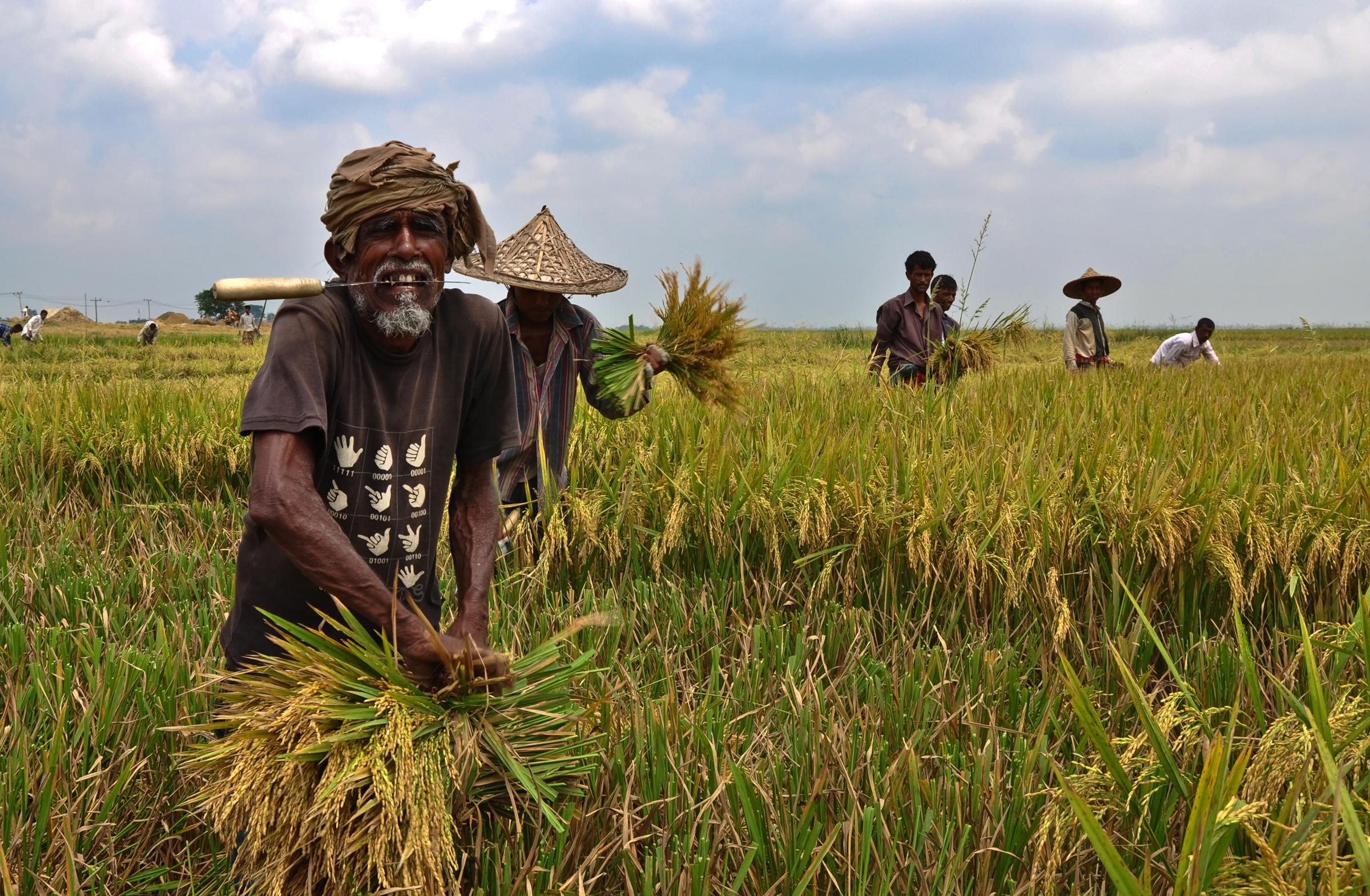
In a column for Prothom Alo written from the UN climate conference (COP31) in Antalya, Turkey, writer and researcher Pavel Partha asks where farmers' own farming fits into the conference's talk about agriculture and food systems. The views are the writer's own.
The column says the theme of the conference's first day was agriculture, food and health. Climate shocks leave about 318 million people in food crisis worldwide. Food systems emit a third of all greenhouse gases yet receive only four percent of climate finance. COP31 wants decisions on moving to sustainable, climate-resilient food systems, targeted finance for women farmers and more room for young people.
He opens with two memories of loss: 50 families of the Magar people of Khairala village in Nepal who lost their homes to floods and landslides in 2008, and the landslide on the Tahirpur border of Sunamganj on 20 July that year, whose sand buried crop land and the homes of Mandi families. Such damage to food systems from hill torrents and sand, he writes, goes largely undiscussed at climate talks.
At side events, speakers from the Rockefeller Foundation, the Asian Farmers' Association, the Agroecology Coalition, Pesticide Action Network Asia Pacific and the Alliance for Food Sovereignty in Africa called for finance for a fair transition and for agroecology to be accepted as a solution. The writer notes that the IPCC (2022) sees agroecology as a route to climate-resilient food systems and lower production costs, that FAO endorsed a framework of its ten elements in 2019, and that Bangladesh has included agroecology in its NDC 3.0.
On methane he cites the Global Methane Assessment (2021): about 40 percent of methane from human activity comes from agriculture. He argues that rice grown under long flooding is mostly high-yielding and hybrid rice, a product of the Green Revolution, and that standing water lets methane-producing microbes thrive, so he asks who should carry that responsibility.
At the conference UN climate chief Simon Stiell said health must sit at the centre of climate action, and Professor Kunrui Huang of Tsinghua University in China said climate change is driving zoonotic and parasite-borne disease. In the writer's view, village farming that respected soil, water, livestock and ecosystems was always a One Health agriculture, and protecting the memory of nearly lost rice varieties such as Hijaldigha, Naldhepa and Sondhyamoni is part of the conference's duty too.
Photo: Balaram Mahalder / Wikimedia Commons (CC BY-SA 3.0)
Source: Prothom Alo


Comments
(0)