
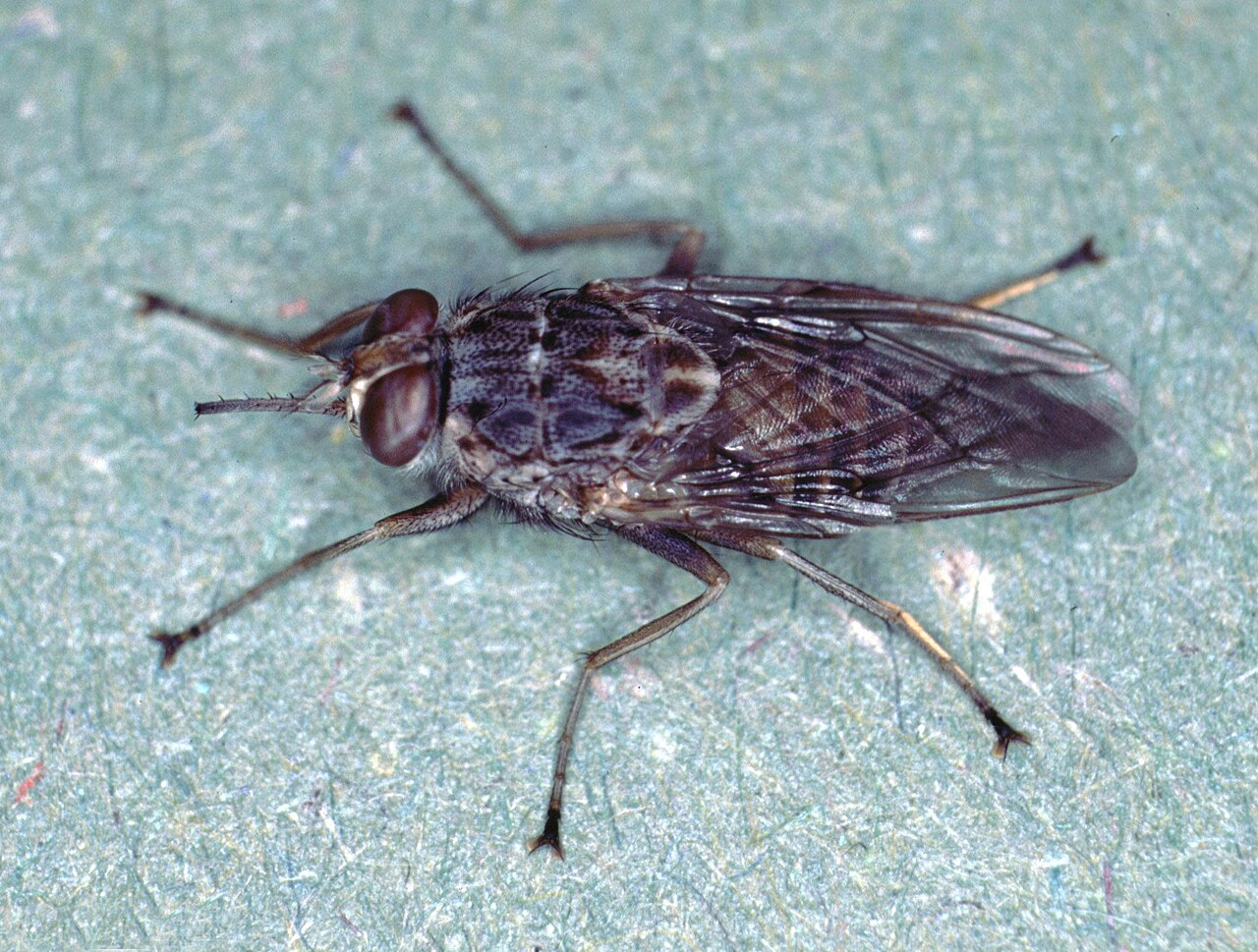
Blood parasites carried by tsetse flies cost cattle farmers in sub-Saharan Africa dearly, and the drugs used against them are losing their power, argues Tlalemasego Matloa, an animal scientist studying for a doctorate in agriculture with the Agricultural Research Council's Animal Production unit and the University of South Africa, in a column for Food For Mzansi. The views in the column are the writer's own.
Matloa writes about trypanosomes, protozoan parasites that live in the blood and cause nagana, also called African animal trypanosomosis. The species most dangerous to livestock are T. evansi, T. congolense, T. vivax, T. brucei and T. simiae, and they infect cattle, sheep, goats, pigs, horses, dogs, camels and buffalo. A tsetse or other biting fly picks up the parasite from an infected animal, the parasite develops in the fly and is passed on to the next animal through its skin, then moves through the lymph nodes into the blood, where it multiplies.
Infected cattle show anaemia, weight loss, fever, lower meat and milk production, abortion and, in severe cases, death. According to the column, nagana has caused losses of more than R74.1 billion (US$4.5 billion) in sub-Saharan Africa through direct and indirect costs. Poor nutrition and stress push infections into the chronic stage, and animals that recover can relapse under stress.
Five main drugs are approved, among them diminazene aceturate, homidium bromide and isometamidium chloride, and the writer advises combining them with vector control such as insecticide sprays on the lower body, where flies bite. But more than 20 African countries have reported resistance, and T. brucei, T. vivax and T. congolense have resisted isometamidium or diminazene aceturate in cattle in Cameroon, Ethiopia, Burkina Faso, Mozambique, Togo and Mali.
Matloa lists the causes: doses miscalculated because animals are not weighed, drugs diluted with vitamins or antibiotics, smallholders without vets diagnosing their own herds, drugs given by the wrong route, and counterfeits, with more than 20 brand names of fake trypanosome medicine on the market in Africa. Because nagana is zoonotic, careless disposal of leftover drugs can also put people at risk where human-infective strains occur.
Smallholders, especially poorer and remote ones, often take advice from relatives, neighbours or drug sellers instead of vets, the writer notes. Given how severe nagana is and how resistance is spreading, Matloa recommends that farmers, policymakers and researchers consider breeding trypanotolerant cattle, breeds that can live with the parasite.
Photo: Alan R Walker / Wikimedia Commons (CC BY-SA 3.0)
Source: Food for Mzansi



Comments
(0)