
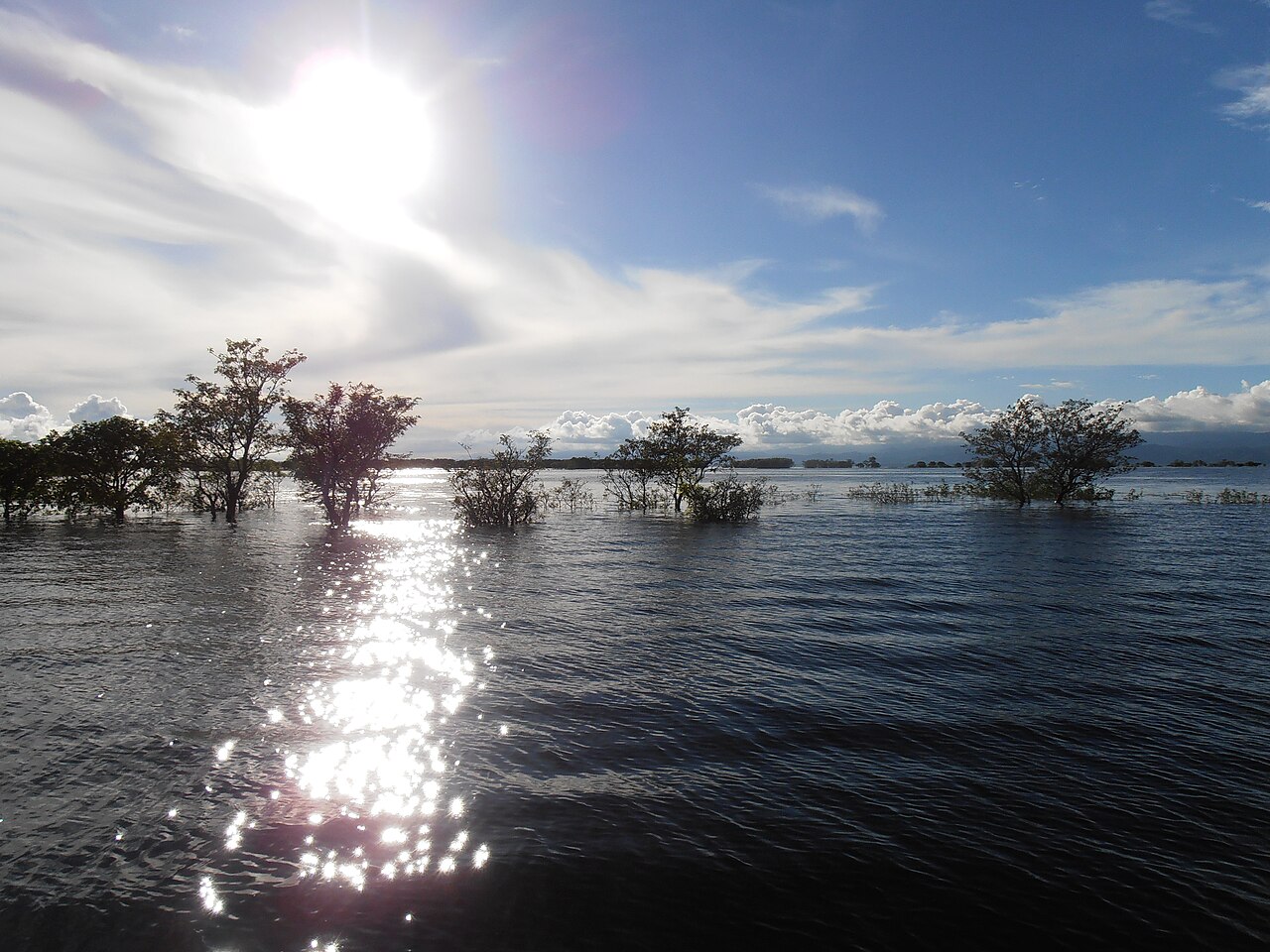
Crop protection embankments are built in the haors every year to save boro rice, but without a drainage plan those same embankments are in places becoming a source of danger, journalist Rasel Ahmed argues in a column in samakal. He asks whether embankment-led development is really keeping farmers' crops safe.
The writer recalls that last year flash floods from upstream combined with days of rain caused severe waterlogging in the haors and submerged half-ripe paddy. By the government's count about 50,073 hectares of rice were damaged; private organisations put it at more than 80,000 hectares. In many places the embankments blocked the natural outlets that let water drain from inside the haor.
Natural drainage canals and channels have filled up, he notes, and silt has reduced the rivers' depth and capacity, yet building embankments is treated as the main measure of development. So in the same haor crops rot under long waterlogging in one place while an embankment breaks and lets in floodwater in another; in the writer's view both come from the same planning failure.
He urges that the haor be seen as a living wetland, where water arrives in the monsoon and recedes after the season, and where the links between rivers, canals, beels and haors keep the flow in balance. Blocking that flow with embankments built anywhere leaves water trapped in some places and builds pressure that breaks embankments in others.
Citing farmers' demands, the writer says that keeping out early floods must go with quick drainage of heavy rain. He proposes planning based on scientific surveys, sluice gates and regulators, restored drainage canals and dredged rivers; temporary earthen embankments alone, he argues, cannot manage the haors' water in the long run.
The views are the writer's own.
Photo: Munirul Hasan / Wikimedia Commons (CC BY-SA 4.0)
Source: samakal

Comments
(0)