
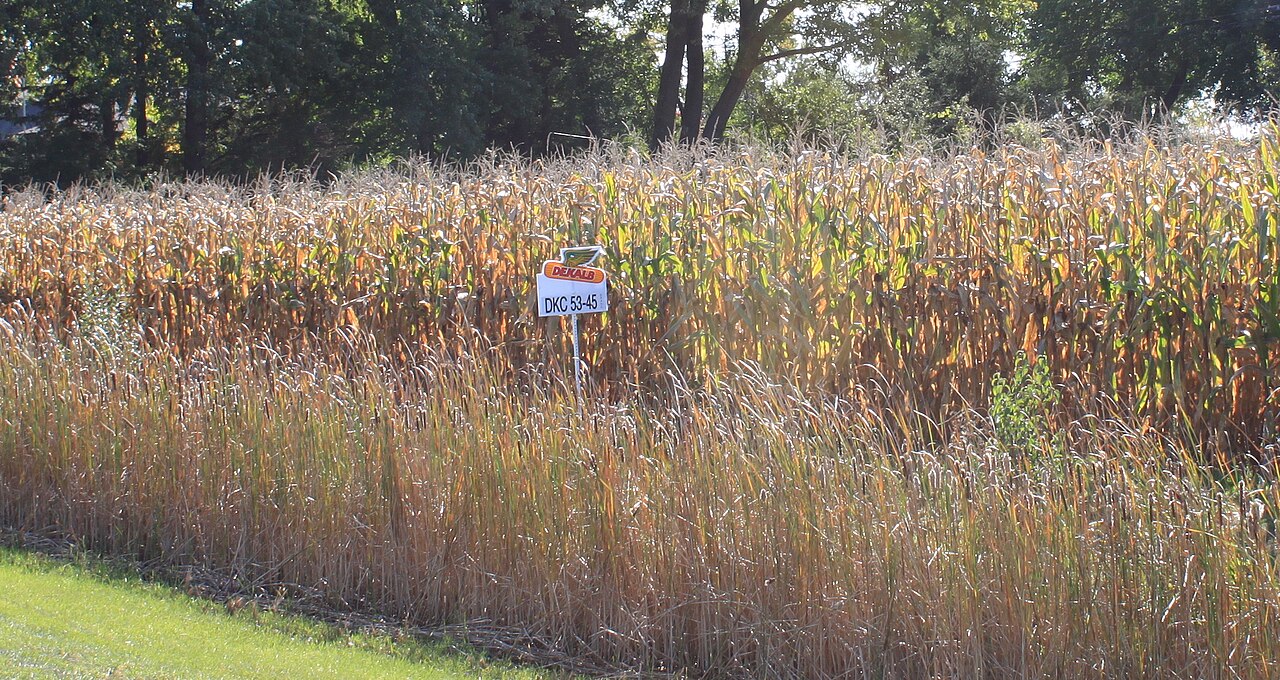
A Penn State research project is testing whether dairy farmers can lean on crop competition instead of herbicides to manage weeds in corn silage, by planting short-stature hybrids more densely and in narrower rows. Plant science doctoral student Noelle Connors is running the trials in Pennsylvania dairy systems, where corn silage is commonly followed by a winter small-grain silage crop and weed control usually depends on herbicides.
The work builds on earlier findings that dense corn stands and narrow rows shade out weeds. Conventional hybrids tend to lodge at high populations, but short-stature hybrids are bred for standability, so producers may be able to push plant density without losing performance. Connors compared short and conventional hybrids under several arrangements, including high populations and 15-inch rows in place of the standard 30 inches, and introduced burcucumber, common cocklebur and Palmer amaranth at different stages of crop growth to see how emergence timing changed the outcome.
The team measured weed biomass and seed production alongside silage yield and forage quality, and tracked light penetration, soil moisture and soil temperature. Higher corn populations generally raised silage yield while forage quality varied little between treatments; weeds that emerged later produced less biomass and fewer seeds. The narrow-row, high-density system gave the strongest suppression. "This practice has the potential to reduce weed biomass and seed production by up to 99% depending on species, emergence timing, and environmental conditions," Connors said.
The study uses a no-till, double-cropping system with dairy manure as the main nitrogen source. The researchers say the approach could serve regenerative goals by strengthening crop competition, cutting herbicide use and keeping forage systems productive.
Photo: Dwight Burdette / Wikimedia Commons (CC BY 3.0)
Source: Farms.com


Comments
(0)