
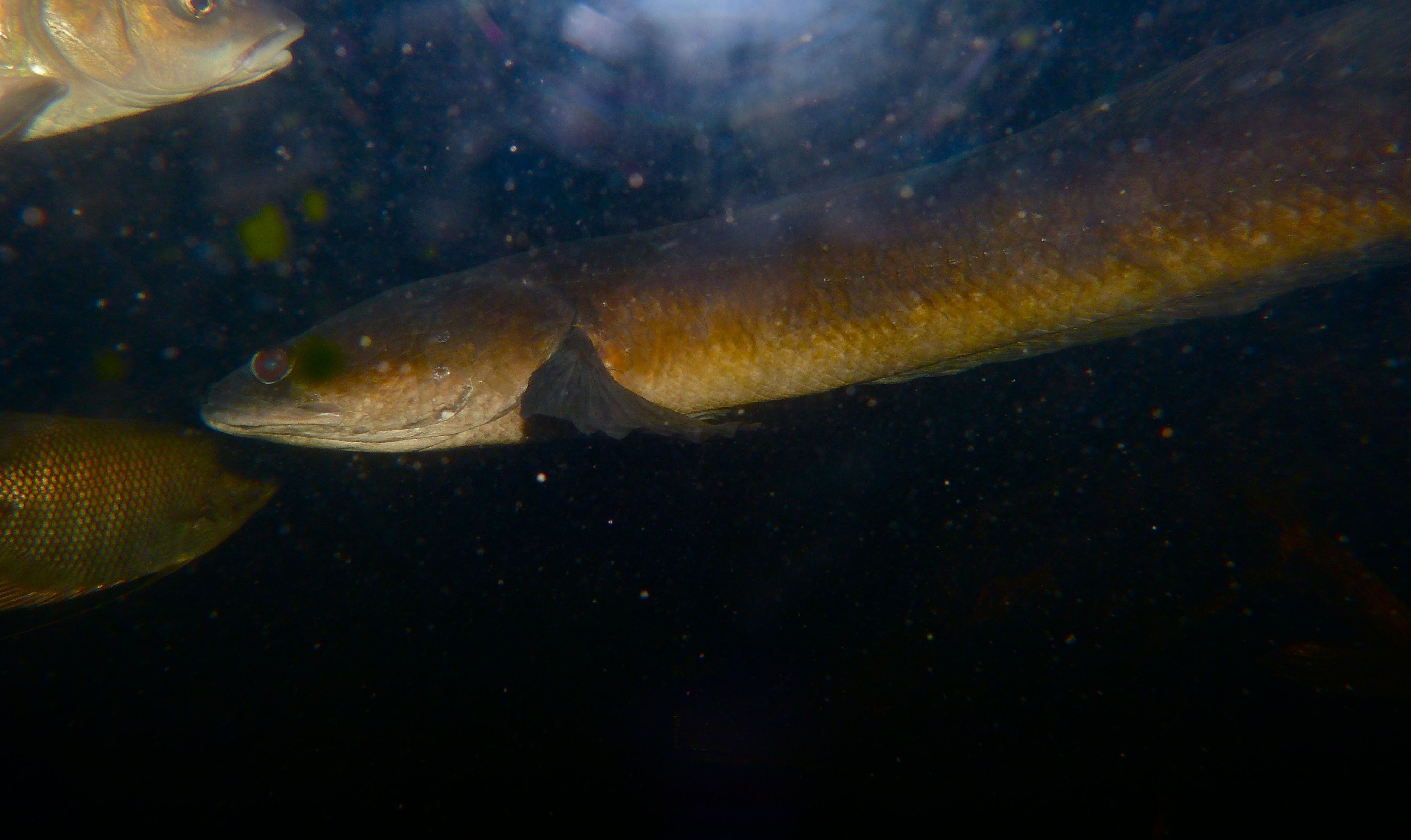
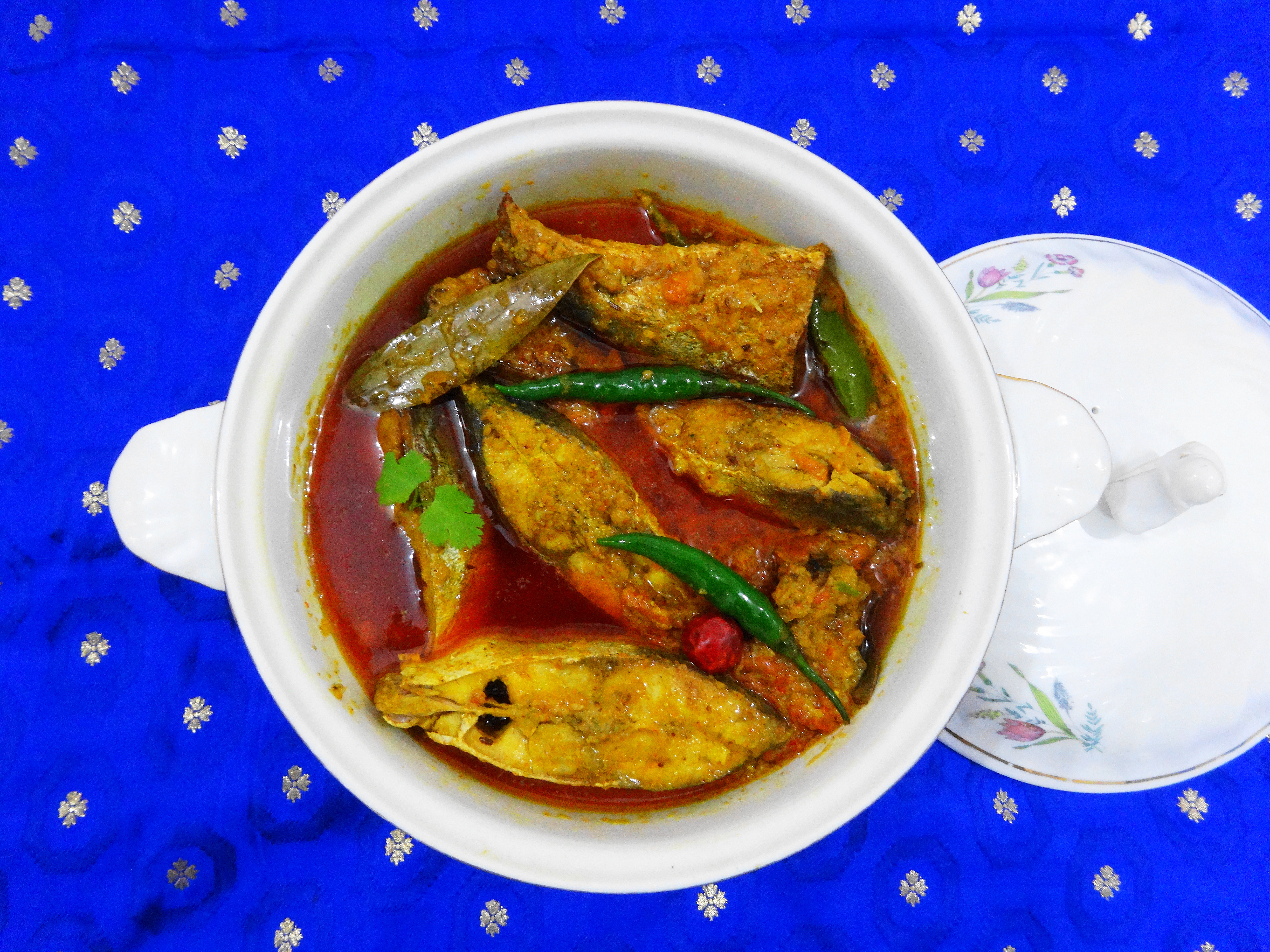
On 26 February 2026 the lifestyle section of Jagonews24 published a home recipe for shol macher do pyaza: striped snakehead cooked with a generous amount of onion and the everyday spices of a Bangladeshi kitchen, to be eaten with rice. The recipe is written for half a kilogram of shol pieces and a cup of thickly cut onion. The report described shol as a fish with a depth of flavour of its own, and the method is simple: the fish is marinated and fried first, the onion and spices are then cooked down in the remaining oil, and the fried fish goes back into the thick masala with a little water to finish.
The ingredients and steps below are those the recipe gives. They are followed by background on the name of the dish, on the onion and the spices it uses, on the shol itself and what it supplies as food, on where the country's snakeheads come from and how their numbers have changed, and on buying and cooking fish safely, drawn from the Department of Fisheries, the Bangladesh Fisheries Research Institute, the Institute of Nutrition and Food Science of the University of Dhaka, Banglapedia, FishBase and food safety agencies.
Ingredients for half a kilogram of shol
The quantities are those in the Jagonews24 recipe. Salt, oil and water are left to the cook's judgement, and the green chillies are used twice in the method, once with the onion and again at the end.
- Shol (striped snakehead) pieces: half a kilogram
- Onion, cut thickly: 1 cup
- Bay leaf: 1
- Salt: to taste
- Ginger paste: half a teaspoon
- Garlic paste: 1 teaspoon
- Turmeric powder: 2 teaspoons
- Chilli powder: 1 teaspoon
- Green chillies, slit: 7 to 8
- Oil and water: as needed
- Chopped coriander leaves: 2 tablespoons
Method, step by step
The cooking happens in two stages. First the fish is seasoned and fried; then a masala is built on the fried onion, and the fish is simmered in it until the sauce clings to the pieces.
- Cut the fish, wash it clean and let the water drain off.
- Rub the fish with half of the ginger and garlic pastes and half of the powdered spices, add salt to taste, and leave it for about ten minutes.
- Heat oil and fry the fish pieces.
- Heat the remaining oil in the pan and fry the onion with the bay leaf and green chillies.
- When the onion is fried, add the rest of the pastes and powdered spices, salt to taste and enough water, and cook the masala down well.
- When the water has dried off and the oil rises to the top, add the fried fish.
- Add a little water, green chillies and the chopped coriander leaves, cover the pan and cook.
- When the fish has turned nicely fried in the masala, take it off the heat and serve.
The recipe gives no cooking times beyond the ten minutes of marinating; it uses visual signs instead: the onion fried, the water dried off and the oil rising to the top of the masala, and the fish looking fried in the sauce at the end.
What "do pyaza" means
Do pyaza, written dopiaza in English cookbooks and দোপেঁয়াজা in Bengali, is a family of curries named for their onions. The English word comes partly from the Persian dupiyāza, in which du means two and piyāz means onion, and the dish takes its name from the use of onion in two ways: cooked into the gravy, and raw or fried as a garnish. The encyclopaedic account of the dish lists Afghanistan, Bangladesh, Iran, India and Pakistan among the countries where it is cooked. In India dopiaza is associated with the city of Hyderabad, and in Iran dopiazeh can be made with cubed or ground lamb or chicken, potatoes and plenty of sliced onions.
A popular legend credits a fictional figure, Mulla Do-Piyaza at the Delhi court of the Mughal emperor Akbar, with creating the dish by accident when he added onions to it twice. An actual recipe for dopiaza was, however, given in a 16th-century text by Abul Fazl, one of Akbar's real courtiers. The Jagonews24 version is a plain home dish of this family: a full cup of thickly cut onion for half a kilogram of fish, fried with a bay leaf and green chillies to form the base of the masala.
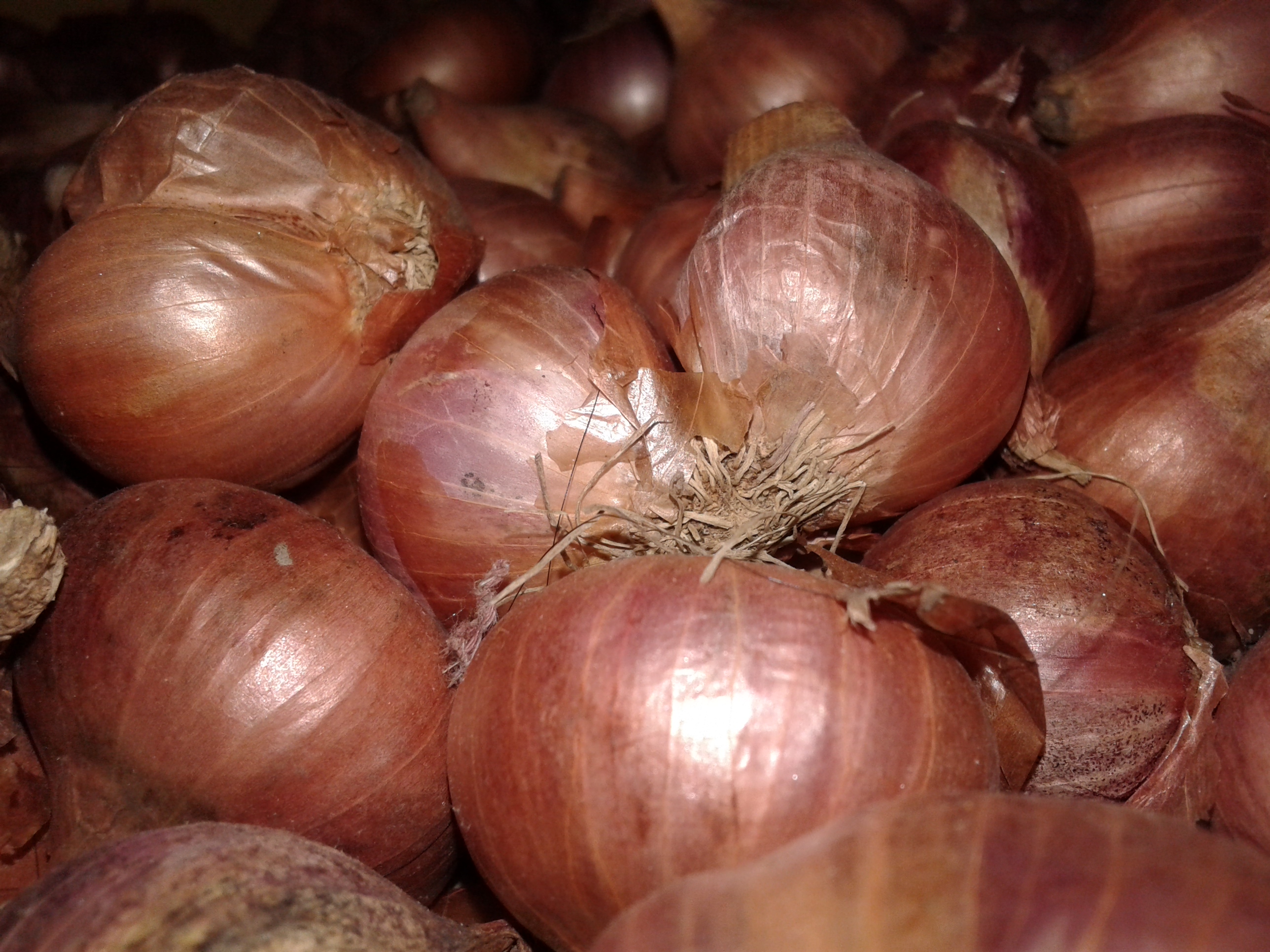
The onion itself is a bulbous herb, Allium cepa, of the family Alliaceae. Banglapedia, the national encyclopaedia of Bangladesh, says it possibly originated in Western Asia, and that its pungency, which varies with the variety, is due to a volatile oil known as allyl-propyl disulphide. Onions can be grown on all types of soil; the best time to transplant them in Bangladesh is December or the first week of January, and the bulbs are mature when the plants stop producing new leaves. Onion is grown in all districts, but Faridpur is the largest producer. Tahirpur and Faridpuri are two important varieties, and the Bangladesh Agricultural Research Institute has released a variety called BARI Piaj-1. Besides being eaten fresh, the encyclopaedia notes, onion is used as a spice and as an ingredient of curry, sauce, soup, pickles and seasoning, which is the part it plays in a do pyaza.
The spices in the pot
Apart from the onion, the recipe calls for ginger and garlic pastes, turmeric and chilli powders, a bay leaf, green chillies and coriander leaves. Banglapedia defines a spice as any aromatic plant, plant part or plant product used as a condiment or for flavouring food. Their value, it says, is due to their aroma, the essential oil, and spices are not treated as food because they lack the requisite nutritional value.
Spices come from different parts of their plants. According to the same entry, ginger and turmeric are obtained from the rhizome; coriander and chilli from the fruit; and coriander leaf, Indian cassia, basil and peppermint from leaves. The commonly cultivated spices in Bangladesh are ginger, garlic, turmeric, onion, red pepper, coriander, Indian cassia and peppermint, yet a large number of spices are still imported from India, Malaysia and Indonesia. The encyclopaedia also notes that the young coriander plant is commonly used as a flavouring for vegetable and fish curries, which is how the two tablespoons of chopped coriander leaves are used at the end of this recipe.
Banglapedia adds that some spices, ginger among them, are used in traditional and folk medicine. Those uses are not established medical advice, and anyone who needs to limit salt, oil or chilli because of a health condition should take advice on diet from a doctor.
Shol, the striped snakehead
Shol belongs to the snakeheads, the freshwater fish family Channidae of the order Channiformes, often known as murrels. Banglapedia describes them as fish recognisable by a head shaped like a snake's, with an elongated, more or less cylindrical body, long soft-rayed dorsal and anal fins, a large mouth with toothed jaws and palate, and a depressed head with large shield-like scales above. They have two accessory air-breathing cavities in the pharynx, which let them take air from the surface.
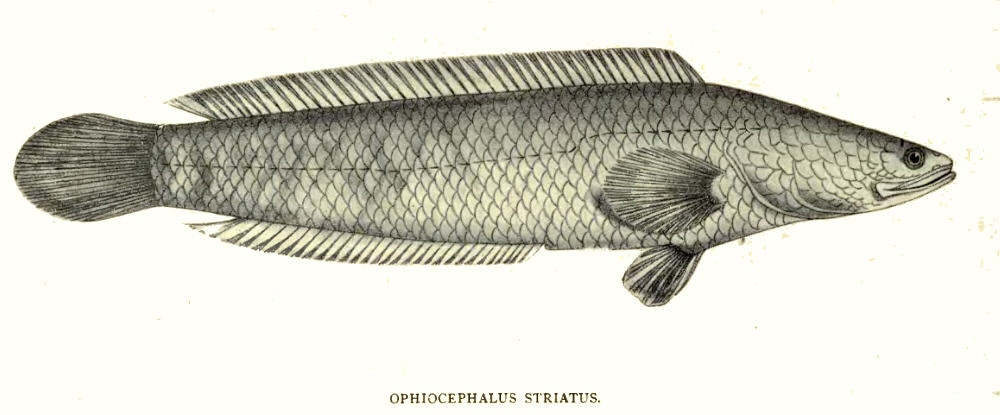
Five snakehead species are known from Bangladesh. With their local names, they are Channa punctatus (taki), Channa striatus (shol), Channa marulius (gajar), Channa barca (tila shol) and Channa orientalis (cheng). Banglapedia's entry on fish lists three of them as threatened: the barca snakehead (pipla shol) as critically endangered, the giant snakehead (gajar) as endangered and the Asiatic snakehead (telo taki) as vulnerable. The shol and the taki are not on that list.
FishBase, the global database of fish species, records the striped snakehead, Channa striata, from Pakistan to Thailand and south China. It reaches a maximum length of 100 centimetres, is commonly about 61 centimetres long and has a maximum published weight of 3 kilograms. It is an obligate air-breather. Adults live in ponds, streams and rivers, preferring the stagnant, muddy water of the plains, and are most common in still water one to two metres deep. The fish survives the dry season by burrowing into the bottom mud of lakes, canals and swamps, as long as its skin and air-breathing organs stay moist, living on its stored fat. It feeds on fish, frogs, snakes, insects, earthworms, tadpoles and crustaceans, and it has been recorded as farmed in rice fields.
Snakeheads are highly esteemed as food, Banglapedia says, but are also regarded as a pest fish because they live mostly on other native fishes. They are monogamous and show highly developed parental care: in the breeding season, before and during the monsoon, they build nests in underwater grass near the shore, and the parents guard the nest until the young hatch, then shepherd the shoal of hatchlings as it moves through the water. FishBase notes that the flesh is firm, white and almost free of bones, that the heavy dark skin is good for soup, and that the striped snakehead is perhaps the main food fish in Thailand, Indochina and Malaysia.
What 100 grams of shol supplies
The Food Composition Table for Bangladesh, published in June 2013 by the Institute of Nutrition and Food Science of the University of Dhaka with the support of the Ministry of Food, the Food and Agriculture Organization of the United Nations (FAO) and other partners, and compiled in line with the International Network of Food Data Systems (INFOODS), lists raw striped snakehead without bones (shol, kata chara) among its fish. All of its values are given per 100 grams of the edible portion.
For 100 grams of raw shol the table gives 101 kilocalories of energy, 78.4 grams of water, 17.7 grams of protein, 3.3 grams of fat, no carbohydrate and 1.4 grams of ash, the mineral residue. Among minerals it lists 104 milligrams of calcium, 1.0 milligram of iron, 43 milligrams of magnesium, 130 milligrams of phosphorus, 362 milligrams of potassium, 50 milligrams of sodium, 0.31 milligrams of zinc and 0.20 milligrams of copper. Its edible portion coefficient, the share of the fish as bought that can be eaten, is 0.77.
For comparison, the same table gives raw rohu without bones 105 kilocalories, 20.6 grams of protein and 2.6 grams of fat per 100 grams. These figures describe raw fish. The oil used to fry the shol and to cook the masala, and the salt added twice in this recipe, are not counted in them, so a plate of do pyaza carries more fat, energy and sodium than the fish alone.
Where the country's snakeheads come from
The Department of Fisheries' Yearbook of Fisheries Statistics of Bangladesh 2023-24, volume 41, published in December 2024, counts shol, gajar and taki together as one group, the snakeheads. Their production in the 2023-24 fiscal year was 83,242 tonnes, 1.66 percent of the country's total fish production, all of it from inland waters. Floodplains supplied by far the most, 73,880 tonnes. Beels gave 4,067 tonnes, ponds 3,189 tonnes, rivers 1,274 tonnes, seasonal cultured water bodies 395 tonnes, baors 329 tonnes, pen culture 74 tonnes and Kaptai Lake 34 tonnes.
The fish was once far easier to find. Banglapedia records that snakeheads were once found in abundance all over Bangladesh in ditches, beels and swamps but have become scarce in recent years, and that their susceptibility to epizootic ulcerative syndrome (EUS) is considered one of the principal factors in their decline. EUS is an infectious disease that causes large, deep ulcers in the tissues and leads to death. In 1988 it struck a wide variety of freshwater and estuarine fish in Bangladesh; losses were estimated at about one million US dollars in one of the 21 affected districts, and air-breathing species such as the snakeheads were badly affected.
In April 2022 scientists at the Freshwater Station of the Bangladesh Fisheries Research Institute (BFRI) in Mymensingh produced shol fry through artificial breeding in a hatchery for the first time, The Daily Star's Bangla edition and the Ittefaq reported. The research team was led by chief scientific officer Dr Md Shaha Ali. He told reporters that breeding and farming shol is more complicated than for other fish because it does not eat oil cake and bran-type feeds: the team first accustomed the fish to a protein-rich local feed, raised broodfish, and then produced fry with hormone injections. Because shol is cannibalistic, keeping the young alive was another challenge.
According to the institute, healthy native shol were collected from Netrokona and the haor region and stocked in the station's ponds at 10 to 12 fish per decimal. Shol breeds from April to mid-October, with the peak from April to August; females are larger than males, their ovaries begin to mature in April, and each gram of a female's body weight carries an average of 80 to 90 eggs. Shol is farmed intensively in Vietnam and Thailand, but without native fry it could not be brought under farming in Bangladesh; Vietnamese shol fry were imported by private farmers in 2011, but the foreign fish did not become popular. The institute said in 2022 that it planned to hand the fry production technology to the field within one or two years, and its director general, Dr Yahia Mahmud, said that with shol the institute had developed breeding and farming methods for 34 native and threatened fish species.
BFRI is an autonomous research organisation set up in 1984 as the national institution for planning, coordinating and conducting fisheries research; it began work in 1986. Its headquarters and Freshwater Station are in Mymensingh, and it has further stations at Chandpur for riverine fisheries, Paikgacha in Khulna for brackish water and Cox's Bazar for marine fisheries, with sub-stations at Rangamati and Santahar, the last for studies of the floodplain ecosystem.
Fish in the Bangladeshi diet
A dish like shol do pyaza sits within a diet built on fish. The same Department of Fisheries yearbook puts the country's total fish production in 2023-24 at 50.18 lakh tonnes, with aquaculture accounting for 59.34 percent. Inland waters supplied 4,389,860 tonnes, 87.47 percent of the total, and the sea 628,623 tonnes, 12.53 percent. According to the yearbook, fish supplies about 60 percent of the people's total daily animal protein intake, and per capita consumption stands at 67.80 grams a day against a target of 60 grams. In 2023-24 the country earned Tk 4,531.86 crore by exporting almost 77 thousand tonnes of fish and fishery products.
The balance between wild catch and farming has shifted over the decades. In February 2018 The Daily Star, reporting a government report, wrote that production in 2016-17 was 41.34 lakh tonnes, of which inland open water (capture) contributed 28.14 percent and inland closed water (culture) 56.44 percent, while in 1983-84 inland capture had contributed 62.59 percent and culture 15.53 percent. The snakeheads remain mostly fish of open water: in the 2023-24 yearbook, floodplains and beels gave far more of them than ponds. In December 2024 the paper reported that the government aims to produce 65 lakh tonnes of fish by 2030 and 85 lakh tonnes by 2041.
Buying and cooking fish safely
Food safety agencies give simple checks for fresh fish. The US Food and Drug Administration's guidance on selecting and serving seafood, current as of March 2024, says fish should smell fresh and mild, not fishy, sour or ammonia-like; its eyes should be clear and shiny; a whole fish should have firm flesh and red gills with no odour; and the flesh should spring back when pressed. Seafood should go on ice or into the refrigerator or freezer soon after it is bought. If it will be used within two days it can be kept in a clean refrigerator at 40 degrees Fahrenheit or below; otherwise it should be wrapped tightly and frozen.
To stop bacteria from raw fish spreading to cooked food, the FDA advises washing cutting boards, dishes, utensils and counter tops with soap and hot water between preparing raw seafood and cooked or ready-to-eat food. Most seafood should be cooked to an internal temperature of 145 degrees Fahrenheit; without a thermometer, fish is done when the flesh separates easily with a fork. Spoiled seafood can smell sour, rancid, fishy or of ammonia, and these odours grow stronger after cooking; fish that smells that way should not be eaten. Perishable food should not be left out of the refrigerator for more than two hours.
The World Health Organization's Five Keys to Safer Food make the same points: keep clean, separate raw and cooked food, and cook thoroughly, especially meat, poultry, eggs and seafood; the WHO notes that cooking food to a temperature of 70 degrees Celsius can help ensure it is safe to eat. FishBase also records that during winter and the dry season the flesh of the striped snakehead around the body cavity can be heavily infested by a larval trematode, a parasitic flatworm, and that other parasites live in its intestine. In this recipe the fish is gutted and washed, fried, and then simmered again in the masala, which fits the WHO advice to cook seafood through.
Photo: Bernard DUPONT / Wikimedia Commons (CC BY-SA 2.0)
Sources: Jagonews24, Department of Fisheries (Yearbook of Fisheries Statistics of Bangladesh 2023-24), Institute of Nutrition and Food Science, University of Dhaka (Food Composition Table for Bangladesh, 2013), Bangladesh Fisheries Research Institute via The Daily Star Bangla and the Ittefaq, The Daily Star, Banglapedia, FishBase, US Food and Drug Administration, World Health Organization, Wikipedia

Comments
(0)