
As dawn breaks in the Garo Hills of Sherpur, collectors head deep into the forest carrying long bamboo poles and baskets. They are looking for ant nests in the trees to gather the eggs, and the money from selling them keeps their households going. Ant-egg collecting now gives a seasonal living to 200 to 300 people here.
The work goes on for three to four months a year in hill villages along about 40 kilometres of border forest in Nalitabari, Jhenaigati and Sreebardi upazilas. There is little other work in the hills at this time of year, so for some it is extra income and for others the family's main support. Collectors work from dawn until midday deep in the forest or high up in the trees.
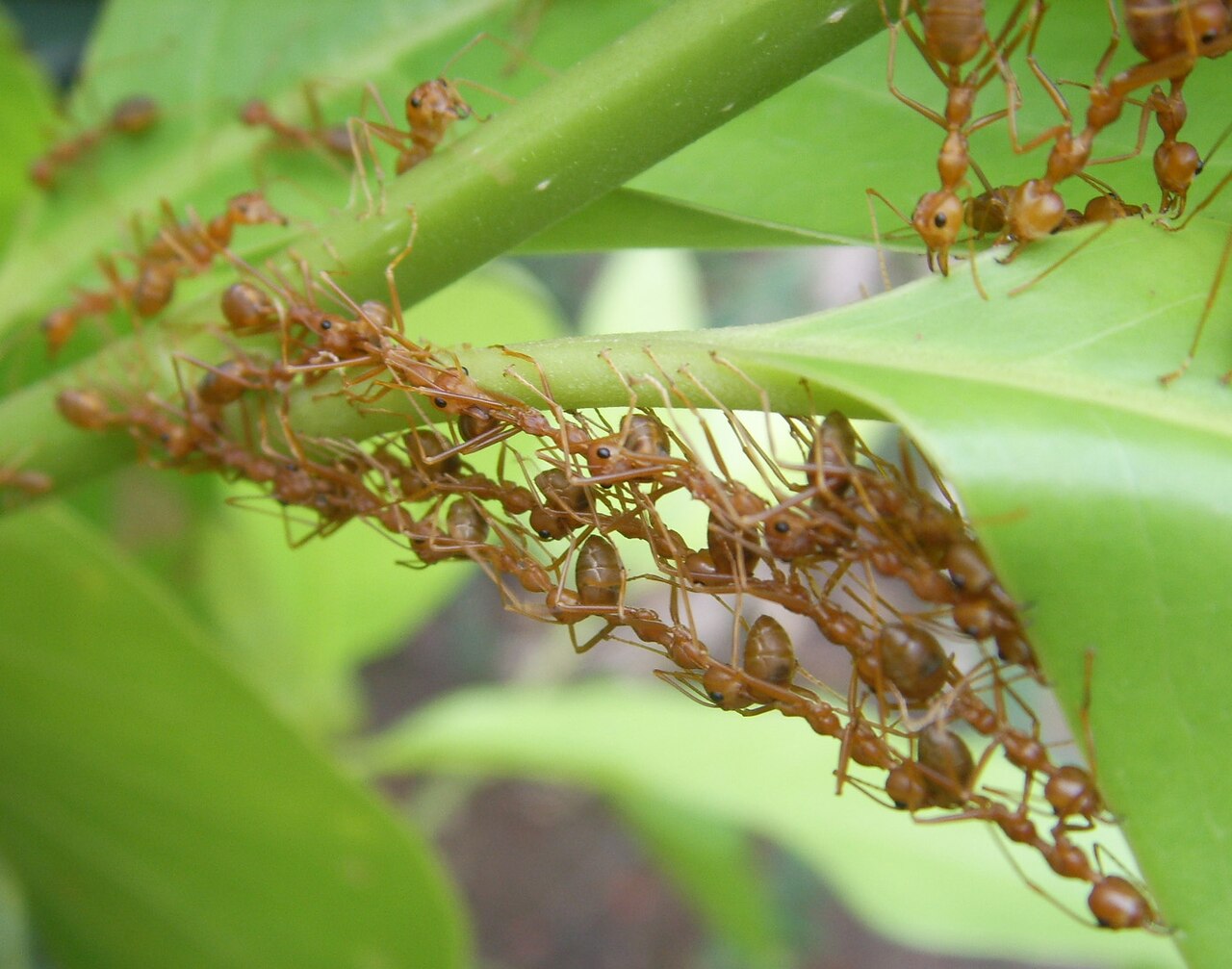
A large red ant builds its nests in sal, gajari, mahogany, mango, lychee and other trees, sticking four or five leaves together at the tip of a branch, and the eggs are kept inside. Collectors Sakib, Shamim, Shahjahan, Zulhas and Ratan Koch of Rangtia village said they gather the eggs with a cloth net tied to the end of a long bamboo pole. A large nest yields about 100 to 150 grams of eggs, and one collector can gather 500 grams to 1 kilogram a day.
An ant-egg market is held every day at Rangtia Bou Bazar, where a kilogram sells for Tk 1,200 to 1,400. The main buyers are recreational anglers, who use the eggs as bait, and prices rise with demand in the fishing season. The eggs are also used as food for pet birds. Local wholesalers pack them in packets and cartons and send them to shops in Dhaka, Mymensingh and other towns. Elias Uddin, 42, a local buyer, said supplies of red ant eggs are greatest in the rainy and winter seasons, when sales are also good.
The living is a hard one. Besides the ant bites, collectors risk attacks by elephants, snakes and bees in the forest, and climbing tall trees is dangerous. With fewer trees and fewer ant nests than before, their income is also becoming uncertain.
Md Habibullah, the Rangtia forest range officer, said collecting ant eggs from the forest is upsetting the balance of the environment, and that fewer migratory birds have been coming to the hills because the eggs are being destroyed. He urged collectors to stop and warned that legal action would otherwise be taken against them.
This report is based on a dispatch from Ittefaq's Jhenaigati (Sherpur) correspondent.
Photo: Sean.hoyland / Wikimedia Commons (public domain)
Source: Ittefaq




Comments
(0)