
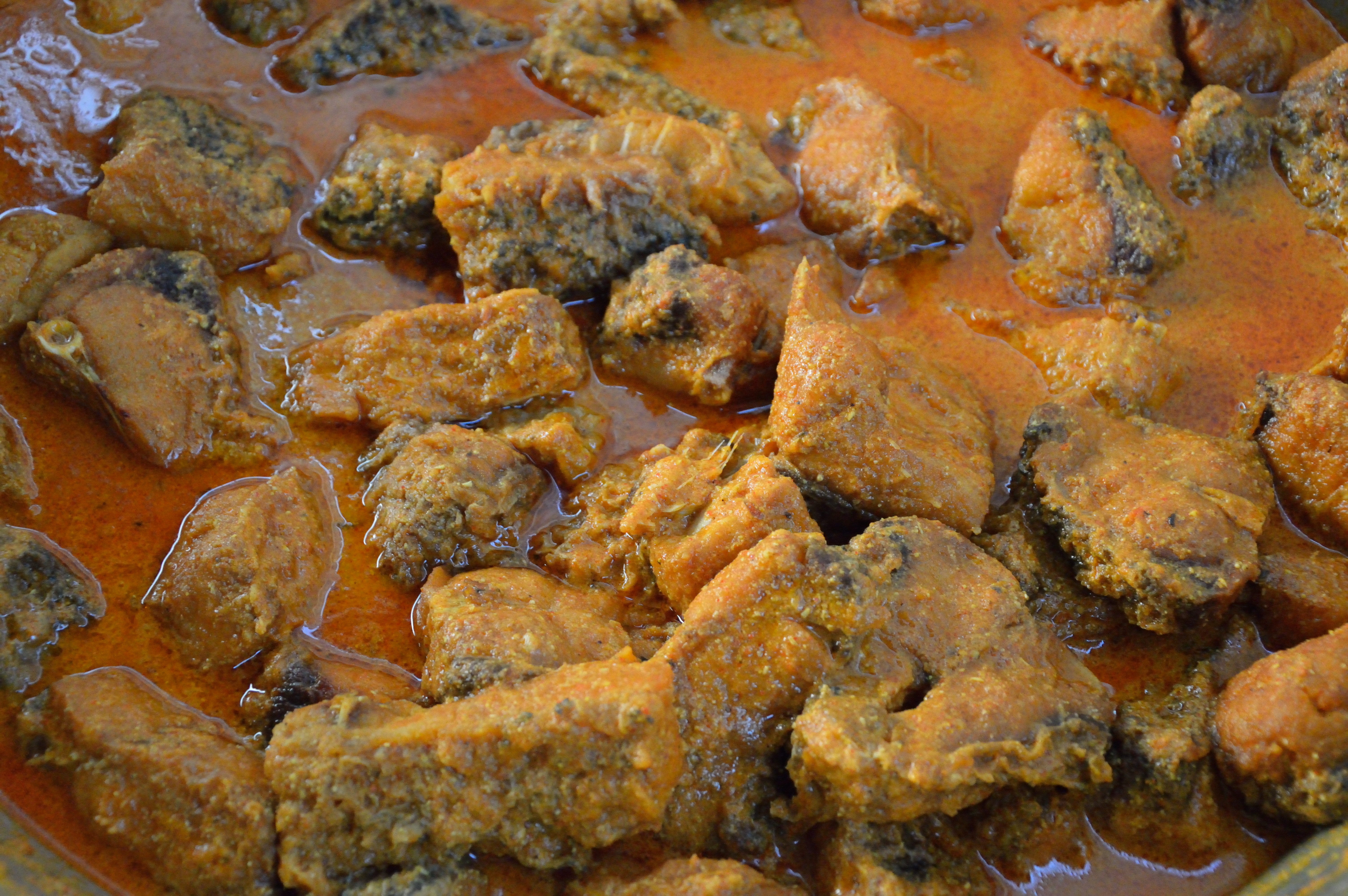
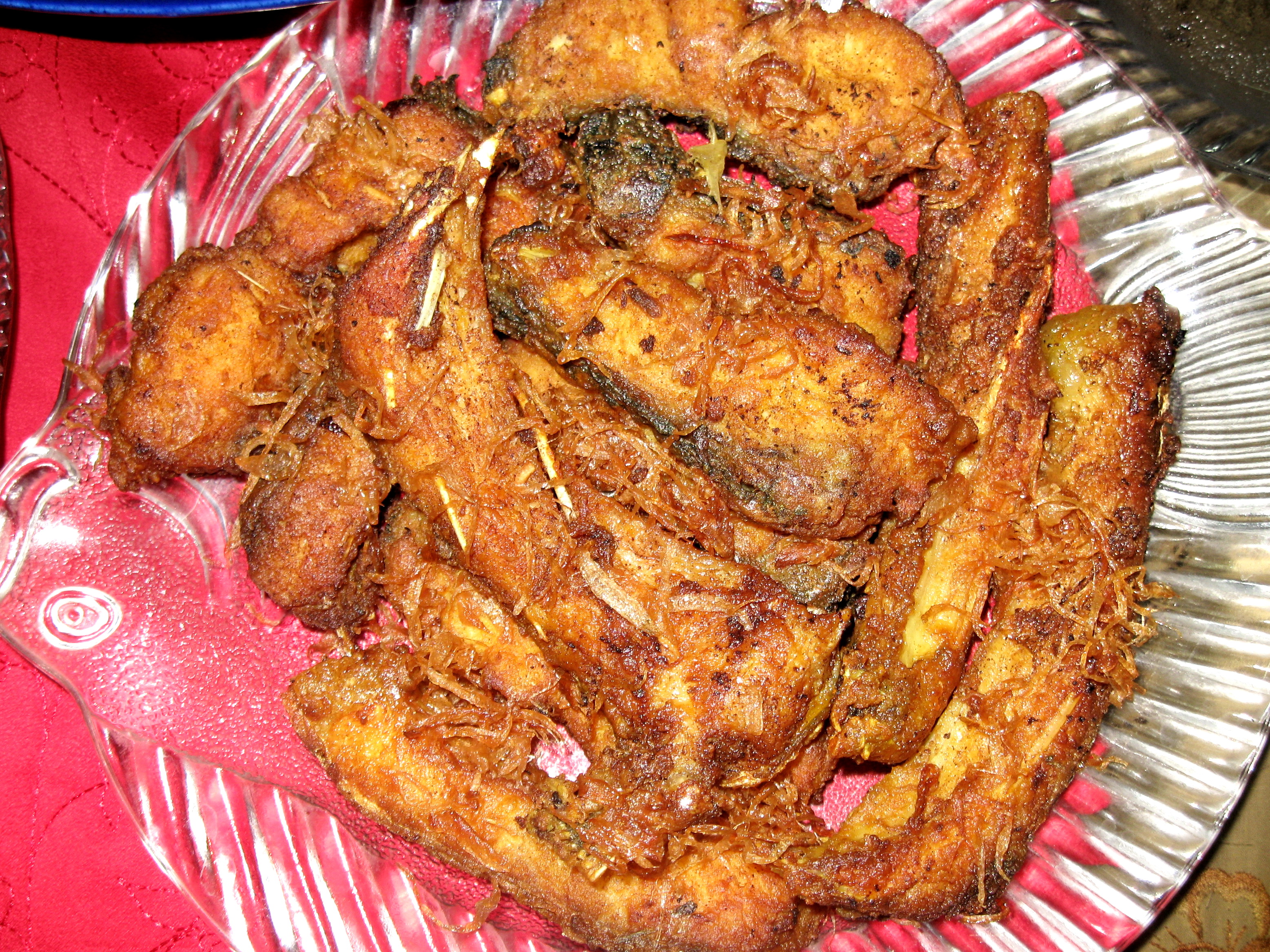
On 9 February 2026 the lifestyle desk of the Bangladeshi news site Jagonews24 published a home recipe for rui macher mathay alu chorchori: the head of a rui, or rohu, fish cooked with potatoes and local spices into a hot, slightly dry dish to eat with rice. The recipe opened by noting that in Bengali home cooking the head of the rui has a special value, and that for many people it is the tastiest part of the fish. Combined with soft potatoes and local spices, it said, the head becomes a fine dish to eat with rice, easy to cook and needing only a few ingredients to give a familiar home taste.
This report sets out the recipe as the publisher gave it, with its quantities and its method. It then explains what a chorchori is, what kind of fish the rui is, how much of it Bangladesh produces and from which waters, and the potato, the other main ingredient, which is harvested across the country in February and March. The last sections give the nutrient values that Bangladesh's own food composition table lists for rui and for potatoes, and the advice that food safety authorities give for buying, storing and cooking fresh fish at home. All figures are taken from official or reference sources published before February 2026.
The ingredients
Jagonews24 listed the following ingredients for one fish head. It did not say how many people the dish serves.
- Rui fish head: 1
- Potatoes, cut lengthwise: 3
- Chopped onion: 4 tablespoons
- Onion paste: half a cup
- Turmeric powder: 1 teaspoon
- Red chilli powder: 1 teaspoon
- Cumin paste: 1 teaspoon
- Coriander powder: 2 teaspoons
- Salt: to taste
- Tomato, cut into pieces: 1
- Green chillies: 4
- Oil: 4 tablespoons
Two small details differ between the list and the method that follows. The list gives the tomato cut into pieces, while the method speaks of chopped tomato; and the list includes four green chillies, but the method does not say at which stage they go in. The list names only oil, without saying which kind.
How the dish is cooked
The publisher's method has three stages: frying the spice base and the fish head, cooking the potatoes in the spices, and finishing the dish with the head until the liquid has dried. Step by step, as Jagonews24 gave it:
- Clean the rui fish head and wash it well.
- Heat the oil in a karai, a deep cooking pan, and fry the chopped onion until it turns brown.
- Add all the pastes and powdered spices and stir-fry them for a while, then add salt and water.
- After a while, add the fish head and stir-fry it again in the spices.
- When the head has been fried in the masala, lift it out and set it aside.
- Add the potatoes to the masala and stir-fry them. Add water if needed so that the potatoes cook through.
- When the potatoes are tender, add the chopped tomato and stir-fry a little longer.
- Finally, add a little water and the fried fish head and cook for 5 minutes.
- When the water has dried up, take the pan off the heat and serve the chorchori with hot rice.
Lifting the head out while the potatoes cook means it is not stirred about in the pan for long; it goes back only for the last five minutes, when a little water is added and then left to dry off. The recipe describes the finished dish as hot and slightly dry rather than a curry with gravy, and that dryness is what marks a chorchori, as the next section explains.
What a chorchori is
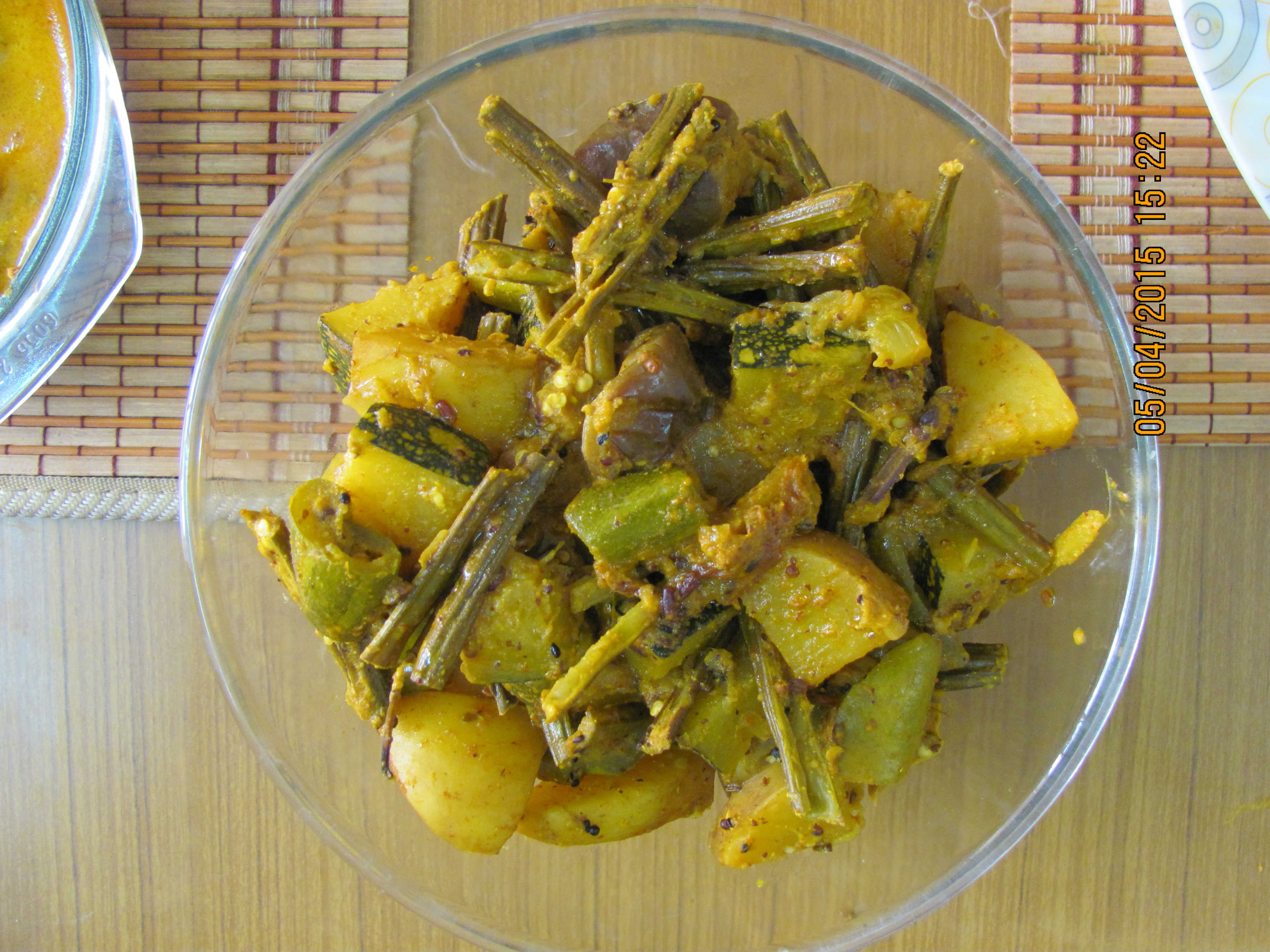
Chorchori, written চচ্চড়ি in Bengali, is described by the English-language Wikipedia, under its Odia name chadachadi, as a char-flavoured mixed vegetable dish of India and Bangladesh, found mainly in Bengali and Odia cooking. In the usual method, spices are first fried in oil or ghee, chopped vegetables are added and stir-fried briefly, and then water, salt and more spices go in and the vegetables simmer. Once all the liquid has been absorbed and cooked off, the vegetables begin to fry in the oil left at the bottom of the pot; as they start to char a sizzling sound is heard, and the pot is taken off the heat. Potatoes are among the typical vegetables, along with aubergine, spinach, French beans and cauliflower.
The same article records the household story behind the dish: in Bengali homes the men traditionally went to the market once a week, so by the end of the week the kitchen was left with bits of all the vegetables bought earlier, and these were cooked together as a chorchori. The Jagonews24 recipe follows the same principle of cooking until the water has dried, but builds the dish around a single vegetable, the potato, and adds the fish head.
Rui has been cooked in the subcontinent for a very long time. Wikipedia's article on the rohu cites the food historian K. T. Achaya, whose book The Story of Our Food (2003) notes that a recipe for fried rohu appears in the Manasollasa, a 12th-century Sanskrit encyclopedia compiled by King Someshvara III, who ruled from present-day Karnataka. In that recipe the skinned fish is marinated in asafoetida and salt, dipped in turmeric mixed with water and then fried; turmeric is also among the spices of the Jagonews24 recipe.
The rui: a river carp of South Asia
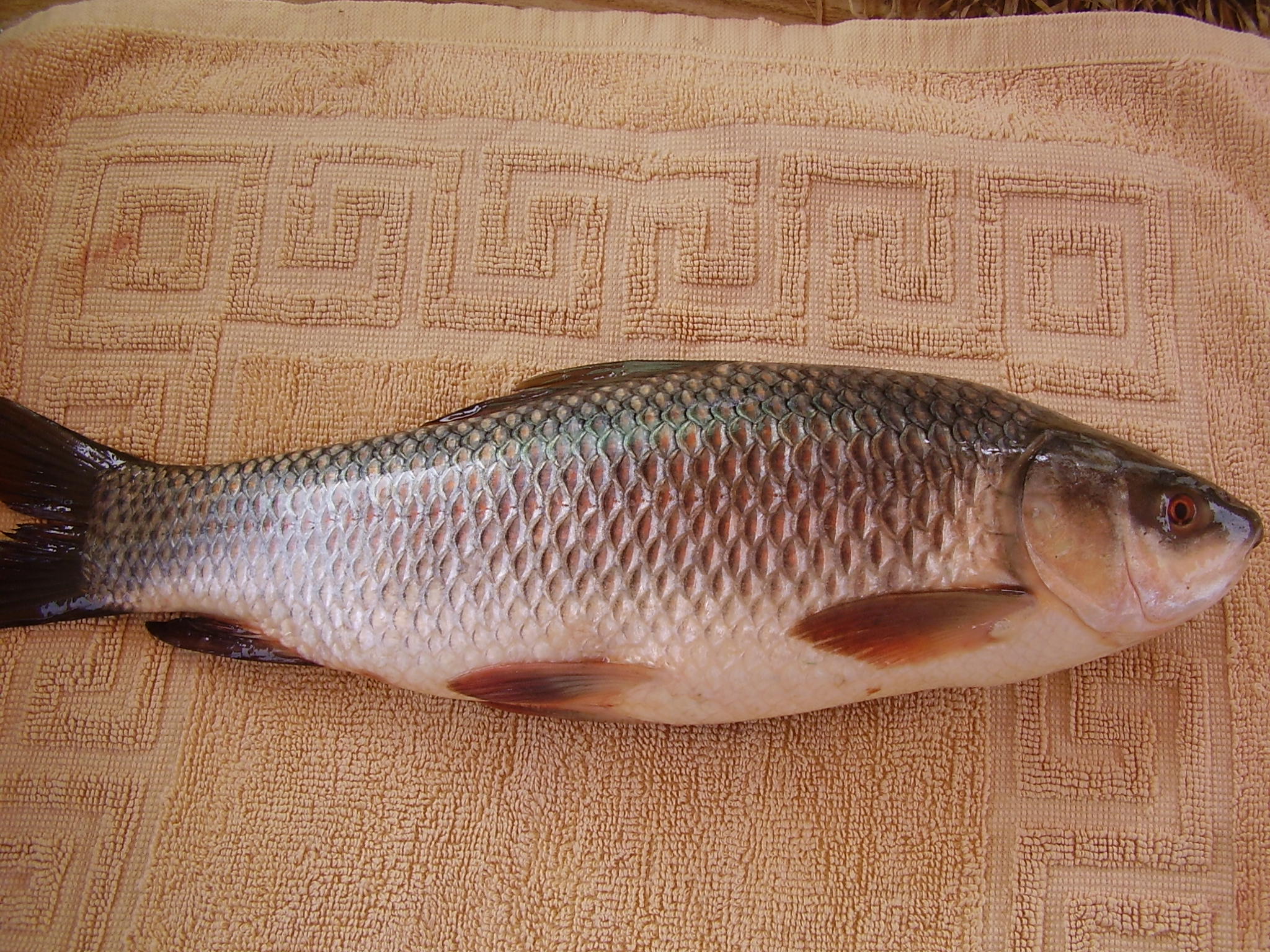
The rui, rohu or roho labeo, Labeo rohita, is a freshwater fish of the carp family, Cyprinidae, first described by Francis Hamilton in 1822. FishBase, the global fish database, records its native range as the rivers of Pakistan, India, Bangladesh, Myanmar and Nepal, and notes that it has been widely introduced outside that range for stocking reservoirs and for aquaculture. It describes a fish with a conspicuously arched lower profile of the head and a short dorsal fin. The largest recorded rohu measured 200 centimetres and the heaviest weighed 45 kilograms, and the greatest reported age is 10 years; length at first maturity is given as 58 centimetres.
Banglapedia, the national encyclopedia of Bangladesh, lists the rohu among the common carps of the country's fresh waters, under the local names rui, rohit and rou, and gives its distribution in Bangladesh as wide. It places the rui in a group with the catla (Catla catla), the mrigal (Cirrhinus mrigala), the kalibaus or black rohu (Labeo calbasu), the bata and other native carps. The Department of Fisheries (DoF) groups the rui, the catla and the mrigal together as the major carps, and counts the kalibaus, bata and ghania as other carps.
Adult rohu live in rivers, according to FishBase. The fish is diurnal and usually solitary, and feeds on plants. Wikipedia, citing published sources, adds that the young eat mainly zooplankton and move on to phytoplankton as they grow, that adults are herbivorous column feeders that eat mainly phytoplankton and submerged vegetation, sieving the water through thin, hair-like gill rakers, and that the fish reaches sexual maturity at between two and five years of age.
Its breeding is tied to the monsoon. FishBase says the spawning season generally coincides with the south-west monsoon and that spawning takes place in flooded rivers, in the middle reaches where flood water spreads in shallows over fertile flats, well above the tidal reaches. A female may carry between 226,000 and 2,794,000 eggs, depending on her length and weight and the weight of the ovary. Wikipedia adds that in culture the rohu does not breed in still waters such as lakes, so induced spawning is needed to produce seed. FishBase lists the species as Least Concern on the IUCN Red List, assessed on 20 March 2010, and describes it as a highly commercial fisheries species that is used fresh.
How much rui Bangladesh produces
The most recent official figures available in February 2026 were those of the Yearbook of Fisheries Statistics of Bangladesh 2023-24, published by the Department of Fisheries in December 2024. It put the country's total fish production in the 2023-24 fiscal year at 50.18 lakh tonnes (5,018,483 tonnes), of which aquaculture accounted for 59.34 percent, inland capture fisheries 28.13 percent and marine fisheries 12.53 percent. The yearbook notes that Bangladeshis are popularly called "Machhe Bhate Bangali", or "fish and rice make a Bengali", and says that fish supplies about 60 percent of the animal protein that people in the country eat, with a per capita supply of 67.80 grams a day against a target of 60 grams.
The three major carps together produced 1,136,095 tonnes in 2023-24, 22.64 percent of all the fish produced in the country, up from 692,597 tonnes in 2009-10. Rui on its own accounted for 512,936 tonnes, or 11.68 percent of the fish from inland waters. Most of it was farmed. By the yearbook's table of inland production, ponds gave 345,046 tonnes of rui, seasonal cultured water bodies 57,897 tonnes, floodplains 48,827 tonnes, shrimp and prawn farms 37,029 tonnes, beels 14,484 tonnes, rivers and estuaries 5,196 tonnes, pen culture 2,539 tonnes, baors, the oxbow lakes, 1,913 tonnes, and Kaptai Lake 5 tonnes.
In pond farming, the yearbook says, the top eight species by production are pangas, tilapia, rui, silver carp, mrigal, catla, common carp and koi. Freshwater aquaculture in Bangladesh consists mainly of pond farming of native and exotic carps, pangas, tilapia, climbing perch and other domesticated fish, and the average output of ponds in 2023-24 was 5.58 tonnes per hectare.
The same yearbook points to a weakness in carp farming. The rapid growth of mostly private fish hatcheries and nurseries helped aquaculture expand, it says, but also created problems of seed quality, which it attributes to inbreeding, negative selection, a lack of quality brood fish and poor brood management. To address this, the government was undertaking programmes that included a major carp brood bank, imports of Chinese carp brood of natural origin, enforcement of the fish hatchery regulations, and the monitoring and training of hatchery operators and extension workers.
The potato, harvested in February and March
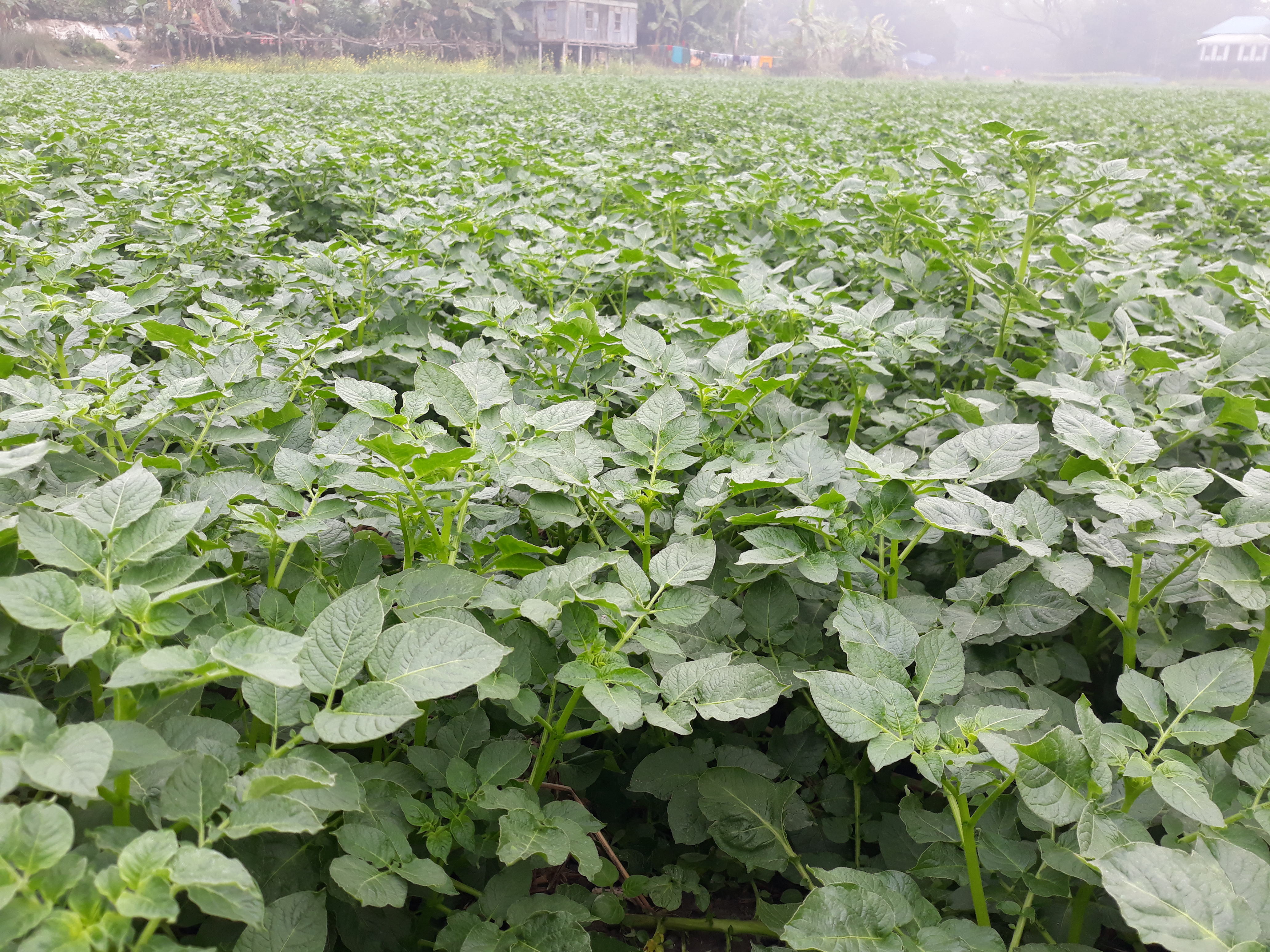
The other main ingredient, the potato (Solanum tuberosum, of the family Solanaceae), is described by Banglapedia as one of the staple foods of Bangladesh. It is widely grown in all the districts of the country in winter. The encyclopedia gives the first fortnight of November as the right time for planting, notes that in some north-western areas farmers plant as early as October to harvest early, and says that most varieties are harvested in February and March, when the leaves turn yellow and then brown and the plants die back. The recipe therefore appeared during the main potato harvest.
Banglapedia divides the varieties grown in Bangladesh into local and high-yielding ones. It counts about 27 local varieties, among them Sheel Bilatee, grown mostly in Rangpur, Lal Sheel of Bogra, Lal Pakri of Dinajpur, Bogra and Sirajganj, and Du Hajari of the Chittagong area, which are still grown for their taste and cooking quality despite lower yields. Among the high-yielding varieties it names Cardinal and Diament, both introduced from the Netherlands, and notes the work of the Tuber Crops Research Centre of the Bangladesh Agricultural Research Institute (BARI) in developing new varieties.
The Yearbook of Agricultural Statistics 2024 of the Bangladesh Bureau of Statistics (BBS), published in June 2025, estimated the potato area in 2023-24 at 456,979 hectares (1,133,005 acres), 0.32 percent more than the 455,523 hectares of the year before. Total production was estimated at 10,601,182 tonnes, 1.62 percent above the 10,431,736 tonnes of 2022-23; high-yielding varieties gave 9,703,292 tonnes and local varieties 897,890 tonnes. The average yield was 23.198 tonnes per hectare.
What the food composition table says
The Food Composition Table for Bangladesh, published in June 2013 by the Institute of Nutrition and Food Science of the University of Dhaka, with the support of the National Food Policy Capacity Strengthening Programme of the Ministry of Food, the Food and Agriculture Organization of the United Nations (FAO), the United States Agency for International Development (USAID) and the European Union, gives values for the main ingredients of this dish. All its figures are per 100 grams of the edible portion of the raw food. It also gives an edible portion coefficient, the share of the food as purchased that can be eaten.
For river rui (rui, nodir), the table gives an edible portion coefficient of 0.80, 90 kilocalories, 76.7 grams of water, 16.6 grams of protein, 2.7 grams of fat and no carbohydrate. It lists 650 milligrams of calcium, 1.0 milligram of iron, 175 milligrams of phosphorus, 288 milligrams of potassium, 101 milligrams of sodium and 1.13 milligrams of zinc.
A second entry, for rui flesh without bones (rui, kata chara), has an edible portion coefficient of 0.44 and gives 105 kilocalories, 76.3 grams of water, 20.6 grams of protein and 2.6 grams of fat per 100 grams, with 30 milligrams of calcium, 0.4 milligrams of iron, 175 milligrams of phosphorus, 309 milligrams of potassium and 38 milligrams of sodium. The table does not give separate values for the head.
For the potato, the table's entry is the Diamond variety, raw and peeled (gol alu, khosa chara), with an edible portion coefficient of 0.84: 66 kilocalories, 81.7 grams of water, 1.2 grams of protein, 0.2 grams of fat, 14.0 grams of available carbohydrate and 2.1 grams of dietary fibre per 100 grams, with 11 milligrams of calcium, 0.5 milligrams of iron, 286 milligrams of potassium and 16 milligrams of sodium. Boiled without salt, the same potato gives 67 kilocalories and 232 milligrams of potassium.
These are values for the raw ingredients. The finished dish also carries the 4 tablespoons of oil and the salt, and how much of each a person eats depends on how many share it, which the recipe does not state. Anyone on a diet set by a doctor, for example one that limits salt, fat or potassium, should ask a doctor or a registered dietitian how such a dish fits into their meals.
Buying, storing and cooking fish safely
A fish head is only as good as the fish it comes from, and food safety agencies give clear signs of freshness. The United States Food and Drug Administration (FDA), in its guidance on selecting and serving fresh and frozen seafood safely, says to buy fish only if it is refrigerated or displayed on a thick bed of fresh ice. Fish should smell fresh and mild, not fishy, sour or like ammonia; its eyes should be clear and shiny; and a whole fish should have firm flesh and red gills with no odour. The flesh should spring back when pressed. The FDA warns that colour alone is not a sign of freshness, because it can be affected by the fish's diet, its environment and treatment or packaging.
Seafood that will be used within two days of purchase should be kept in a clean refrigerator at 40 degrees Fahrenheit or below; otherwise it should be wrapped tightly and frozen. Frozen fish is best thawed gradually in the refrigerator overnight or, if needed quickly, sealed in a plastic bag and put in cold water. Hands should be washed for at least 20 seconds with soap and warm water after handling raw fish, and cutting boards, dishes, utensils and counters washed with soap and hot water between preparing raw seafood and cooked food.
On cooking, the FDA says most seafood should reach an internal temperature of 145 degrees Fahrenheit; without a food thermometer, fish is done when the flesh separates easily with a fork. Spoiled seafood can smell sour, rancid, fishy or of ammonia, these smells grow stronger after cooking, and fish that smells this way should not be eaten. Cooked seafood should not be left out of the refrigerator for more than 2 hours, or for more than 1 hour when the temperature is above 90 degrees Fahrenheit, because the bacteria that cause illness grow quickly at warm temperatures.
The World Health Organization sums up the same principles for every kitchen in its Five Keys to Safer Food: keep clean, separate raw and cooked food, cook thoroughly, keep food at safe temperatures, and use safe water and raw materials. The FDA adds that anyone who thinks they or a family member has a foodborne illness, with symptoms such as vomiting, diarrhoea, abdominal pain or fever, should contact a health care provider at once.
Photo: Biswarup Ganguly / Wikimedia Commons (CC BY 3.0)
Sources: Jagonews24, Department of Fisheries (Yearbook of Fisheries Statistics of Bangladesh 2023-24), Bangladesh Bureau of Statistics (Yearbook of Agricultural Statistics 2024), Institute of Nutrition and Food Science, University of Dhaka (Food Composition Table for Bangladesh, 2013), FishBase, Banglapedia (Carp, Potato), US Food and Drug Administration, World Health Organization, Wikipedia (Rohu, Chadachadi)
Comments
(0)