
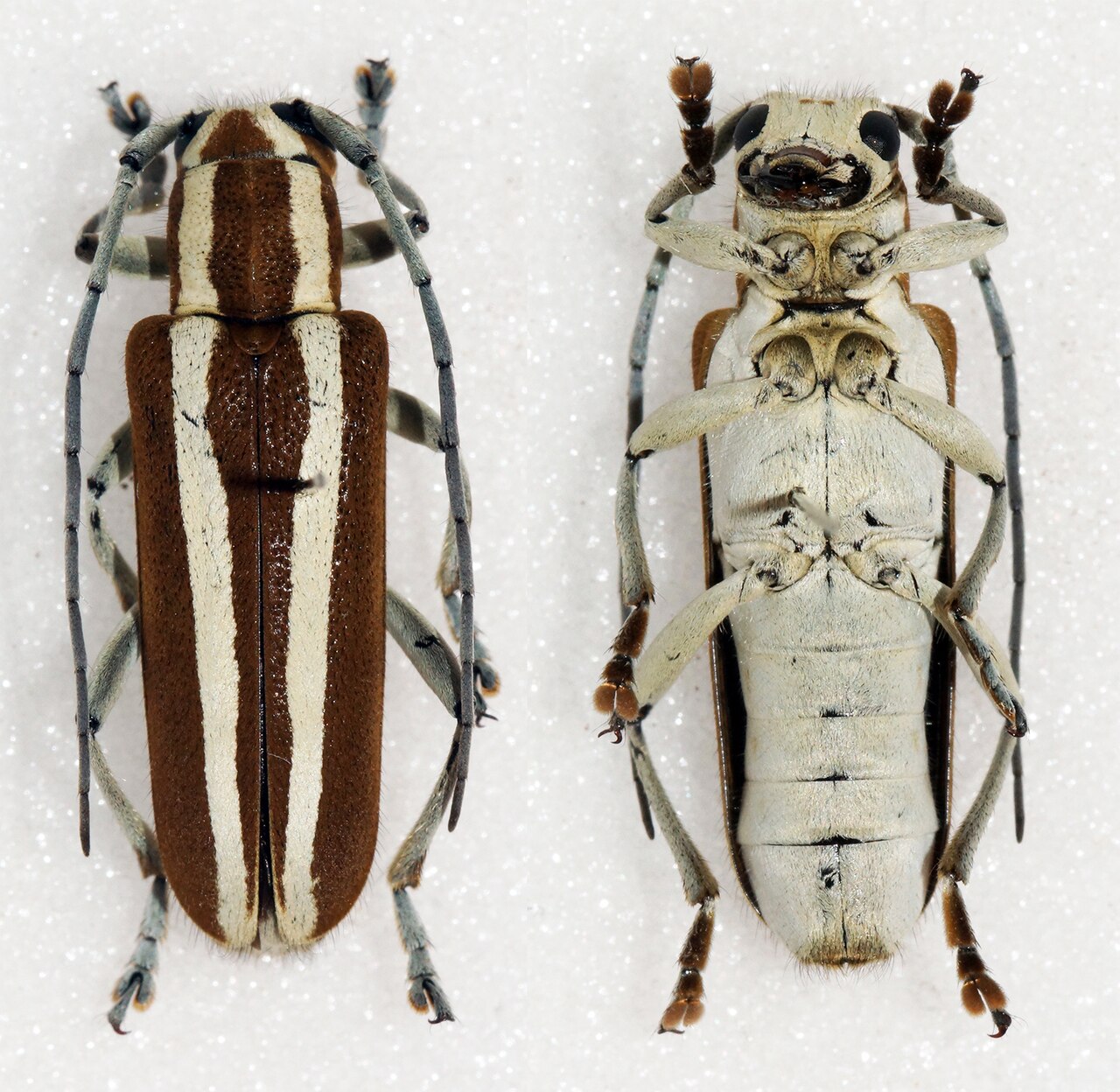
Fruit growers in Manitoba are being urged to watch for the roundheaded apple tree borer, a pest the province rarely sees but one that can do serious damage before anyone notices it, the Manitoba Co-operator reported. Manitoba Agriculture highlighted the insect in its September fruit crop report.
The borer is a longhorn beetle. Adults appear in June and July and lay eggs at the base of host plants such as apple trees and saskatoon bushes, and the larvae then spend several seasons feeding beneath the bark and into the wood. Its life cycle can take up to three years. Unlike many borers, which attack dead or dying wood, this species feeds inside living trees, sometimes young ones, which puts it in direct conflict with fruit production, said provincial entomologist John Gavloski.
The clearest sign is a reddish, sawdust-like material, called frass, around the bottom of the trunk, produced as the larvae tunnel. Growers may also see cracks or holes in the lower trunk. The feeding can eventually girdle the stem, cutting a ring of vital tissue and causing dieback; younger plantings are especially at risk. Because the larvae are small at first, damage may not show until the second or third year of an infestation. "All [growers] can really do is just keep an eye open for that reddish-coloured frass," Gavloski said. From June to August, the adult beetles can also be watched for.
It is not common in Manitoba. Fruit crop specialist Anthony Mintenko said he had seen only one recent sample, from the south-central region, and one about 15 years ago in the eastern part of the province.
Control options are limited. Someone with a few backyard trees can widen the exit hole with a knife and use a flexible wire to puncture or pull out the borer, Gavloski said, but that is not practical in a commercial orchard. Manitoba Agriculture lists removing and destroying infested material as the only control method and says no economic threshold has been set. The story was reported by Miranda Leybourne.
Photo: Ben Sale / Wikimedia Commons (CC BY 2.0)
Source: Manitoba Co-operator

Comments
(0)