
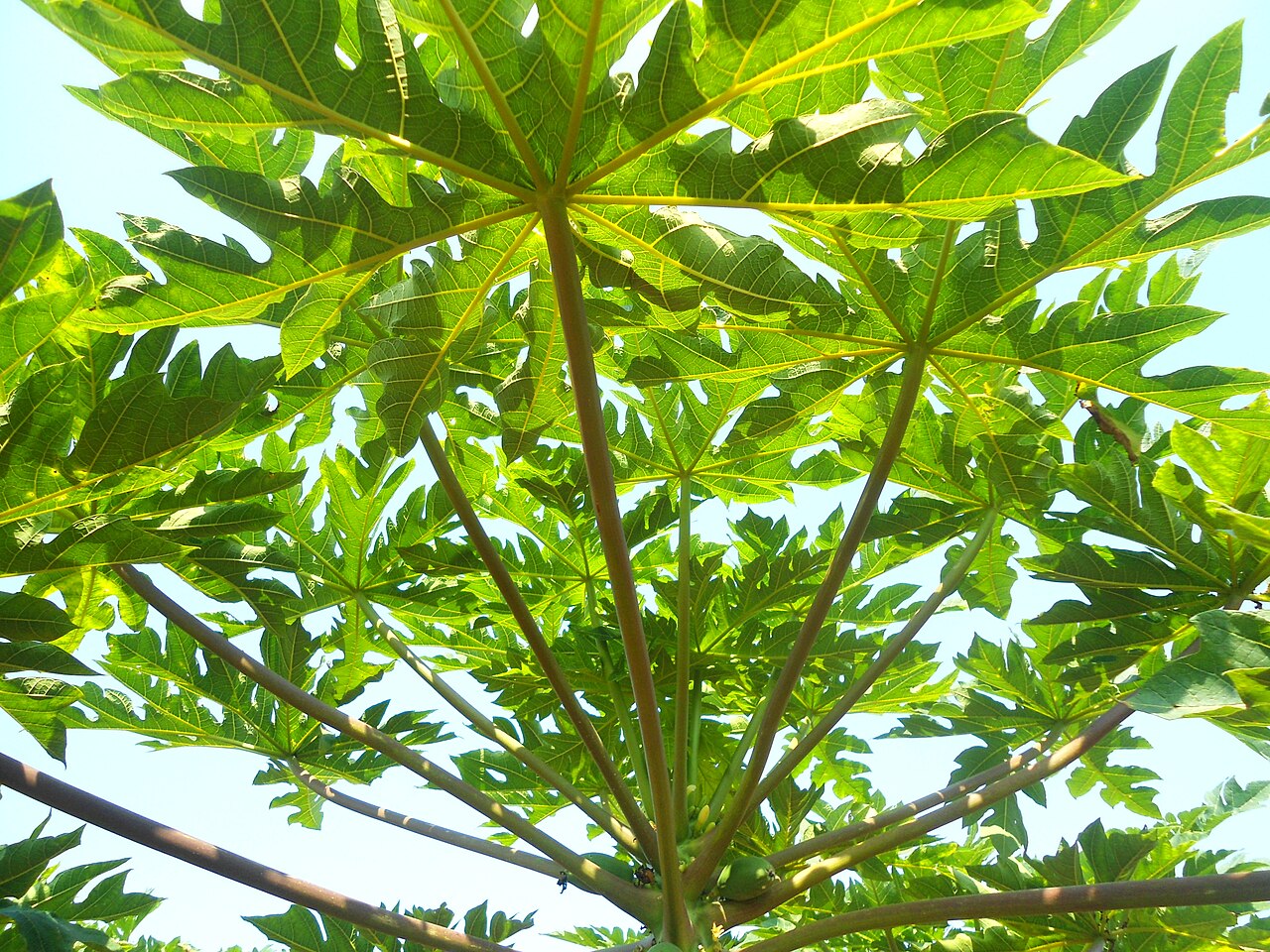
On farmer Kamal Hossain's five bighas at Khamarkandi village in Bogura Sadar, papaya forms the upper layer and turmeric and seasonal vegetables grow below. Rather than leave the ground between papaya rows bare, he grows companion crops for extra income from the same land, and sells seedlings he raises himself for another.
He started four years ago with papaya on one bigha and now has five, and has worked with the Shahi papaya variety for about eight years. He used to grow cauliflower, aubergine and potatoes before switching to papaya on the agriculture department's advice. Citing a research-based report from the Agriculture Information Service, Samakal notes that suitable companion crops raise a field's productivity and profit, measured by the land equivalent ratio (LER); a ratio above one means intercropping uses land better, and turmeric with various companion crops can exceed two.
By Kamal's account a papaya tree bears for about two years: ripe fruit in the first, green papaya in the second. Fruit average two to three kilograms, some reaching six or seven, and a tree gives two to four maunds a season. According to the agriculture department, papaya flowers in five to six months and ripe fruit can be picked in eight to nine. This year he spent about Tk 4 lakh on five bighas, much of it on bamboo, fertiliser and organic manure, and hopes to sell Tk 15 to 16 lakh of ripe papaya from four and a half bighas, though that figure leaves out land value, family labour and transport. A bypass road beside the orchard gets the fruit quickly to Bogura's Chelopara wholesale market.
Raising seedlings from his own seed, he sold about 2,000 Shahi papaya seedlings this year for an extra Tk 50,000 to 60,000. Inspired by his orchard, farmer Lavlu planted papaya on about 50 decimals; yields are good, but lower prices this season mean less profit than hoped, though he does not expect a loss.
Mahfuz Alam, additional deputy director (crops) of the Department of Agricultural Extension, said the district now has about 650 hectares of papaya, 10,202 hectares of summer vegetables and 1,237 hectares of early winter vegetables. Sub-assistant agriculture officer K M Mansur Rahman said Kamal also sold Tk 15 to 16 lakh of papaya last year. Kamal's advice is regular fertiliser and proper spacing between trees for better yields and bigger fruit. 'Even when papaya prices dip a little, there is still profit,' he said.
Photo: Anna Frodesiak / Wikimedia Commons (CC0); a representative picture of a papaya plantation
Source: samakal


Comments
(0)