
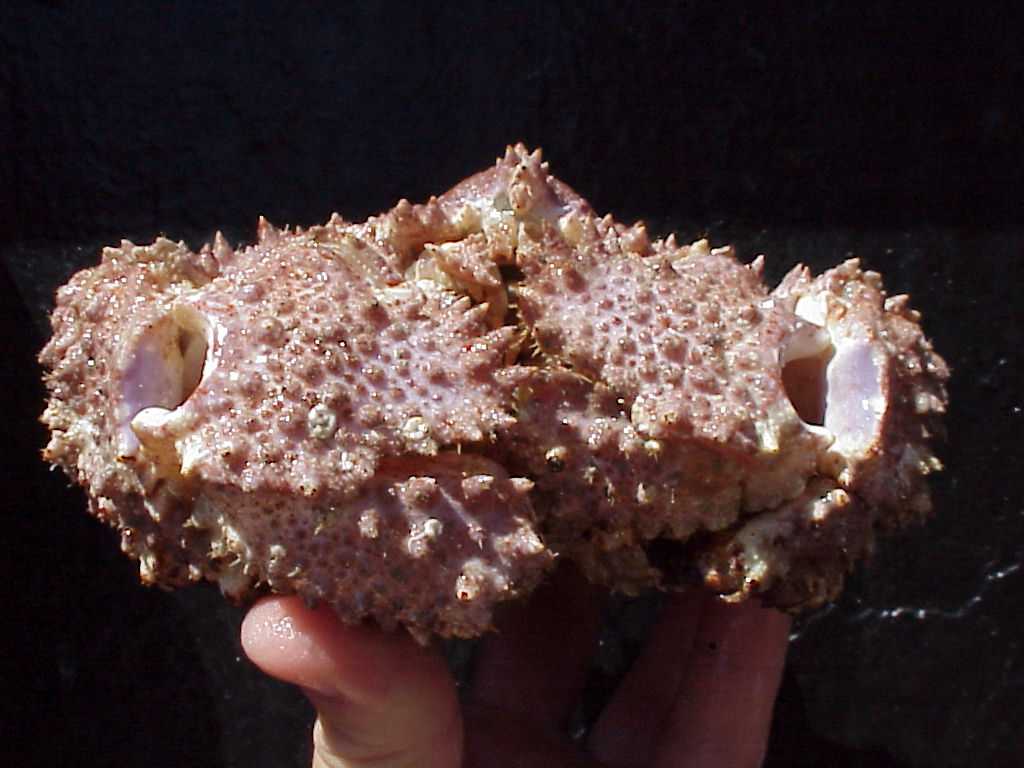
A small experimental fishery for brown box crab off southern California is being worked entirely with ropeless traps, gear that leaves no vertical line in the water for a whale to swim into, the Food and Environment Reporting Network (FERN) reported.
Conventional crab and lobster traps sit on the seabed tied by heavy ropes to floating buoys. Those lines are a leading cause of injury and death for whales worldwide. Ropeless, or "pop-up", gear keeps the traps on the seafloor with no line to the surface until the crew is ready to haul them.
Fisher Mikey Volaski, who works out of Oxnard, uses units from two West Coast firms, Sub Sea Sonics and Guardian Ropeless Systems, chosen for price: about $1,500 a unit, a fifth of the cost of higher-end models. From a smartphone app he signals a "sled" on the seabed to release an orange buoy, which rises with the line, and the crew winch up the sled and the string of traps behind it.
The brown box crab lives as deep as 600 metres and has never supported a lasting commercial fishery. California allowed a small experimental box crab fishery in 2018 after fishers asked for a new source of income. In 2021 a humpback whale was found tangled in box crab gear, and instead of closing the fishery the state turned to Kim Sawicki, a marine technology researcher from Connecticut.
Sawicki had spent years trying to persuade New England lobster fishers to trial ropeless gear and met strong resistance, as many feared that voluntary trials would bring more regulation. When six West Coast fishers she trained in 2023 withdrew from the permit process, she took the experimental permit in her own name, moved to Oxnard in June 2024 and captained a donated 9.8-metre boat herself.
Fishing groups have called the gear unproven and expensive, though prices are falling as the technology develops. Supporters hope that a fishery built on ropeless gear from the start will show other crab and lobster fishers that whale-safe trapping can pay.
The report was written by Madeline Ostrander and produced with bioGraphic.
Photo: Alaska Fisheries Science Center, NOAA / Wikimedia Commons (public domain)
Source: Food and Environment Reporting Network

Comments
(0)