
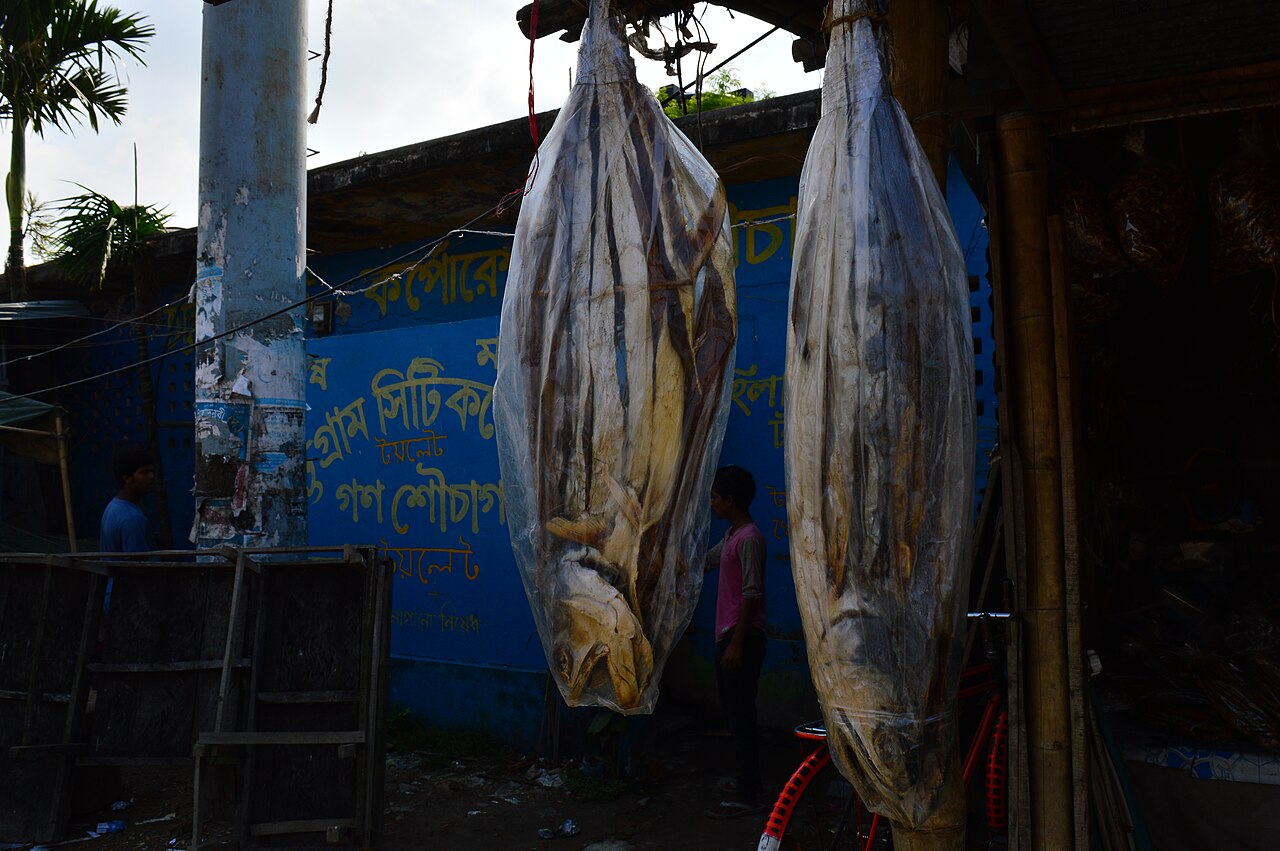
Researchers at the University of Chittagong have found microplastics in every one of 24 samples of dried fish, or shutki, taken from the country's four main drying centres, with at least nine kinds of synthetic plastic particle identified. The study was published on 15 October in Marine Pollution Bulletin, an international journal from Elsevier, Dinajpur TV reported.
The work was supervised by Professor Dr Md Ashraful Azam Khan of the university's fisheries department, with master's students Kazi Nusrat Jahan Oishi, Habibur Rahman Piyas, Nadia Islam Ria and Sanjida Juthi. Samples came from Cox's Bazar, Teknaf, Kuakata in Patuakhali and Dublar Char in the Sundarbans.
The team tested the six species most eaten in ordinary households: loitta (Bombay duck), poa, churi (ribbonfish), phaissa, and tiger and harina shrimp. Contamination was highest in Kuakata's dried fish, followed by Cox's Bazar. On the internationally used polymer hazard index, the Kuakata samples scored 2,642.7 and those from Cox's Bazar 1,461.1.
Polyvinyl chloride (PVC) and polystyrene were the commonest particles. The report notes that traders were once accused of using banned chemicals such as DDT and Nogos to keep insects off drying fish; with invisible plastic particles now entering the food chain as well, the health risk may grow.
Professor Ashraful Azam Khan said untreated household, municipal and industrial waste reaching the coast breaks down into fine plastic particles, which enter the fish caught there and the shutki made from them by traditional methods. He advised drying fish on solar-powered or clean covered racks instead of open, dusty ground, and an immediate end to the uncontrolled use of plastic sheets, nylon rope and packing materials in processing.
Without proper recycling of waste and strict government policy, the researchers warned, ordinary people face serious health risks in future.
Reported by the Dinajpur TV desk.
Photo: A dried fish shop at Patenga, Chattogram, Moheen Reeyad / Wikimedia Commons (CC BY-SA 4.0)
Source: Dinajpur TV

Comments
(0)