
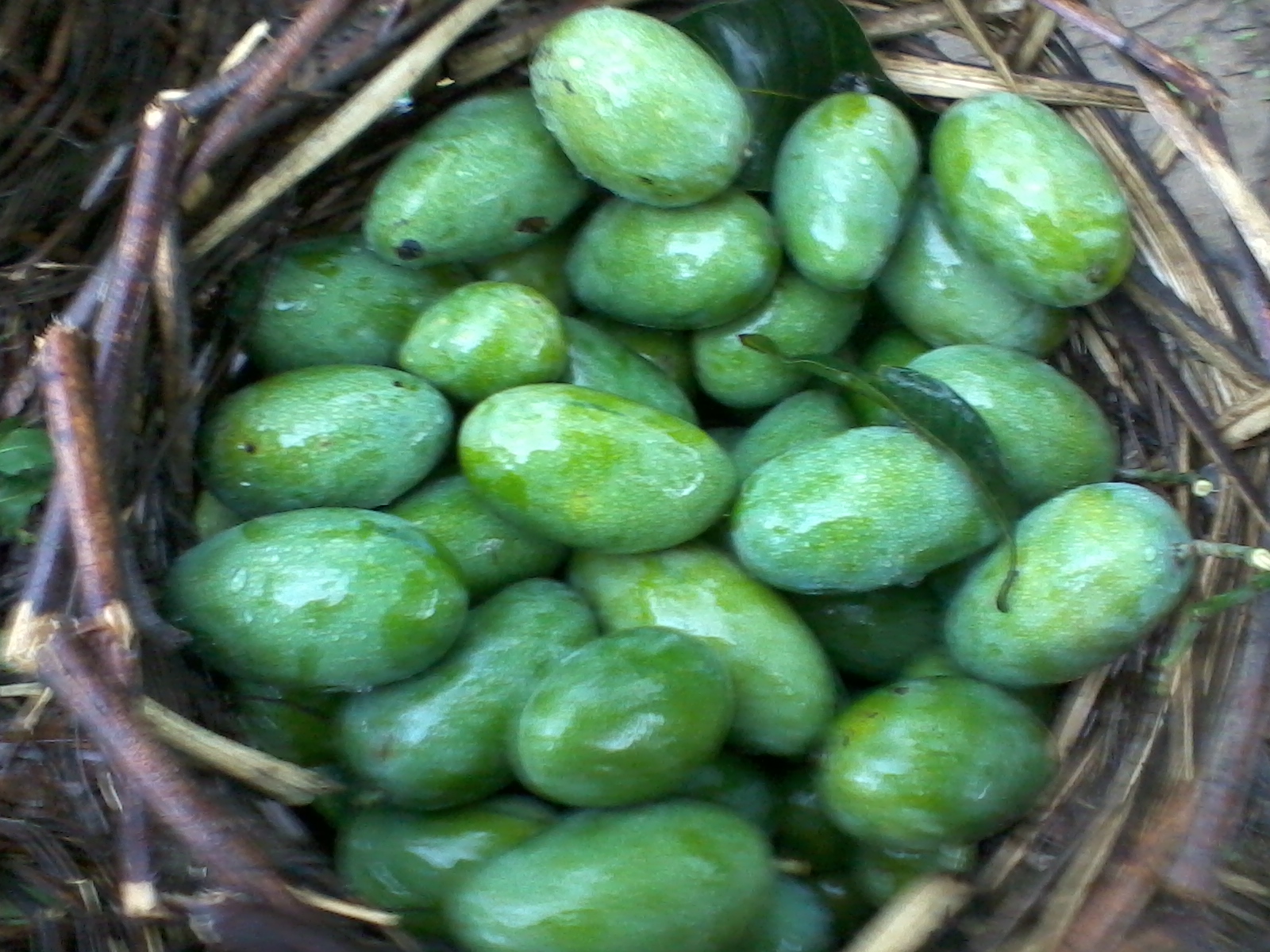
On 25 April 2026, while much of Bangladesh was in the grip of a heatwave, the lifestyle desk of the news portal Jagonews24 published a home recipe for a spicy raw mango lolly: an ice lolly made from green mango, mint, sugar and a handful of familiar spices, cooked into a thick purée, cooled and frozen in ice-cream moulds. The recipe uses eight ingredients, needs no special equipment beyond a blender, a pan and moulds, and asks for eight to nine hours in a deep freezer. This report sets out the recipe as the desk published it, explains what each ingredient is, and adds the background a cook would find useful that week: where Bangladesh's mangoes come from and why green fruit was in the markets in late April, what researchers have found about unripe mango, what the World Health Organization (WHO) says about sugar, salt and hot weather, and the basic food-safety steps that apply to a frozen treat made at home.
The desk introduced the dish as one for the summer, describing it as tasty, easy to make and likely to please everyone from children to adults. Its original introduction also said that raw mango boosts immunity and lowers the risk of dehydration, fatigue and heatstroke. Those health claims are not repeated here, because no health authority consulted for this report supports them; what the research and the health bodies do say is set out in the sections below.
The ingredients
The Jagonews24 recipe lists the following quantities. It does not say how many lollies the mixture makes, which depends on the size of the moulds.
- Raw (green) mangoes: 2
- Sugar: half a cup
- Black salt (bit lobon): half a teaspoon
- Red chilli powder: half a teaspoon
- Roasted cumin powder: half a teaspoon
- Mint leaves: 1 tablespoon
- Chaat masala: half a teaspoon
- Water: half a cup
The recipe does not say whether the mango is peeled before blending. The note on mango skin in the food-safety section below is worth reading before handling a large number of green mangoes.
How the lolly is made
The method, as the desk gave it, runs in six stages:
- Blend the raw mango with the mint leaves into a smooth purée.
- Put the purée, the water and the sugar into a pan and heat it, stirring slowly until the sugar has dissolved completely and the mixture has come together.
- Once the sugar has melted, add the black salt, chilli powder, cumin powder and chaat masala, and let the mixture boil a little longer, stirring now and then so that it does not stick to the bottom of the pan.
- When the mixture has slowly thickened, take it off the heat and let it cool completely.
- Pour the cooled mixture into ice-cream moulds. Push a stick into each mould, or cover the moulds well with foil, so that nothing goes wrong while it freezes, then leave the moulds in the deep freezer for 8 to 9 hours.
- When the lollies are fully frozen, take the moulds out and hold them under gently running water for a few seconds; the lollies will then slide out easily.
What an ice lolly is
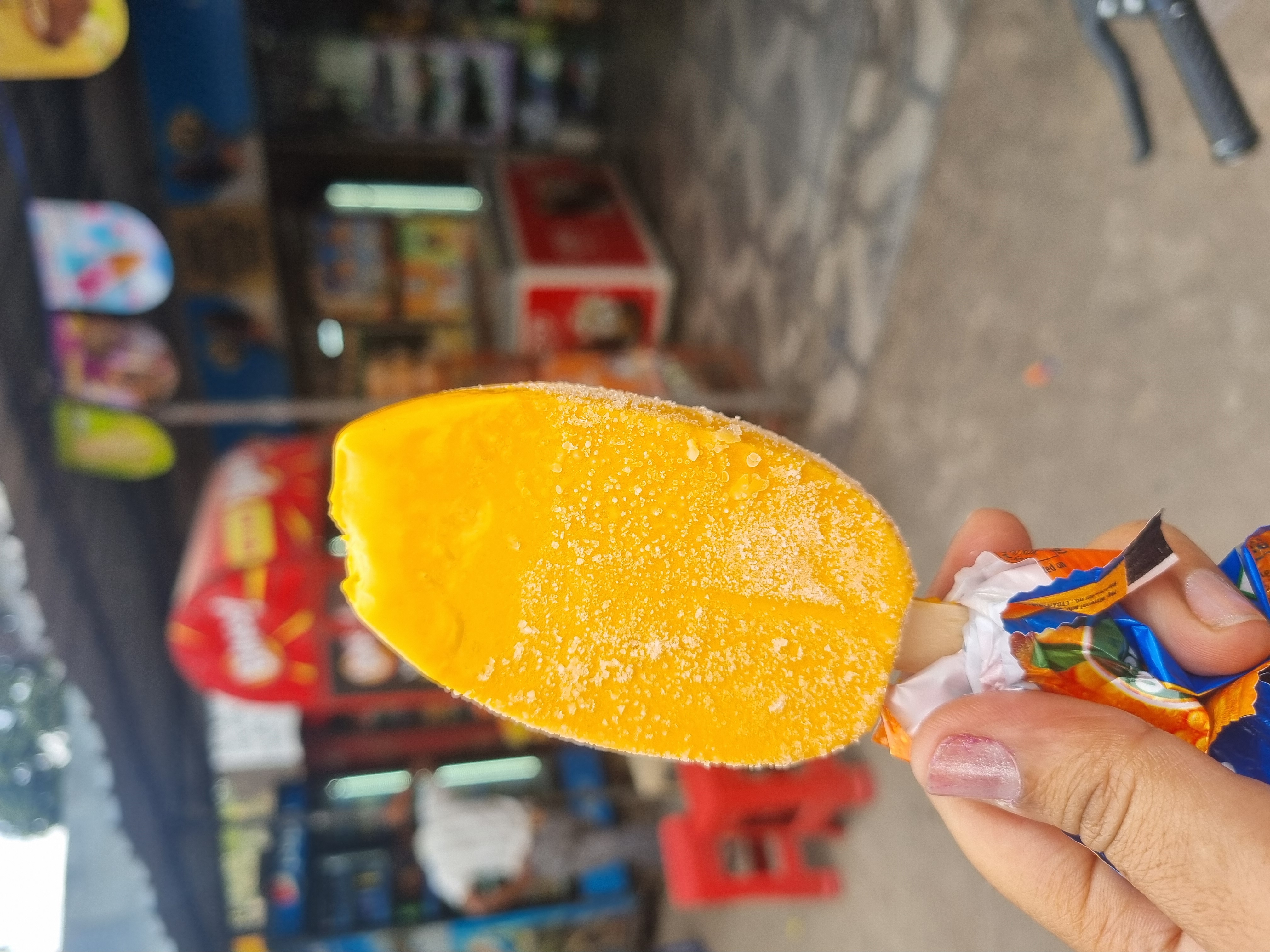
An ice lolly is what British English calls a frozen dessert on a stick; in Canada and the United States the same thing is usually called a popsicle, a name that began as a trademark. The online encyclopaedia Wikipedia describes the ice pop as a liquid- or cream-based frozen dessert on a stick that, unlike ice cream or sorbet, is frozen at rest rather than whipped while it freezes. That is why the Jagonews24 recipe needs nothing more than moulds and a freezer: the mixture is poured in and left alone.
The modern ice pop is usually traced to Frank Epperson, an American who claimed to have first made one in 1905 at the age of eleven, received a patent for his "Epsicle" ice pop in 1923 and by 1924 had patented handled frozen confections in general. In India the encyclopaedia records related street sweets under names such as ice gola and ice candy. The raw mango lolly belongs to a South Asian line of its own: it borrows its flavours from savoury-sweet raw mango preparations rather than from fruit juice alone.
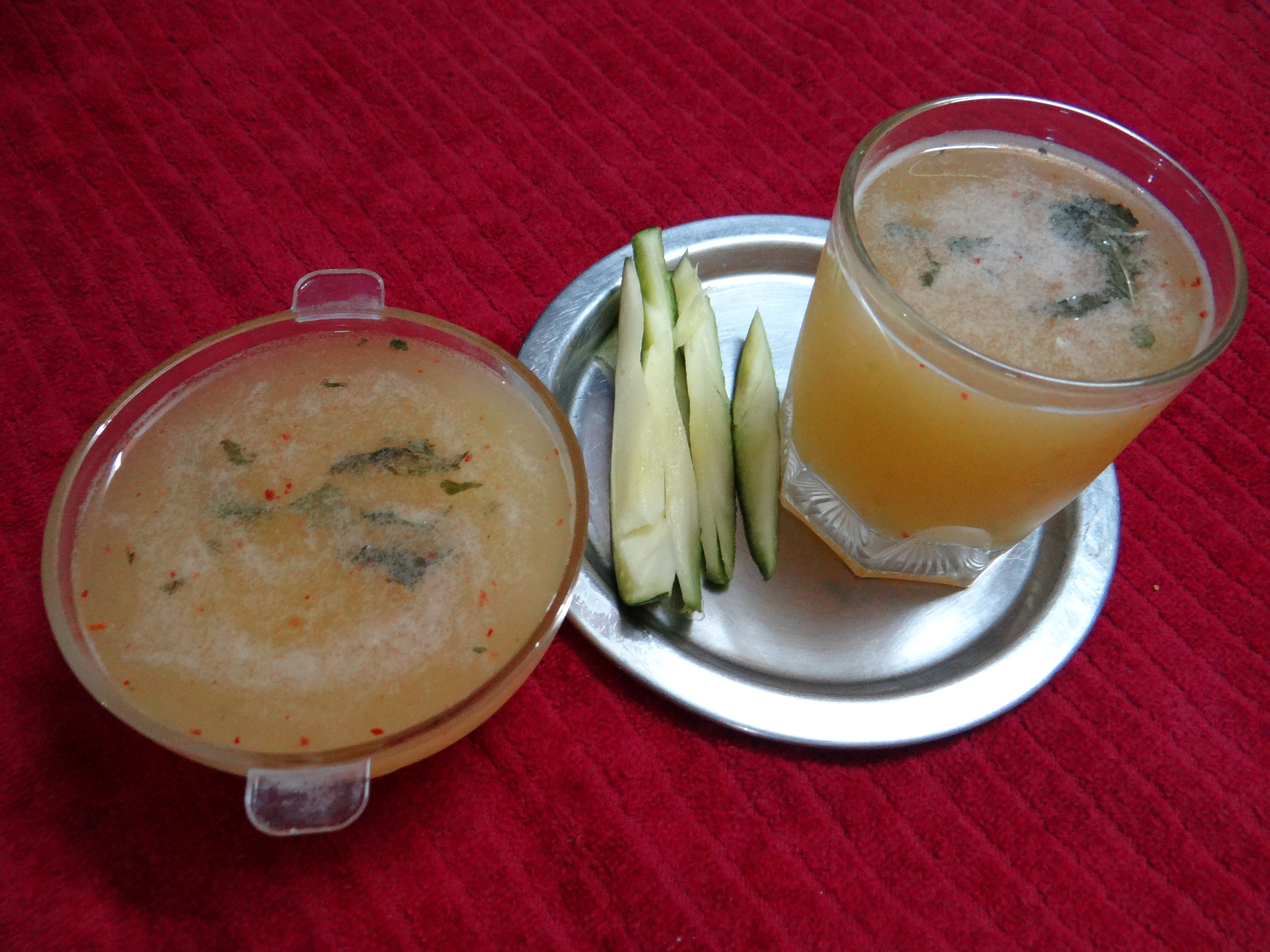
The closest relative is aam panna, which Wikipedia describes as an Indian drink made from unripe mangoes, prepared with raw mango, cumin and an assortment of other spices, with mint leaves often added. It is drunk mainly in western India. The lolly in this recipe uses the same core flavours of green mango, mint, cumin and salt, but cooks the purée thicker and freezes it instead of diluting it into a drink.
The spices and the salt
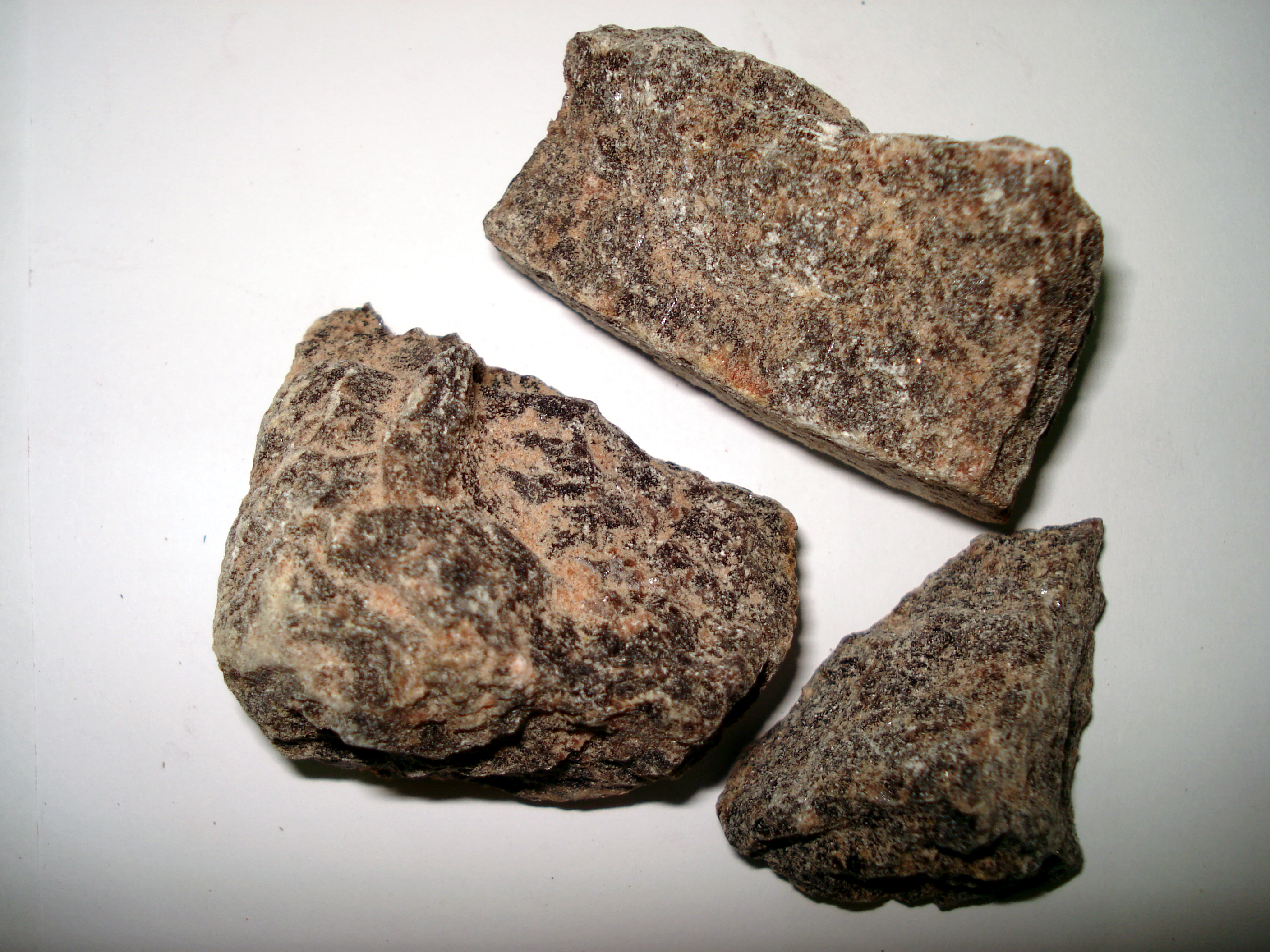
Black salt, called bit lobon in Bengali and kala namak in Hindi and Urdu, is not ordinary table salt. According to Wikipedia's entry on kala namak, it is a kiln-fired rock salt with a sulphurous, pungent smell, made up largely of crystalline sodium chloride with traces of sulphur compounds such as sodium sulphate and iron sulphide; hydrogen sulphide is the main source of its smell. Whole lumps are brown and black, and the ground salt ranges from pink to dark brown or black. Traditionally the raw salt was fired for about 24 hours in a sealed ceramic jar with charcoal and plant material such as harad seeds, amla and bahera; today manufacturers often add the chemicals to pure salt before firing. The raw material comes from Himalayan mines and the salt lakes of northern India, and production is concentrated in Hisar district in the Indian state of Haryana. Cooks across South Asia add it to chaats, chutneys, salads, fruit and raitas.
Chaat masala is a powdered spice mix from the Indian subcontinent. The usual blend, as Wikipedia lists it, contains amchur (dried mango powder), cumin, coriander, dried ginger, salt (often black salt), black pepper, asafoetida and chilli powder. It is the seasoning street vendors sprinkle on cut fruit and fresh vegetables, and its amchur brings dried mango into this recipe a second time. Because chaat masala usually contains salt, the lolly gets salt from both the black salt and the spice mix.
Cumin is the dried seed of Cuminum cyminum, a plant of the parsley family (Apiaceae) native to the Irano-Turanian region. Its warm aroma comes mainly from an essential oil whose chief aroma compound is cuminaldehyde. The seed can be used whole or ground; this recipe asks for roasted cumin powder. India is the world's largest producer of cumin, with about 70 per cent of the crop, according to Wikipedia.
Chilli came to South Asia from the Americas. Banglapedia, the national encyclopaedia of Bangladesh, records the plant as Capsicum frutescens of the family Solanaceae, native to Mexico, and notes that Bengal exported chilli on a very large scale until the early twentieth century and that chilli was one of the spices that drew the East India Company to eastern India. In Bangladeshi kitchens dried chilli is ground into powder and used in curry powders, sauces and pickles; here half a teaspoon of it gives the lolly its heat. Mint (pudina), the recipe's one fresh herb, belongs to the genus Mentha in the family Lamiaceae.
Green mango: what the research says
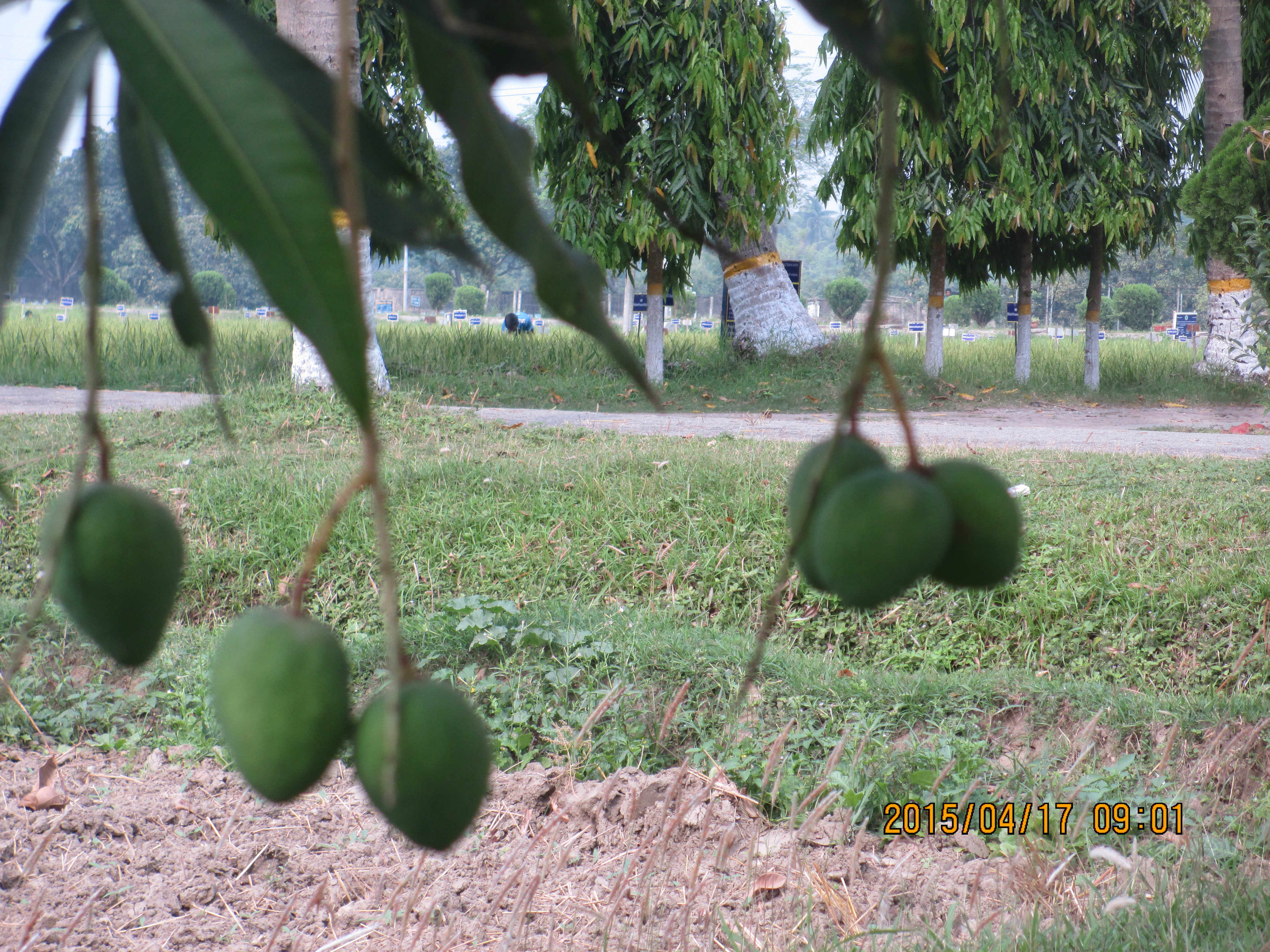
The mango tree, Mangifera indica, is the national tree of Bangladesh. Wikipedia's mango article says the fruit originated in the northeastern part of South Asia, in an area that covers parts of present-day Bangladesh, northeastern India and Myanmar, and has been grown in South and Southeast Asia since ancient times. The English word came in the sixteenth century from the Portuguese manga, which goes back through Malayalam to Tamil.
A review of mango chemistry published in the journal Frontiers in Plant Science in October 2019, by M. E. Maldonado-Celis and colleagues, gathers what laboratory studies have found about the fruit at different stages. It reports that vitamin C content changes during ripening and is higher in less ripe mango than in fully ripe fruit. It attributes the fruit's acidity mainly to citric and malic acids and notes that organic acid content falls as the mango ripens, which is why green mango tastes sharply sour. The same review reports that carotenoids, the yellow and orange pigments, rise as the fruit moves from the green to the ripe stage. Across the studies it reviewed, vitamin C ranged from 9.79 to 186 milligrams per 100 grams of mango pulp, a range that reflects differences between varieties and stages of ripeness.
The review also discusses mangiferin, a compound of the xanthone group found widely in higher plants, for which studies have shown pharmacological and antioxidant activity, and notes that in the cultivars studied mangiferin was more concentrated in the peel than in the pulp. Laboratory findings of this kind describe what is in the fruit; they are not evidence that a sweetened frozen lolly protects health, and readers with a medical question should ask a doctor.
For ripe mango, Wikipedia's nutrition table gives about 60 kilocalories per 100 grams of raw fruit and describes mango as a rich source of vitamin C, at 40 per cent of the Daily Value in that amount.
Mango in Bangladesh and the green-mango weeks
Banglapedia counts nearly 100 mango cultivars in Bangladesh. Superior grafted varieties are grown mainly in Rajshahi, Chapainawabganj (Nawabganj) and Dinajpur, and include Fazlee, Langda, Gopalbhog, Himsagar, Khirsapat, Ashwina, Kishanbhog, Lata Bombai, Mohanbhog and Lakshmanbhog, among others; seedling trees of no recognised variety are known as deshi or guti am. Grafted trees start bearing at about four years old and stay productive for about 45 years. Mango trees flower from January to March, and fog, rain or cloudy weather at that time harms fruit set, while hailstorms make young fruit drop. The encyclopaedia notes that green fruits are added to curries and dal, and that green and ripe mangoes alike are made into jam, jelly, squash, chutney and pickle (achar).
Figures from the Department of Agricultural Extension (DAE), reported by the state news agency BSS and carried by The Business Standard on 27 April 2025, show the scale of the crop. The country produced 23,50,499 tonnes of mango from 2,02,968 hectares in fiscal year 2020-21 and 25,08,973 tonnes from 2,05,034 hectares in 2023-24. For the 2025 season the department set a record production target of 27 lakh tonnes, and the same report put Bangladesh seventh among the world's mango producers. Exports remained small: 3,100 tonnes in 2022-23 and 1,321 tonnes in 2023-24, sent to about 38 countries.
The 2026 crop began well. The Daily Star reported on 26 February 2026 that, according to the DAE, nearly 72 per cent of mango trees in Rajshahi district had flowered, and that the four districts of Rajshahi, Naogaon, Natore and Chapainawabganj had 92,552 hectares of orchards. The paper gave the previous season's output as 4,58,640 tonnes in Chapainawabganj, 4,21,429 tonnes in Naogaon, 2,49,953 tonnes in Rajshahi and 72,073 tonnes in Natore. On 11 March 2026 BSS reported that fruitlets, known locally as guti, had begun to appear in Rajshahi, that the production target for the four districts was about 12.5 lakh tonnes from 34,960,554 trees, and quoted Dr Shafiqul Islam, chief scientific officer at the Bangladesh Agricultural Research Institute (BARI), as saying that the ideal temperature during the flowering and fruitlet stages is 15 to 20 degrees Celsius.
This timing explains why a raw mango recipe appeared in late April. In 2025 the harvest of ripe mangoes in Rajshahi followed a set schedule, which BSS reported on 20 May that year: Gopalbhog from 22 May, Himsagar or Khirsapat from 30 May, Langra from 10 June, Amrapali and Fazli from 15 June and Ashwina from 10 July. Before those dates the fruit on the trees is still green, and green mango is what kitchens turn into the curries, dal, chutney and pickle Banglapedia describes, and into drinks and treats like this one.
The heatwave of April 2026 and what WHO advises
The recipe was published in the middle of the year's longest hot spell up to that point. On 23 April 2026 the Bangladesh Meteorological Department said the heatwave would last another four to five days. Meteorologist Md Shaheenul Islam told BSS that it would persist until 25 April, ease somewhat after 26 April and might continue until 28 or 29 April, and that one or two more spells could follow in May, as is usual between March and May. The heat was most severe in Rajshahi district, which recorded the country's highest temperature of 40 degrees Celsius on 22 April, while a mild to moderate heatwave covered the rest of Rajshahi and Khulna divisions and the districts of Dhaka, Tangail, Faridpur, Madaripur, Dinajpur, Brahmanbaria, Laxmipur, Rangamati and Bandarban.
A frozen lolly is a treat, not a treatment. The WHO fact sheet on heat and health, dated 28 May 2024, calls heatstroke a medical emergency with a high case fatality rate and describes heat stress as the leading cause of weather-related deaths. Its advice to the public in hot weather includes:
- Drink water regularly: one cup of water per hour and at least 2 to 3 litres a day.
- Avoid going outside and doing strenuous activity during the hottest time of the day, and stay in the shade.
- Wear light, loose-fitting clothing, take cool showers or baths and wet the skin with a damp cloth or spray.
- Check regularly on vulnerable people, especially those over 65 and people with heart, lung or kidney conditions, a disability or who live alone.
- Never leave children or animals in parked vehicles, even for a short time.
WHO also notes that outdoor and manual workers are exposed to excess heat because of their work. Anyone who feels unwell in the heat, and above all anyone showing signs of heatstroke, needs medical help rather than a cold snack.
Sugar and salt: the WHO guidance
The recipe's half cup of sugar is what WHO calls free sugar. In guidance issued on 4 March 2015, WHO recommended that adults and children reduce their intake of free sugars to less than 10 per cent of total energy intake, and said that a further reduction to below 5 per cent, or roughly 25 grams (about 6 teaspoons) a day, would bring additional health benefits. Free sugars include the glucose, fructose and sucrose added to foods and drinks by the manufacturer, the cook or the consumer, as well as sugars naturally present in honey, syrups and fruit juices. The guideline does not cover the sugars in fresh fruit and vegetables or those naturally present in milk. WHO linked the recommendation to evidence that adults who eat less sugar have lower body weight and that higher sugar intake is tied to more tooth decay, and pointed out how quickly hidden sugars add up: a single can of sugar-sweetened soda contains up to 40 grams.
Salt follows the same logic. WHO's fact sheet on sodium reduction, dated 14 September 2023, recommends that adults eat less than 2,000 milligrams of sodium a day, equivalent to less than 5 grams of salt, or just under a teaspoon; for children aged 2 to 15 the adult figure should be adjusted downward according to their energy needs. It reports a global average adult intake of 4,310 milligrams of sodium a day (10.78 grams of salt), more than double the recommendation, and links high-sodium diets above all to raised blood pressure and heart disease, as well as to gastric cancer, obesity, osteoporosis, Meniere's disease and kidney disease. Because black salt is mostly sodium chloride and chaat masala usually contains salt too, both count towards that daily limit. Among WHO's tips is to flavour food with herbs and spices rather than salt.
People with diabetes, high blood pressure or kidney disease, and parents deciding how much of a sweet and salty treat to give a child, should take advice from a doctor.
Keeping a home-made frozen treat safe
The usual kitchen rules apply to a frozen treat as much as to a cooked meal. WHO's Five Keys to Safer Food, published in 2006, sum them up as: keep clean; separate raw and cooked; cook thoroughly; keep food at safe temperatures; and use safe water and raw materials. The United States Food and Drug Administration (FDA) adds practical detail for fruit and vegetables:
- Wash your hands for at least 20 seconds with soap and warm water before and after preparing produce.
- Wash all produce thoroughly under running water before preparing it; washing fruit with soap, detergent or a commercial produce wash is not recommended.
- Scrub firm produce with a clean produce brush, and cut away any damaged or bruised areas before preparing the fruit.
- Keep fruit and vegetables that will be eaten raw separate from raw meat, poultry and seafood.
- Check with an appliance thermometer that the refrigerator stays at 40 degrees Fahrenheit or below and the freezer at 0 degrees Fahrenheit or below.
In this recipe the water and the purée are boiled together and the mixture is cooled before freezing; WHO's first key, keeping clean, then applies to the moulds, the sticks and the hands that touch the lollies afterwards.
One more point concerns the mango itself. A 2021 review in the journal Medicina by E. C. Berghea and colleagues at Carol Davila University of Medicine and Pharmacy in Bucharest found that contact dermatitis, a skin rash, is the main allergic reaction caused by mango, but that it is rare: the authors found 12 case reports and four case series covering 37 patients in the medical literature. The substances long suspected of causing it are alk(en)yl catechols and alk(en)yl resorcinols, and the review found that the rash can appear even on first contact with mango in people already sensitised to plants that contain urushiol, such as poison ivy. Anyone who develops a rash after handling mango should see a doctor.
Photo: Roboture / Wikimedia Commons (CC BY-SA 3.0)
Sources: Jagonews24, BSS, Dhaka Tribune, The Business Standard, The Daily Star, Banglapedia, World Health Organization (WHO), U.S. Food and Drug Administration (FDA), Frontiers in Plant Science, Medicina, Wikipedia

Comments
(0)